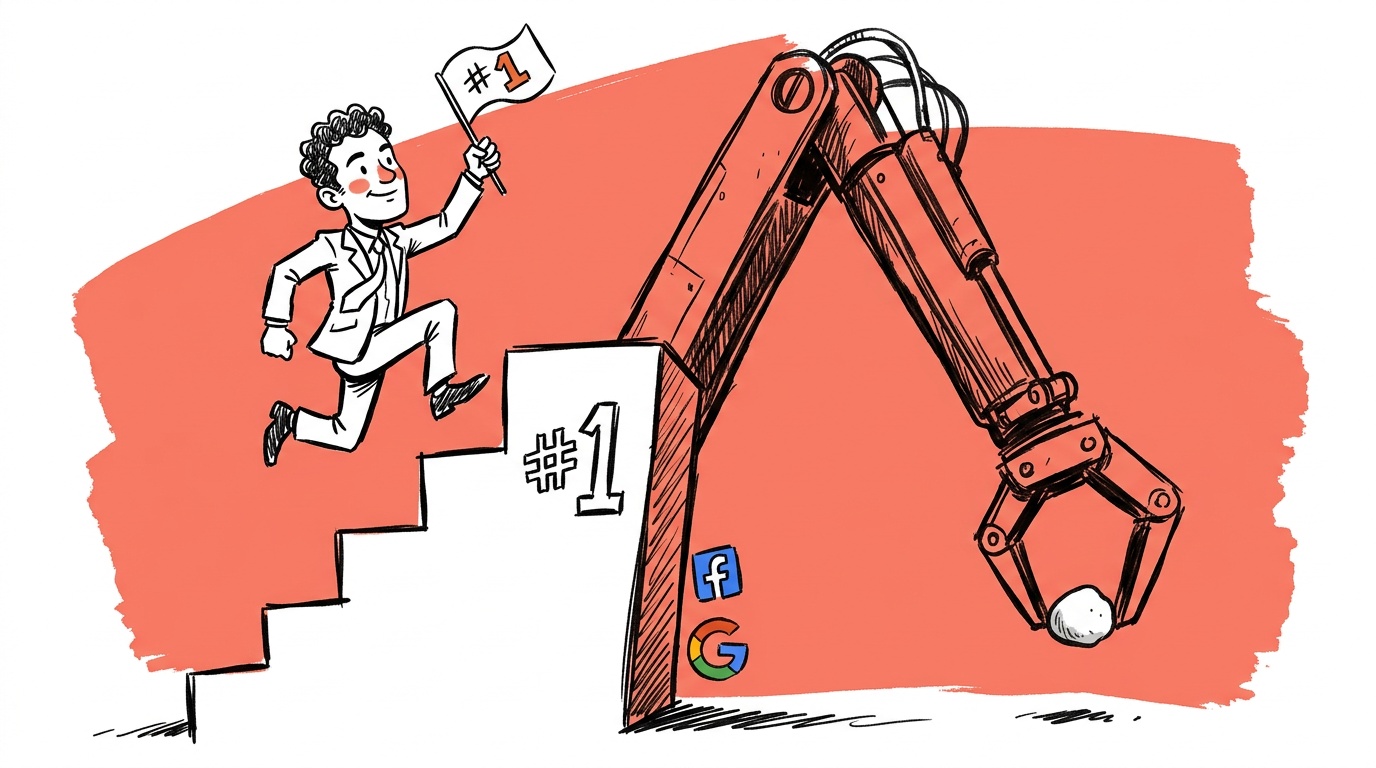
The pages AI answer engines cite most often are frequently not the pages ranking in Google's top five. In many content categories, the overlap between "what AI cites" and "what Google surfaces" is surprisingly thin. That's not a quirk. It's a structural divergence that has direct consequences for anyone spending money to drive traffic from search.
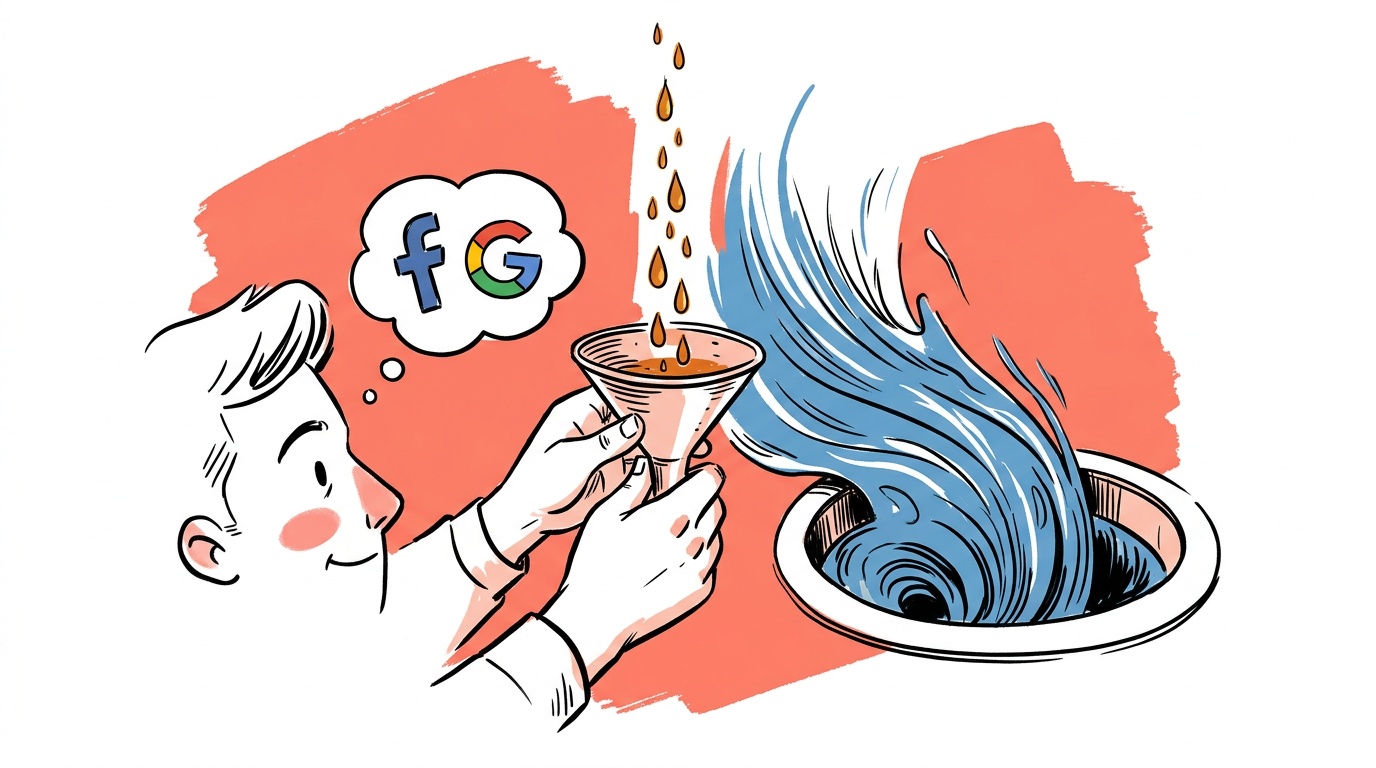
If your paid and organic strategy assumes that ranking well on Google means you'll get pulled into AI-generated answers, you may be funding the wrong signal entirely.
TL;DR — AI Citations vs SEO
- AI answer engines (ChatGPT, Perplexity, Gemini) regularly cite pages that rank well outside Google's top positions, sometimes from page two or beyond.
- The attributes AI models weight most—answer specificity, structural clarity, semantic authority—are different from the attributes Google's ranking algorithm prioritizes.
- Traditional SEO signals like domain authority and backlink count are weak predictors of AI citation likelihood.
- For paid-media founders, this means landing pages and content built purely for Google may get ignored by the AI layer that's increasingly intercepting your potential customers.
- The winning move is writing content that answers a specific query completely in one place—not content optimized to rank, but content optimized to be cited.
Why Google Rankings Don't Predict AI Citations
Google's algorithm is, at its core, a relevance-and-authority ranking engine. It weighs inbound links, domain trust, click-through signals, and hundreds of other factors calibrated over years of search behavior. The result is a list ordered by estimated relevance to a query.
AI answer engines work differently. Models like those powering ChatGPT's browsing mode or Perplexity's answer layer are not re-ranking Google's results. They are retrieving documents—sometimes via their own crawlers, sometimes via Bing's index—and synthesizing an answer from whatever text best satisfies the query semantically. The retrieval step privileges documents that contain a direct, complete, well-structured answer to the question. A page that ranks third on Google because it has strong backlinks but buries its actual answer inside five paragraphs of preamble may lose to a page that ranks fifteenth but answers the question in the first hundred words.
This is the core divergence: Google ranks documents. AI engines cite answers.
When a model retrieves content to cite, it is pattern-matching for answer density—how much useful signal is in a small window of text. A high-authority page with thin, keyword-stuffed prose scores poorly on answer density even if it scores well on PageRank.
What AI Engines Actually Look For
Researchers and practitioners studying AI citation behavior have converged on a few consistent patterns. These align with what we observe when we analyze the content our own users are running against AI-driven search traffic.
Specificity over breadth. A page that answers one question precisely is cited more often than a page that covers a topic broadly. "What is a good ROAS for Meta ads in the home goods category" is better served by a post that gives a direct number with context than by a 3,000-word overview of ROAS as a concept.
Structural legibility. Headers, short paragraphs, and clear sentence-level answers help retrieval systems parse the document quickly. This is not about keyword density—it's about whether the relevant answer is findable in a small token window.
Semantic authority, not domain authority. AI models appear to weight whether a document demonstrates real knowledge about a subject—through specific claims, internal consistency, and the use of terminology the way practitioners use it—more than they weight how many backlinks point to the domain. A niche site written by someone with deep operational experience can outperform a high-DA generalist site.
Freshness on fast-moving topics. For anything time-sensitive—ad platform policy changes, CPM trends, algorithm updates—AI engines retrieving live content weight recency heavily. A post from three years ago about Meta's auction system may be accurate but still lose to a fresher one.
The Paid-Media Implication No One Is Talking About
Here's where this gets expensive for founders running ads. A meaningful share of the queries your potential customers type into ChatGPT or Perplexity are research queries—"best tool for managing Google and Meta ads," "how to reduce wasted spend on Performance Max," "what's a normal CPL for B2B SaaS on LinkedIn." These are exactly the queries where AI citations matter.
If your landing pages and blog posts are built to rank on Google—optimized for backlinks, structured around head keywords, written to satisfy a crawler—they may be invisible to the AI layer that's now intercepting a growing share of that research traffic.
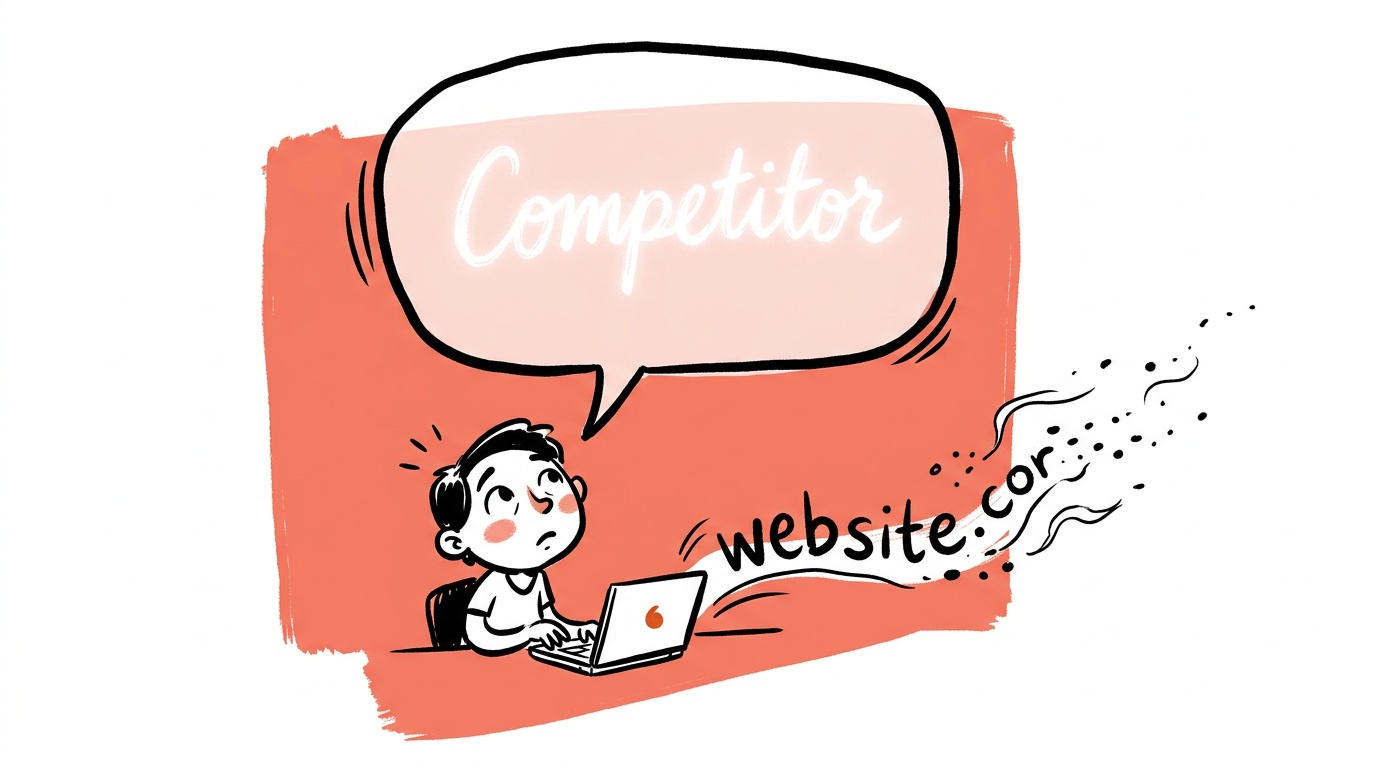
The cost is indirect but real: you're running paid campaigns to people who already filtered you out before they ever reached your ad. They asked an AI, the AI cited your competitor's more specific, better-structured content, and they arrived at the click stage pre-sold on someone else.

Live today.
The full campaign — copy, images, targeting — generated for your site and deployed paused for your approval.
Prompting Is Not the Differentiator—Content Structure Is
There's a temptation in the GEO (Generative Engine Optimization) conversation to focus on prompt engineering: if you phrase your content a certain way, AI models will prefer it. That's a distraction. Research into how AI retrieval actually works suggests the differentiating factor is not how you prompt or even how you title a page—it's whether the underlying document is genuinely useful to a model trying to answer a specific question.
Models are trained to be helpful. They cite content that helps them be helpful. That means content that is accurate, specific, and complete for its stated scope. Tricks don't scale; genuine answer density does.
What this means practically:
- Write posts that answer one specific question per post, not one topic per post.
- Put the direct answer in the first paragraph, not after an introduction.
- Use the exact language your audience uses when they're searching, not the sanitized keyword version.
- Cite primary sources—data, studies, platform documentation—because models weight documents that themselves demonstrate epistemic rigor.
What an Answer-Atomic Post Actually Looks Like
The structure is simpler than most content templates:
- Direct answer — one to three sentences at the top that a model could lift verbatim and cite.
- Necessary nuance — the conditions, caveats, or ranges that make the answer accurate rather than glib.
- Concrete example — a real scenario, ideally from operational experience, that shows the answer working in practice.
- One outbound link to the primary source the answer draws on.
That's it. No introduction. No "in this post we will cover." No summary at the end restating what was already said. The entire document serves the retrieval step, not the reader who wants to browse.
These posts often run 600–900 words. They frequently rank lower on Google than their long-form counterparts. When we look at which content earns citations in AI-generated answers, the answer-atomic format appears consistently.
How This Changes Content Strategy for Ad-Tech Founders
Most ad-tech content follows the same template: target a head keyword, write a comprehensive guide, build links. That template was designed for Google circa 2018. It still works for Google. It doesn't work well for AI citation.
The tradeoff is real. You need both types of content—long-form authority pieces for Google ranking, answer-atomic pieces for AI citation. Running only one type means you're visible in one channel and invisible in the other.
Research on AI citation behavior confirms that AI answer engines frequently pull from pages that don't appear in Google's top results. That means there's a large addressable surface of "AI-visible" content that most teams aren't producing, because their SEO tools don't measure it. The Search Engine Land coverage of AI Overviews source behavior documents this pattern specifically for Google's own AI layer, and independent analysis of Perplexity citations shows similar divergence from traditional ranking signals. The Moz research on AI citation factors offers a useful breakdown of what structural attributes appear most predictive.
What to Actually Measure
If you're investing in content as part of your paid-media support strategy—pre-click nurturing, retargeting content, landing page trust-building—you need to track AI citation directly, not infer it from Google position.
A few approaches that work:
Query testing. Manually run the queries your customers use into ChatGPT, Perplexity, and Gemini. Note what gets cited. If your competitors appear and you don't, that's a gap—and it's usually a content structure gap, not a domain authority gap.
Referrer tracking. Perplexity and some AI-assisted search flows pass referrer data. Tag your URLs and watch for perplexity.ai or bing.com (which powers several AI layers) in your referrer logs. If that traffic is growing and converting well, AI citation is already working for someone in your space. That traffic tends to be small but unusually high-intent — we broke down why AI sends less traffic but closes more.
Citation audits. Ask AI engines directly: "What tools do you recommend for [your category]?" and "Where can I learn about [your topic]?" The answers are your citation competitive landscape. Run this monthly. The results shift as models update their retrieval indexes.
This post is about organic AI citations, not paid placements in AI answer interfaces. Those are a separate and emerging surface. But organic citation builds the credibility that makes paid placements in AI environments more effective—models that have indexed your content are more likely to treat your brand as a known entity.
The Honest Tension
None of this means Google ranking is irrelevant. Google still drives a large share of commercial search traffic, and that won't flip overnight. Google is also moving ads into its own AI layer — see what early Google AI Mode testing shows. The tension is that the two optimization targets—Google ranking and AI citation—require different content, different structures, and sometimes different topics.
For founders with limited content budgets, the practical answer is to audit your existing content for answer density first. Many posts already contain the specific answer an AI would want to cite—it's just buried. Restructuring those posts to surface the answer early costs less than writing new content and can improve AI citation performance quickly. A two-hour editing pass on your ten most-visited posts is a faster experiment than commissioning ten new ones. Pair it with the technical items in our 2026 GEO checklist so the restructured posts are actually reachable by AI crawlers.
The harder question is whether your content strategy is built around what earns a ranking or what earns a citation. Increasingly, those are different things. The founders who figure out how to serve both without doubling their content spend will have a real edge in the next few years of search. Start by auditing one query you know your customers type into an AI assistant. If your content isn't cited, find out whose is—and read it carefully.
FAQ: AI Citations vs SEO
What is the difference between AI citations and Google rankings? Google rankings reflect a document's authority, relevance, and link equity as measured by Google's algorithm. AI citations reflect whether a document contains a specific, complete, well-structured answer that a language model can extract and attribute when generating a response. The two signals overlap but are not the same—a page can rank well on Google without being cited by AI engines, and vice versa.
Why do AI engines cite pages that rank low on Google? AI retrieval systems prioritize answer density—how directly and completely a page responds to a specific query—over authority signals like backlinks. A low-ranked page that answers a question precisely in its first paragraph can outperform a high-ranked page that buries its answer in broad introductory content.
How can I get my content cited by ChatGPT or Perplexity? Focus on writing content that answers one specific question per page, puts the direct answer near the top, uses clear structure (short paragraphs, headers), and cites primary sources. Avoid broad overview posts that cover a topic comprehensively but answer no single question precisely.
Does domain authority matter for AI citations? Less than it does for Google rankings. Semantic authority—whether your content demonstrates genuine expertise through specific, accurate, practitioner-level claims—appears to matter more to AI retrieval than the number of inbound links to your domain.
Can I track whether AI engines are citing my content? Yes, partially. You can check referrer data for traffic from Perplexity and Bing-powered AI surfaces. You can also manually query AI engines with the questions your customers ask and audit whether your content appears in the cited sources. There is no direct equivalent of Google Search Console for AI citations yet, which makes manual query testing the most reliable method available.
Is GEO (Generative Engine Optimization) a replacement for SEO? Not a replacement—an addition. Google still handles a large share of commercial search. GEO targets the growing share of research queries that go to AI answer engines first. The most effective content strategies serve both, though the content forms they require are different.
How does this affect my paid search strategy? If potential customers are filtering you out at the AI-answer stage before they reach a search results page, your paid ads reach an audience that may already have a competitor preference. Content that earns AI citations reduces that pre-click attrition, improving the effective quality of the traffic your paid campaigns eventually reach.
Live today.
The full campaign — copy, images, targeting — generated for your site and deployed paused for your approval.
We build AdControlCenter — AI-powered ad management for small businesses, online stores, SaaS companies and service providers. We write what we'd want to read: real numbers, no fluff, the things we wish we'd known when we started.
More from the team →