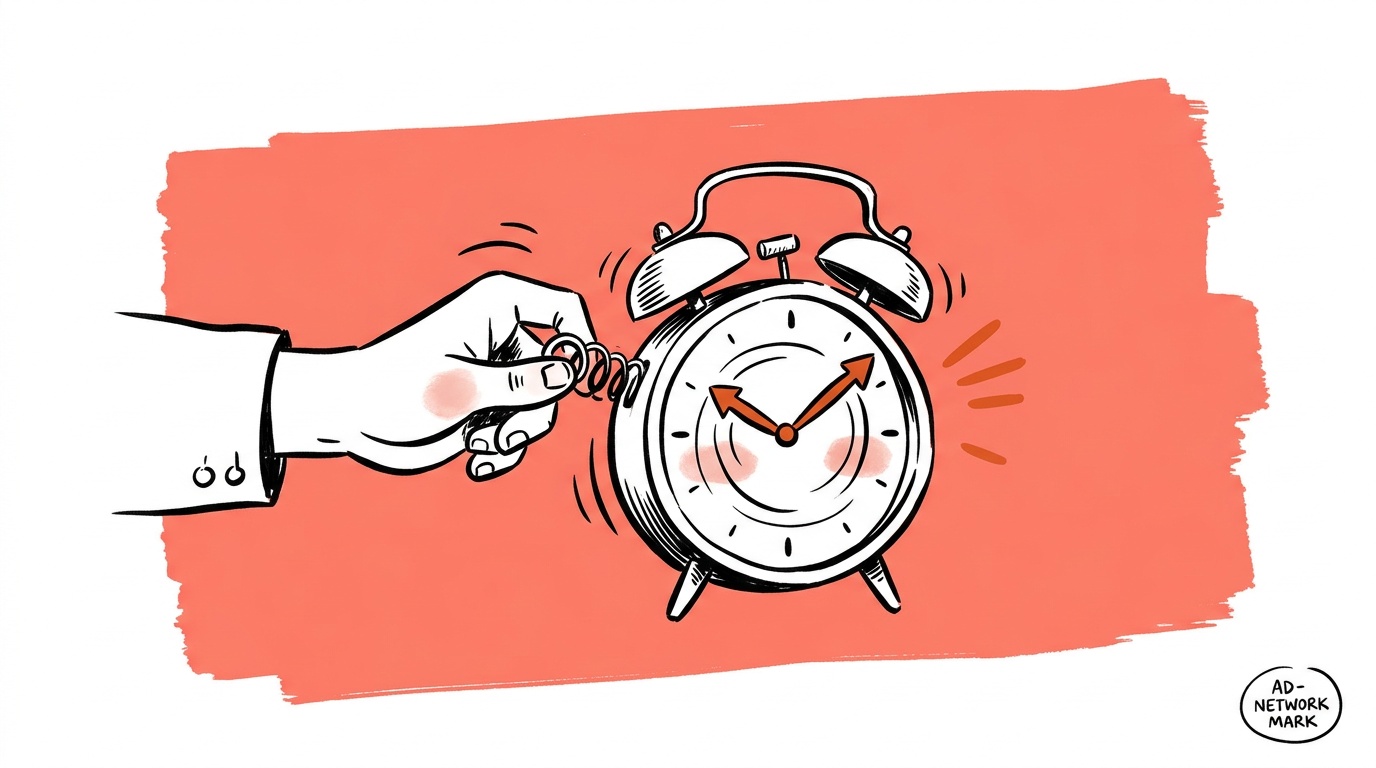


If removing your weekend hours would cause the business to slip backward rather than just grow more slowly, you're not building equity — you're plugging a structural hole. That distinction is more important than how many hours you logged.
The question isn't whether hard work matters — it obviously does. The question is whether indiscriminate hard work compounds into something, or whether it just becomes the water you swim in: invisible, total, and quietly expensive.
TL;DR — What this post answers
- Weekend work feels productive but often signals a systems problem, not a commitment advantage
- Sustained output without recovery degrades decision quality faster than most founders notice
- The founders who scale past their own effort treat time like a capital allocation problem
- Motivation fluctuates for everyone — process is what runs when the feeling isn't there
- The real "work-life balance myth" isn't that balance is impossible; it's that imbalance is automatically an asset
The hustle gospel has a conversion problem
The hustle narrative has real examples behind it. Early-stage companies often do require a sprint. There are real windows — a product launch, a funding round, a competitive threat — where long weeks are the right call.
The trap is when the sprint never ends. When the weekend grind stops being a tactical choice and becomes the default state. When you're not working hard toward something specific; you're working hard as proof of seriousness.
This is the mode where effort stops compounding and starts merely sustaining.
If removing your weekend hours would cause the business to slip backward rather than just grow more slowly, that's a sign your hours are plugging a structural hole — not building equity. Plug the hole or accept the cost, but don't mistake it for compounding work.
The honest version of most founder origin stories is more nuanced than "I worked every weekend." It tends to include: I worked selectively on high-leverage things, I stopped doing low-value tasks at some point, and I had enough recovery to think clearly when it counted.
Decision quality degrades before you notice it
There's a reason surgeons have mandated rest periods and pilots have hard hour limits. Cognitive performance under sustained fatigue doesn't feel impaired — it just is impaired. You still feel like yourself. You're still answering emails, still running the meeting, still signing off on the ad budget. You just do all of it slightly worse.
For founders running paid ads, this shows up in specific, expensive ways:
- You approve creative that you'd flag as weak on a rested morning
- You let a campaign run too long without interrogating the numbers because you're too tired to fight the sunk-cost feeling
- You make targeting changes reactively instead of systematically, because reactive decisions require less working memory
None of these look like burnout. They look like normal founder behavior. That's what makes them expensive.
The research on sleep deprivation and executive function is not ambiguous. The American Academy of Sleep Medicine has documented that adults operating on insufficient sleep show measurable declines in judgment, risk assessment, and impulse control — the exact faculties you need to run a high-stakes ad account or make a good hire.
A simple diagnostic
Before you open the laptop on Saturday, run this quick check on your last four weekends:
- List every task you actually did
- Mark each one: did it change something structural, or did it produce one-time output?
- Count the ratio
If most items land in the one-time column, your weekend hours aren't compounding. If more than one or two items were genuinely irreversible — a template written, a process documented, a system fixed — the time may have been worth it. If the list is mostly "checked numbers, answered messages, caught up," you have a scheduling problem to fix, not more hours to add.
Motivation is not a prerequisite — and pretending otherwise is costly
One of the more honest things a founder can sit with: motivation fluctuates. For everyone. Including people who've built businesses you'd recognize.
A useful distinction separates motivation — a feeling, inherently variable — from process, which is designed to run even when the feeling isn't there. Sustained operators rely on the latter. This isn't a discipline hack; it's just accurate modeling of how human cognition works over months and years.
This matters because a lot of weekend work is actually driven by the absence of a process. When you don't have a clear system for Monday through Friday, the weekend becomes the overflow bin. You're not working because the work is highest-leverage on Saturday; you're working because you didn't finish what needed finishing during the week.
The founders who break this pattern aren't less driven. They've built systems that contain their effort rather than let it spill everywhere.

Live today.
The full campaign — copy, images, targeting — generated for your site and deployed paused for your approval.
What "high-leverage" actually looks like in practice
High-leverage work has a specific shape. It changes something structural — a process, a relationship, a system — so that future output is easier or higher-quality without proportional extra effort.
Low-leverage work is the opposite: it produces output once, requires roughly the same effort every time, and doesn't compound.
For founders in the ad management world:
High-leverage weekend hours might look like:
- Writing a creative brief template your team will use every week
- Auditing your attribution setup so every decision next quarter is based on better data
- Recording a walkthrough of your campaign review process so someone else can run it
Low-leverage weekend hours often look like:
- Reviewing individual ad performance without changing anything
- Answering support tickets someone else could handle
- Refreshing the dashboard to see if last night's numbers moved
The second list feels productive. It's responsive, visible, and gives you the sensation of control. But it's not building anything.
The attention residue problem
Cal Newport's work on deep work and attention residue applies directly here: switching between work and genuine rest leaves a cognitive residue. When you work on weekends without real mental separation, you're not getting rest between Monday and the next Monday. You're getting a slightly slower version of work.
The result is a week that feels like one long stretched session, with diminishing returns across the whole thing.
The capital allocation frame
Treat your time exactly like your ad budget.
You wouldn't run ads with no frequency cap because "more impressions is better." You wouldn't let a campaign run indefinitely without evaluating return. You wouldn't refuse to pause a losing creative because you spent a long time making it.
But founders do all of these things with their own hours routinely.
The question for any block of weekend work should be the same question you'd ask about a line item in your media plan: what is this actually producing, and is that the best use of this resource right now?
If you can't answer that clearly, you're not working strategically — you're working on habit.
The research on cognitive depletion supports this frame: decision-making capacity is a finite resource within any given period. Spending it on low-stakes weekend tasks means less of it available for high-stakes decisions Monday morning.
Track your last four weekends of work. Not vaguely — actually list what you did. Then mark each item: did it change something structural, or did it produce one-time output? If most items are in the second column, the weekend hours aren't compounding.
When the sprint is real — and how to tell
None of this means founders should enforce hard hour limits from day one. There are genuine sprints. The question is whether you can recognize them clearly.
A real sprint has:
- A defined end point (launch date, funding close, a specific milestone)
- A clear reason why this specific period requires more hours
- A plan for what recovery looks like afterward
Indefinite hustle has none of these. It's just the default.
The founders who use intensity well describe those periods as intentional, not ambient. They worked hard during the sprint and then, critically, they stopped and rebuilt capacity. That capacity — cognitive, creative, relational — is what made the next sprint productive rather than merely continued.
The myth in the myth
The real "work-life balance myth" isn't that balance is possible for founders. For many, it genuinely isn't during certain phases, and pretending otherwise is its own kind of self-deception.
The real myth is on the other side: that imbalance is automatically productive. That the founder grinding on Sunday is, by definition, outcompeting the one who went for a walk.
The evidence — across sleep research, cognitive science, and the honest retrospectives of people who've actually built things — points the other way. Sustained overwork degrades the quality of the work itself. The walk might be the better investment.
What compounds isn't hours. It's good decisions made consistently over time. And good decisions require a brain that's been allowed to recover.
FAQ
Is work-life balance actually achievable for founders? For most founders, especially early-stage, strict balance isn't realistic or necessary. The more useful frame is intentional intensity: working hard in defined sprints, with real recovery built in, rather than treating all hours as equally available indefinitely.
Does working weekends actually help founders succeed faster? Sometimes, in specific situations — a product launch, a critical deadline, a genuine competitive window. But working weekends as a default habit tends to erode decision quality over time, which makes the work less effective even if the hours stay high.
What's the difference between productive hustle and the "weekend work trap"? Productive hustle is directed at a specific goal, has an end point, and changes something structural. The trap is when weekend work becomes habitual overflow — catching up, checking in, staying busy — without compounding into anything.
How do I know if my extra hours are actually paying off? Audit what the hours produced. List every task from your last four weekends and mark each one: did it change a system or process, or did it produce one-time output? If most items are in the second column, the hours aren't compounding. If removing those hours would cause the business to slide backward rather than just grow more slowly, you have a structural hole to fix — not a commitment deficit to close.
Can you build a successful company without constant motivation? Yes. The founders who sustain output over years tend to rely on process, not motivation. Motivation is a feeling; it fluctuates for everyone. Process runs whether the feeling is there or not. The goal is to build systems solid enough that low-motivation days are just normal days, not crisis points.
What does high-leverage founder work actually look like? It changes something structural so that future work is easier or better without proportional extra effort — writing a template, building a process, training someone, fixing a system. Low-leverage work produces output once and requires the same effort next time.
Is the "hustle culture" advice founders get actually bad? Not exactly bad — more often it's incomplete. The advice to work hard is correct but stripped of context. The missing context is: hard work on what, during which periods, toward which specific outcomes. Without that, effort becomes ambient rather than directional, and ambient effort doesn't compound.
Live today.
The full campaign — copy, images, targeting — generated for your site and deployed paused for your approval.

We build AdControlCenter — AI-powered ad management for small businesses, online stores, SaaS companies and service providers. We write what we'd want to read: real numbers, no fluff, the things we wish we'd known when we started.
More from the team →