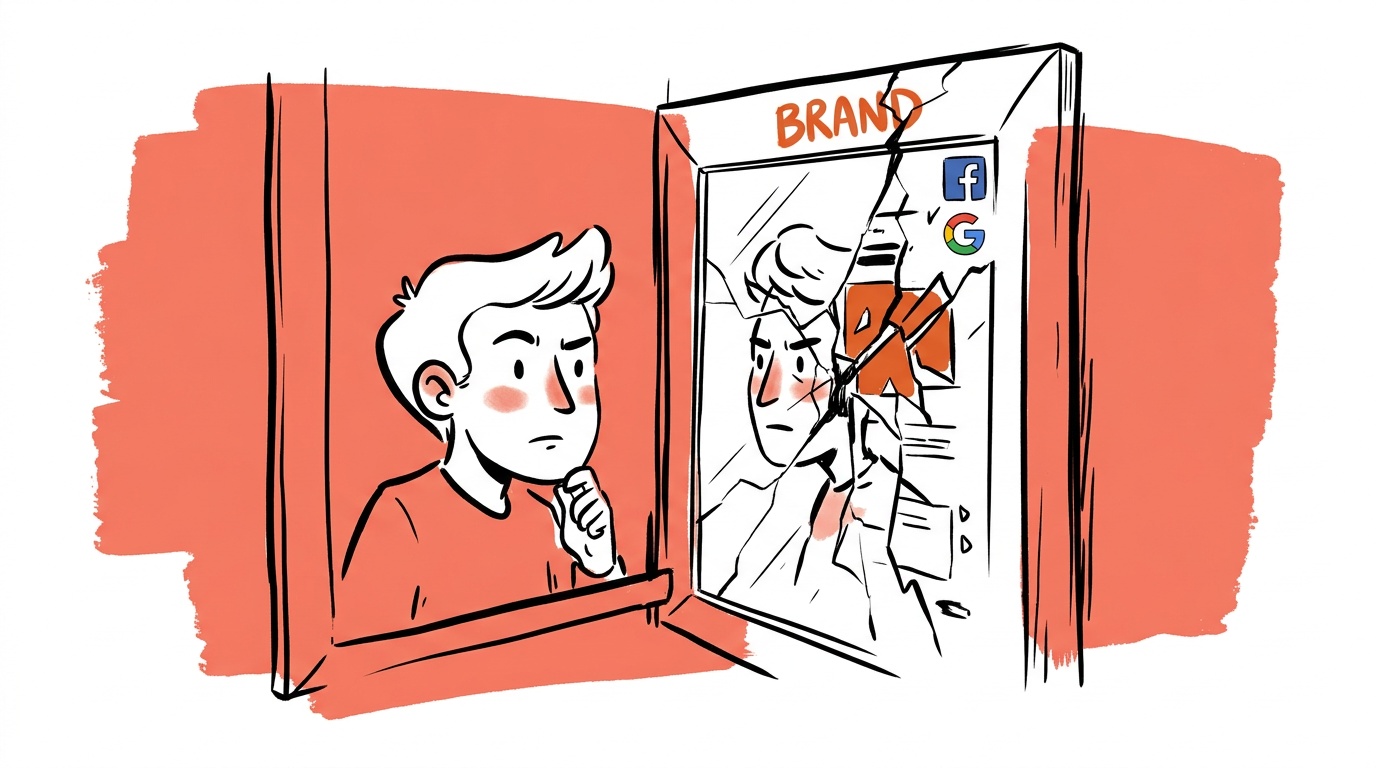
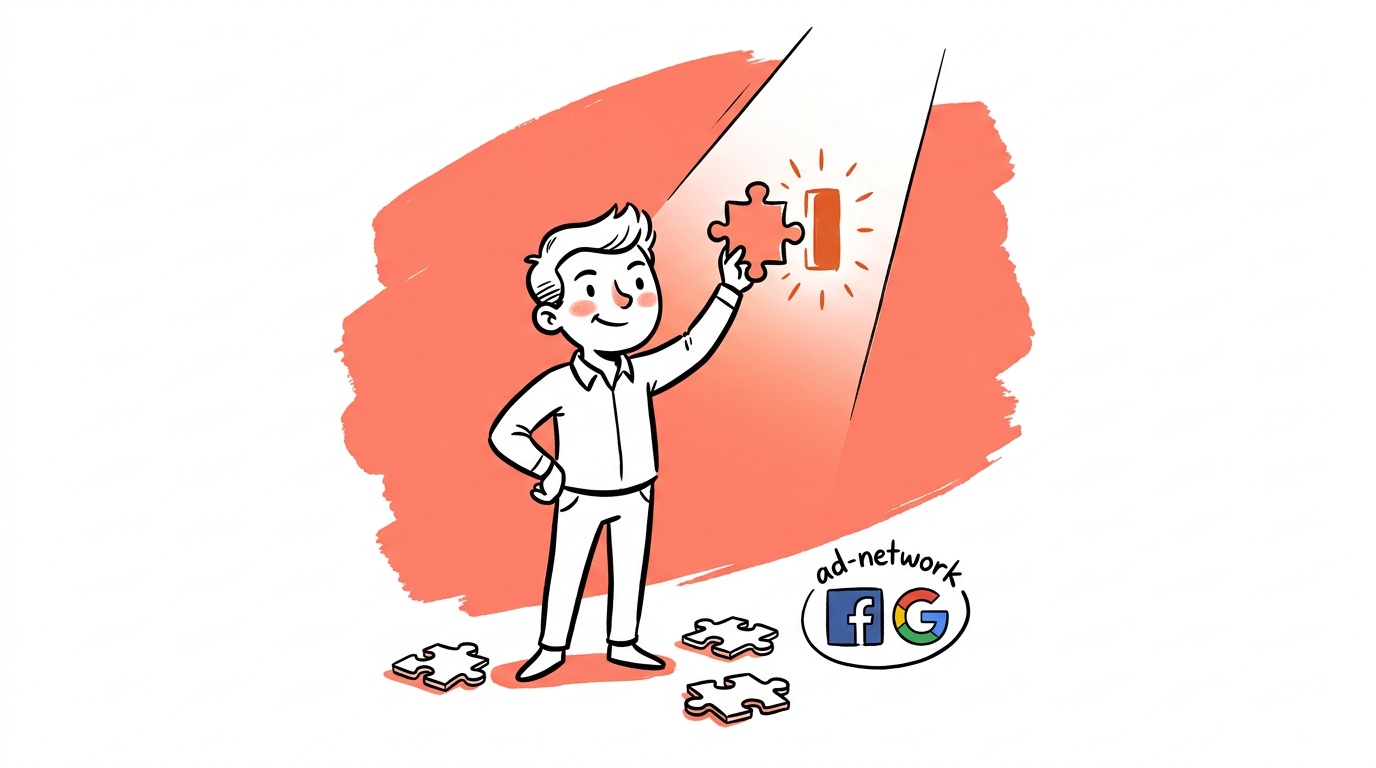
Most founders who come to us convinced their ads are broken have the same problem: the click-through rate is fine, the CPM is reasonable, the creative is doing its job. What's broken is what happens in the prospect's head before they ever see the ad — the brand layer that either makes people lean in or scroll past without registering the message at all.
This is one of the most expensive misdiagnoses in paid media. You pause a campaign that was working, swap the creative, change the audience, cut the budget, and wonder why nothing moves. Meanwhile the actual problem — weak positioning, no category awareness, zero social proof — sits untouched. You've been fixing the messenger while ignoring the message.
TL;DR — Brand vs Ad Performance
- If your CTR is healthy but your conversion rate is low, the ad is doing its job; the brand isn't.
- Ads can generate clicks and awareness but cannot manufacture trust — trust has to already exist at the brand level.
- The fastest diagnostic: compare returning-visitor conversion rate to new-visitor conversion rate. A large gap is a brand signal, not an ad signal.
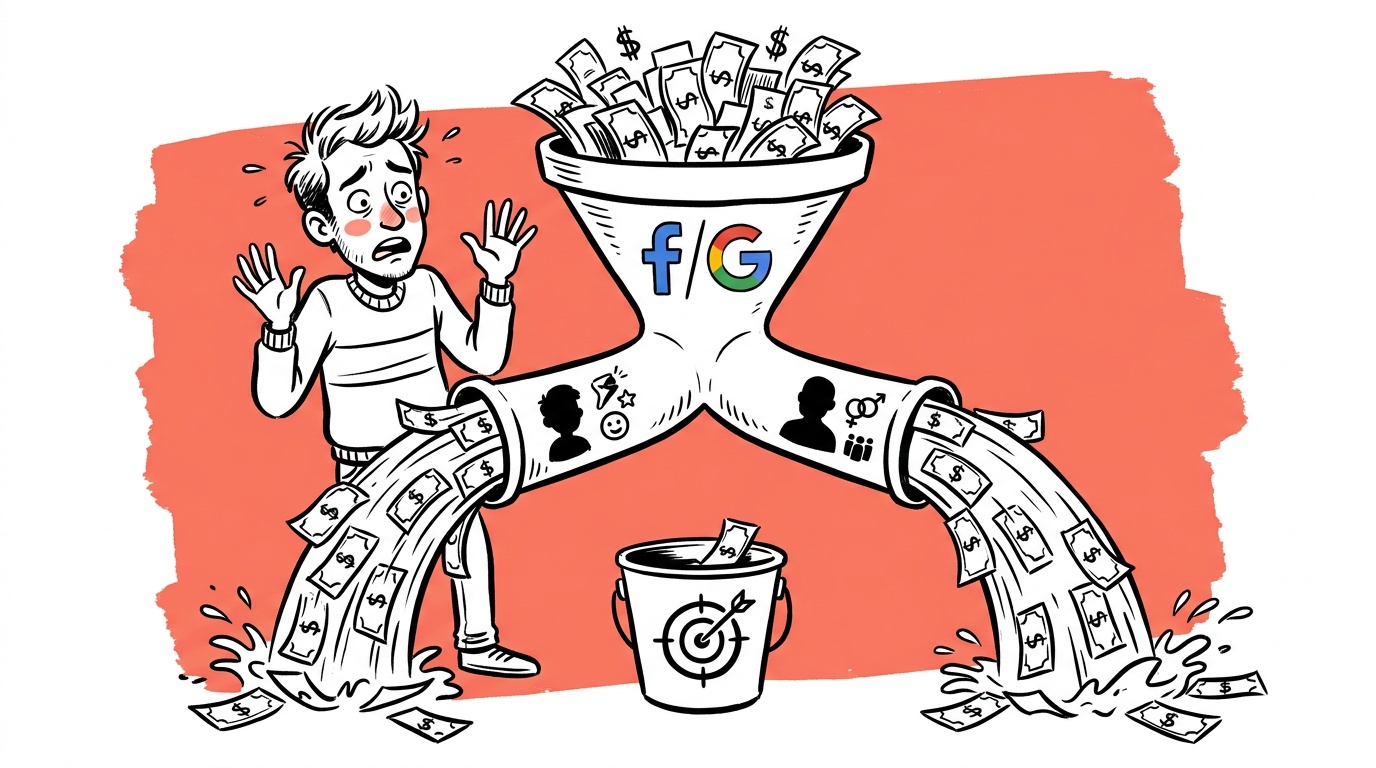
- Scaling ad spend into a brand problem accelerates losses, not growth.
- Fix the brand layer first (positioning, proof, category clarity), then return to ad optimization.
The Symptom Everyone Misreads
Here is what a brand problem looks like in your ad dashboard: decent impressions, acceptable CTR, landing page visits that bounce fast, conversion rate well below your category benchmark, and ROAS that seems to decline the more you spend. Before you blame the brand, rule out the funnel mechanics — high CTR, zero sales walks through the layers.
Here is what most founders conclude from that data: the creative is wrong, the audience is off, the bidding strategy needs work.
Both diagnoses point at the ad. Neither points at the brand.
The tell is in what happens after the click. Ads are responsible for the click. The brand is responsible for everything that happens next — whether someone reads the page, trusts the price, believes the testimonials, and buys. When the handoff from ad to brand fails consistently, you don't have an ad problem.
Most paid media audits stop at click cost. The more expensive failure happens post-click, when a prospect lands on a page that doesn't confirm what the ad implied — or that simply doesn't feel credible enough to spend money on.
What "Brand" Actually Means in a Performance Context
Brand gets treated as a soft concept — logos, colors, vibes. In a performance context it means something much harder: does the person who just saw your ad have enough context, familiarity, and trust to convert at a reasonable cost?
That breaks into three measurable sub-problems:
Awareness depth. Has your target audience seen you enough times, in enough places, that the ad feels like a reminder rather than a cold introduction? A cold introduction is expensive. A warm reminder is cheap. Many performance campaigns are cold introductions pretending to be warm reminders.
Positioning clarity. When someone lands on your page after clicking, can they answer "what is this, who is it for, and why is it better" in under ten seconds? If not, your brand hasn't done the pre-work. The ad cannot compensate for that in a thirty-second visit.
Proof density. Reviews, case studies, named customers, press mentions, follower counts — anything that signals "other people have bet on this and it worked." Ads can point at proof but they cannot manufacture it. A prospect who has never heard of you and sees no proof on your site will not convert reliably, no matter how good your ad copy is.
The Diagnostic You Can Run Today
You don't need a brand tracking study to tell the difference between an ad problem and a brand problem. You need a few numbers you almost certainly already have.
The decision tree
Work through these four checks in order. The first one that breaks tells you where to focus.
1. Compare new-visitor CVR to returning-visitor CVR. Pull this in GA4. If returning visitors convert at a dramatically higher rate — which they almost always do — the gap tells you how much lift brand familiarity is worth. A wide gap means new visitors are arriving but not trusting. That's a brand problem.
If both groups convert poorly, you likely have a product or offer problem that sits upstream of both brand and ads.
2. Map where the drop-off happens post-click. If people land on the page and leave in under fifteen seconds, the page isn't matching expectations set by the ad — that's an ad problem (usually a voice or promise mismatch; run the messaging-consistency audit). If they stay, read, browse, maybe start a checkout, and still don't buy — that's a trust and proof problem. The ad worked. The brand didn't close.
3. Check branded search volume over time. If people who already know your brand are converting well but acquisition campaigns are bleeding money, your ads are reaching people who need more convincing than a single ad can provide. Branded search growing slowly while you pour money into cold prospecting is a classic brand-weak pattern — not a targeting failure.
4. Ask your best customers how they found you. Almost every high-trust purchase involves multiple touches: "I saw your ad, then looked you up, saw some reviews, saw you mentioned somewhere, then came back and bought." If your attribution shows single-touch ad conversions but your customers describe a longer journey, your ads are one step in a brand-building process you haven't fully built yet.

Live today.
The full campaign — copy, images, targeting — generated for your site and deployed paused for your approval.
Why Ads Can't Do the Brand's Job
Ads are a pointing mechanism. They point attention. They frame a claim. They create a reason to investigate. What they cannot do is compress months of brand exposure into a thirty-second impression.
This is the core of what gets misunderstood. Founders treat ads as the full sales mechanism — expecting them to generate the click, build the trust, explain the product, overcome objections, and close the sale, all in one touch. That expectation is reasonable for a product with a low price, high category familiarity, and abundant social proof. It breaks down completely for anything that requires real trust.
The channels that build that trust — earned media, content, organic social, word of mouth, community presence — are slow, hard to attribute, and don't show up in your ad platform's dashboard. So founders under-invest in them and over-invest in ads, then wonder why the ads stop working. The fix isn't in the campaign settings.
What to Actually Fix (And in What Order)
If the diagnostic above points at brand, here is the repair sequence — in priority order, not effort order.
First: Get your positioning to one sentence. Who it's for, what it does, and what makes it different — in one sentence a stranger understands in five seconds. If you can't write it, your landing page can't communicate it, and your ads definitely can't.
Second: Collect and surface real proof. Not vague testimonials. Named customers, specific outcomes, verifiable numbers. "We helped [real company] do [real thing] in [real timeframe]." Run customer interviews. Screenshot real messages. If you don't have enough proof yet, that's a product-market fit signal worth taking seriously before you spend more on ads.
Third: Build touch-point density before you scale spend. Get mentioned in places your target audience already trusts. Write content that ranks for queries they're asking (scattered content doesn't compound — see why random content kills growth). Get on podcasts they listen to. Do things that don't directly attribute to ad ROAS but that make your ads dramatically cheaper to convert — because when prospects arrive from an ad, they've already encountered you.
Fourth: Then return to ad optimization. Once the brand layer is working, your ad optimization work actually compounds. You'll see ROAS improve not because you found a better headline but because the same headline is landing on a warmer audience.
The Traffic-Down, Revenue-Up Clue
There's a related signal worth naming explicitly: sometimes traffic goes down but revenue holds or grows. This is confusing if you think more traffic is always better. It's clarifying if you understand brand.
What's usually happening is that low-quality, low-trust traffic from broad prospecting is being cut — intentionally or by algorithm — and what remains is higher-intent, higher-trust traffic: people who have enough brand exposure to convert. Revenue holds because the quality of the visitor improved even as the quantity dropped.
This is brand equity showing up in your analytics. It's a good sign. It also means that previous periods of strong traffic but weak conversion were probably a brand problem in disguise — you were buying visitors who didn't trust you enough to buy.
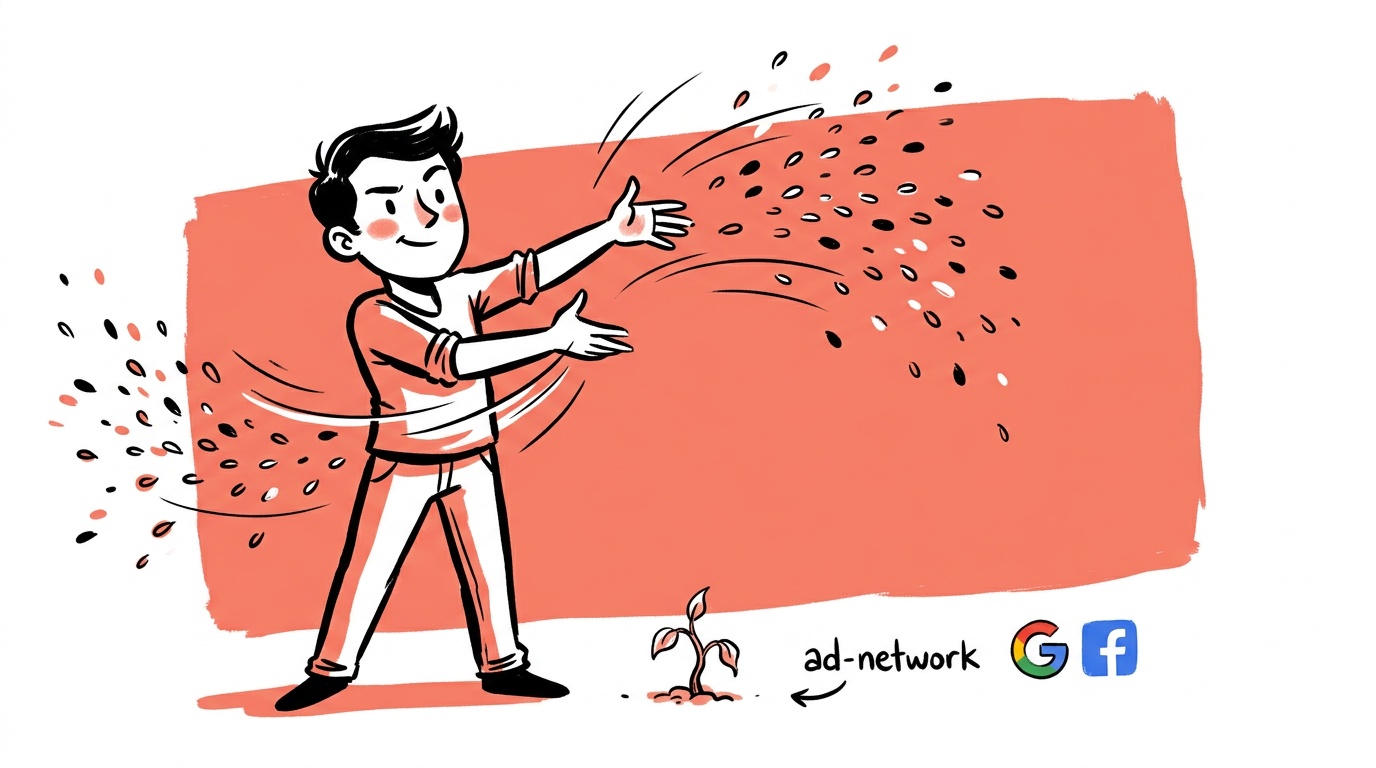
Chasing volume when your brand can't convert it is expensive and demoralizing. Building brand to make your existing traffic more valuable is slower but compounds. Understanding which mode you're in is the whole game.
FAQ
What is the difference between brand performance and ad performance? Ad performance measures how well your campaigns generate impressions, clicks, and initial engagement. Brand performance measures how well your business generates trust, recognition, and repeat intent. Ads can be healthy while brand is weak — high CTR paired with low conversion rate is the classic symptom.
How do I know if my low ROAS is a brand problem or an ad problem? Run a returning-visitor vs new-visitor conversion rate comparison. If returning visitors convert at a far higher rate, new visitors aren't trusting you enough — that's brand. If both groups convert poorly, you may have a product or offer problem. If new visitors convert well but ROAS is still bad, your cost-per-click is the issue — that's an ad targeting or bidding problem.
Can ads build brand on their own? Ads can contribute to brand awareness if run with enough frequency to a consistent audience over time. But direct-response ads optimized for conversion rarely build the kind of trust that makes cold audiences buy. Earned media, community presence, and genuine customer proof tend to build trust faster than paid impressions alone.
Why does scaling ad spend make a brand problem worse? Scaling sends more cold visitors through a funnel that already isn't converting them. You pay more for the same low-quality outcome. The unit economics get worse as you push into broader, colder audiences who need even more trust-building before they'll buy.
What should I fix first — the ads or the brand? Fix the brand layer first. Nail your positioning, surface real proof, and build some touch-point density through organic or earned channels. Then return to ad optimization. Ads optimized on top of a working brand compound. Ads optimized on top of a weak brand erode budget.
How long does it take to fix a brand problem? Faster than most people expect for positioning (days to weeks) and slower than most people want for proof and awareness (months). The positioning fix is cheap and immediate. The proof and awareness work takes time but pays back in permanently lower customer acquisition costs.
What metrics should I track to monitor brand health without a formal brand study? Watch branded search volume, direct traffic, returning-visitor rate, net promoter score if you're collecting it, and the ratio of referral or word-of-mouth revenue to paid acquisition revenue. Together they show whether people who already know you are growing as a share of your audience — which is the real measure of brand strength.
The honest question worth sitting with: if you paused all your paid ads tomorrow, would people who need what you sell still find you and trust you enough to buy? If the answer is no, that's where to start — not in the campaign manager.
Live today.
The full campaign — copy, images, targeting — generated for your site and deployed paused for your approval.
We build AdControlCenter — AI-powered ad management for small businesses, online stores, SaaS companies and service providers. We write what we'd want to read: real numbers, no fluff, the things we wish we'd known when we started.
More from the team →