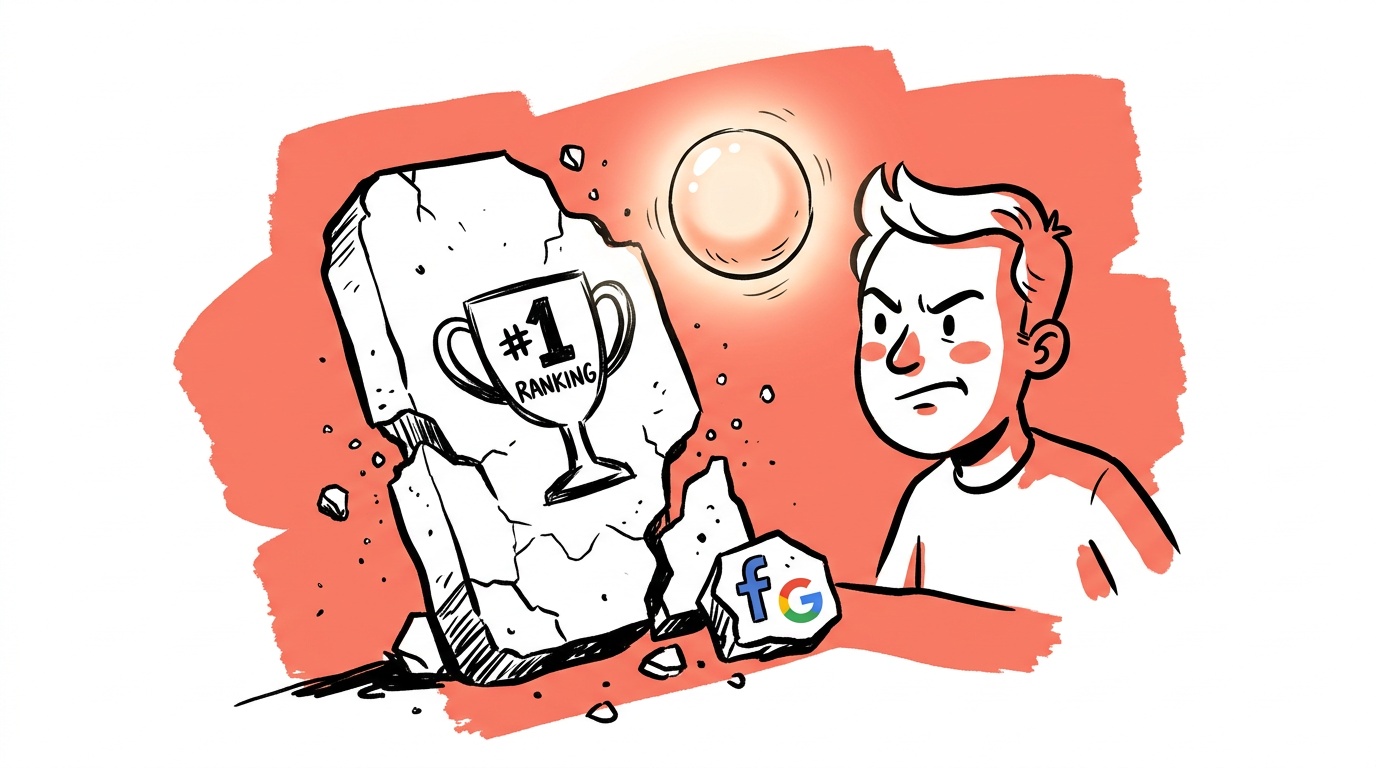
Most founders still report keyword rankings to themselves or their boards as evidence that content is working. That habit is now actively misleading — not just incomplete. When AI-powered answer engines surface a single synthesized response instead of ten blue links, being ranked fifth for a keyword is worth considerably less than being the source that the model quotes. The game changed, and most SEO playbooks didn't get the memo.
That's the uncomfortable reality underneath two terms you're hearing everywhere: AEO (Answer Engine Optimization) and GEO (Generative Engine Optimization). They describe a real structural shift in how discovery works — one that has direct consequences for every paid-ads-adjacent content decision you make.
TL;DR — 5 things to know before reading further
- Traditional keyword rankings are losing correlation with actual traffic and revenue as AI answer engines intercept more queries before a click happens.
- AEO is about being the source an AI cites in a direct answer. GEO is about being represented in AI-generated summaries across broader topic areas.
- Strong backlinks still matter, but stale content attached to those backlinks is increasingly penalized by AI ranking signals — authority alone no longer carries the page.
- The metric to watch is not rank position. It is whether your content appears as a cited source in AI-generated answers for your target queries.
- Founders running paid ads should care doubly: organic AI visibility shapes brand familiarity that lowers paid acquisition costs over time.
What "AI Search Replacing SEO" Actually Means
People who say "AI search is replacing SEO" are partly right and mostly imprecise. Search engines are not disappearing. Google processes billions of queries a day and will for a long time. What's changing is the output layer — the thing a user actually sees when they search.
A growing share of queries now return an AI-generated answer at the top of the page, sometimes with citations, sometimes without. Users who get a satisfying answer there often don't scroll further. For informational queries — exactly the kind that content marketers have traditionally targeted with blog posts — the click often never happens, even when your page ranks well.
The traditional SEO model assumed: rank high → get clicked → user reads → user converts. The AI search model increasingly looks like: query submitted → AI synthesizes an answer → user satisfied → no click. Your page can rank third and receive almost no traffic if the AI answer above it resolves the question completely.
This is not an edge case. It's the dominant pattern for informational queries, and that pattern is spreading into navigational and commercial ones too.
AEO vs. GEO: Not the Same Thing
The two terms get lumped together but they describe different problems.
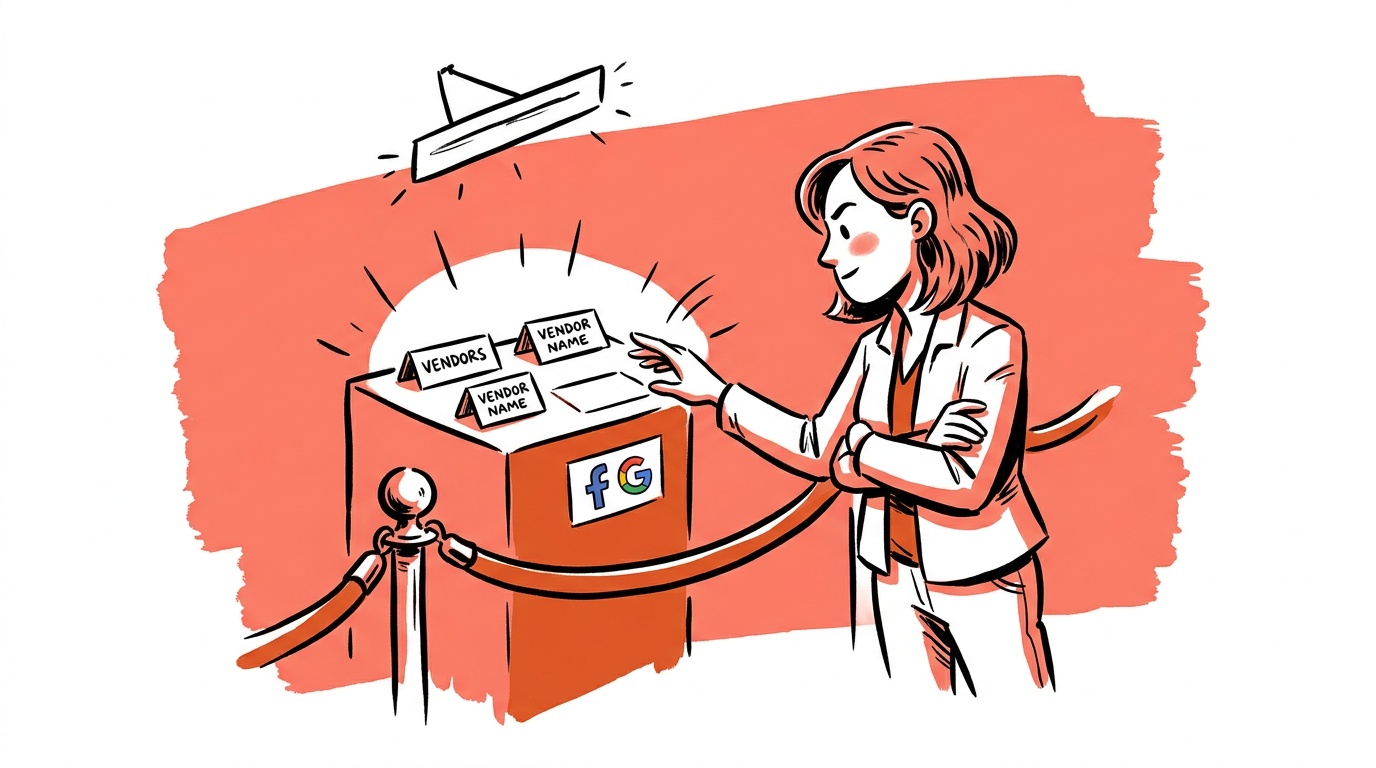
AEO — Answer Engine Optimization is the practice of structuring content so that AI systems (Google's AI Overviews, Perplexity, ChatGPT search) extract and surface your content as a direct answer to a specific question. Think: FAQ formats, clear definitional paragraphs, structured data, concise factual claims that are easy to pull into a summary. The goal is to be cited when someone asks a precise question.
GEO — Generative Engine Optimization is broader. It's about ensuring your brand, product, or perspective appears inside longer AI-generated summaries on topics you care about — even when the user didn't ask a question you'd have targeted with a keyword. A user asks ChatGPT to explain how paid social advertising attribution works. Does your name come up? That's a GEO question.
AEO is about winning specific answer slots. GEO is about being part of the model's working knowledge on your topic. You need both, and they require different content investments.
The overlap with traditional SEO is real: solid technical foundations (fast pages, clean crawlability, structured data) help all three. Our GEO checklist lists the six technical items to verify first. Original, well-sourced content helps all three. But keyword density, exact-match anchor text, and obsessive rank tracking help almost exclusively with legacy SEO — and that's where the wasted effort concentrates.
The Backlink Problem Nobody Wants to Say Out Loud
Backlinks are not dead. But the relationship between backlinks and results is more conditional than it used to be.
Here's the specific problem: many sites accumulated strong backlink profiles during years when consistently publishing any content on a topic was sufficient to rank. The content aged. It stopped reflecting current best practices, current pricing, current product realities. The backlinks remained. For a while, those backlinks kept the pages ranking despite the staleness.
AI ranking signals — both in AI Overviews and in what language models use as retrieval sources — weight freshness and factual density more heavily than traditional PageRank-style signals did. A page with fifty backlinks pointing to an article last updated three years ago is increasingly outranked by a newer, more detailed page with fewer backlinks but more current, verifiable information. The links didn't disappear; they just stopped compensating for content that no longer earns its position.
The practical consequence: if your content strategy has been "publish once, let links accumulate, leave it alone," that's now an expensive approach.
Finding Answer Gaps Before Your Competitors Do
One underused tactic: systematically identifying queries where the current AI-generated answer is weak, generic, or uncited — then writing directly to fill that gap.
Run twenty queries in Perplexity and ChatGPT that matter to your category. For each one, note:
- Is an answer generated at all, or does the model defer to links?
- Is the answer cited, and if so, who gets cited?
- Is the answer accurate and specific, or hedged and generic?
Queries where the AI answer is uncited or visibly thin are your highest-value content targets. The model wants a good source and doesn't have one yet. A well-structured, factually dense page on that exact question can move from nonexistent to cited source faster than it would climb traditional search rankings, because the competitive set is smaller and the bar for "best available answer" is lower.
This is different from keyword gap analysis. You're not looking for search volume. You're looking for answer quality gaps — places where the current AI output is weak enough that a single strong page can become the default citation.
The most valuable gaps combine three things: the query is genuinely relevant to your category, the current AI answer cites nobody (or cites sources that are outdated), and the question requires the kind of specific operational knowledge you actually have. Generic "what is X" questions are already well-covered. Specific "how does X work when Y is true" questions often aren't.

Live today.
The full campaign — copy, images, targeting — generated for your site and deployed paused for your approval.
The Metrics Founders Should Actually Track
Keyword rankings are not the right number to report. They measure position in a results page — a proxy for visibility that was always imperfect and is now significantly less correlated with outcomes than it was five years ago.
Better metrics for the current environment:
Cited-source tracking. Run your target queries in Perplexity, ChatGPT with search, and Google AI Overviews. Does your content appear as a cited source? This is currently a manual check, but it's directionally more meaningful than a rank position. Build a simple weekly log: query, platform, whether you were cited, who was cited instead.
Organic traffic by intent cluster, not by keyword. Group your traffic by the underlying user intent, not the individual keyword. This smooths out the volatility introduced by AI answer interception on specific terms and shows you whether you're winning topic areas overall.
Branded search volume. When AI answers mention your brand, some users search for you directly afterward. Rising branded search volume is a downstream signal that AI visibility is working even when organic clicks are flat.
Revenue-attributed sessions from organic. In a world where AI intercepts informational queries, the organic clicks that do happen are often higher-intent. Conversion rates on organic may actually improve even as raw traffic plateaus. Track both volume and rate. This is the AI-traffic-vs-revenue gap in practice: fewer visits, better economics per visit.
Stopping the keyword rank reports doesn't mean stopping measurement. It means measuring things closer to money.
What Good AEO/GEO Content Actually Looks Like
Structure for extraction, not for reading flow
AI systems pull answers by finding the most directly responsive passage to a query. That means your content needs answer-first paragraphs — the direct response to the likely query in the first sentence or two of each section, followed by supporting context. This is the opposite of how most long-form content is written, where context comes before the point.
For AEO specifically:
- Lead every section with the most important claim or answer, not with a setup sentence.
- Use exact question phrasing in headers where natural. AI systems pattern-match questions in headers when generating direct answers.
- Include a genuine FAQ section on every substantive page. These get extracted at high rates.
- Define terms explicitly. "AEO (Answer Engine Optimization) is the practice of…" — that sentence structure is highly extractable.
For GEO:
- Take genuine positions that differ from consensus. AI summaries that draw on multiple sources tend to include sources that add perspective, not sources that restate what everyone else already said.
- Cite primary sources directly and link to them. Models and retrieval systems weight content that demonstrates sourcing rigor.
- Publish original observations, even small ones. "When we tested X, we found Y" is more GEO-valuable than "experts say X."
We restructured our own post intros to lead with the most surprising or specific claim rather than context-setting paragraphs. Not because it always reads better, but because the first substantive paragraph is disproportionately likely to be extracted by AI answer systems. The content shape follows the extraction logic, not the editorial preference.
How This Intersects With Paid Ads
If you're a founder running paid acquisition, AI search visibility is not separate from your ad strategy — it affects it. Google is also putting ads inside AI Mode itself — what early AI Mode testing shows is worth reading alongside this.
Brand familiarity is one of the strongest predictors of paid ad conversion rates. When someone sees your ad, prior exposure to your brand through any channel lowers friction. AI-generated answers that mention or cite your brand create that exposure without a click, without an impression you paid for, without any direct touchpoint you can track. The effect is real even though the attribution is invisible.
Founders who build AI-visible content tend to see improved efficiency on branded paid campaigns over time, because organic AI mentions warm audiences before those audiences ever see a paid ad. The clearest signal is directional: watch branded search volume and branded ad conversion rates over a twelve-to-eighteen month window. If AI visibility is working, both should trend up even in periods when paid spend is flat.
The inverse is also true: if competitors are being cited by AI systems on queries relevant to your category and you're not, they're getting the brand-familiarity benefit while you pay full price for cold-audience conversion on every paid impression.
This isn't an argument to abandon paid ads for content. It's an argument to treat content quality and AI visibility as part of the same acquisition system.
What to Do Monday Morning
-
Run your ten most important queries in Perplexity and ChatGPT search this week. Note who gets cited. If it isn't you, read those pages carefully. That's what AI-visible content looks like in your category right now.
-
Map answer gaps. For queries where the AI output is uncited or visibly thin, those are your fastest content opportunities. Write one page specifically targeting the clearest gap you find.
-
Audit your top five highest-traffic organic pages. When were they last substantially updated? Do they have explicit Q&A sections? Do they lead with the direct answer or with context-setting prose? Update one using answer-first structure and run the citation check again in four to six weeks.
-
Stop reporting keyword rank as a primary metric. Replace it with cited-source checks and organic conversion rate. Do this before you need to explain a traffic dip, not after.
-
Take a position in at least one piece of content per month. Not a hedged, "on one hand / on the other hand" piece. A specific claim based on your own observation or data. GEO favors distinctive sources over sources that restate consensus.
-
Link to primary sources. Every factual claim that comes from a study, a platform, or a public document should link out. This is good epistemic practice and a signal that retrieval systems weight positively.
The version of SEO most founders learned — find keywords, write content targeting those keywords, build links, watch rankings — is genuinely broken as a complete strategy. The underlying goal hasn't changed: create content that surfaces when someone needs what you offer. The mechanism has changed substantially. The faster you adapt the measurement and content approach, the less expensive the transition will be.
FAQ
Is AI search actually replacing traditional SEO? Not replacing — restructuring. Search engines still exist and still send traffic. What's changed is that a growing share of queries, especially informational ones, are resolved by AI-generated answers before a user clicks anything. The pages that get cited in those answers receive brand visibility even without a click. Pages that rank well in traditional results but don't get cited are increasingly invisible in practice.
What is AEO and how is it different from regular SEO? AEO stands for Answer Engine Optimization. It's the practice of structuring content so AI answer engines (Google's AI Overviews, Perplexity, ChatGPT) extract and cite it in direct answers to user questions. Regular SEO optimizes for rank position in a list of links. AEO optimizes for selection as the quoted source in a single synthesized answer. Different target, different content structure, significant overlap in technical foundations.
What is GEO in search? GEO stands for Generative Engine Optimization. It's about ensuring your brand, content, or perspective is represented in AI-generated summaries across a topic area — not just for specific questions. If a user asks an AI to explain a category you operate in and your name never comes up, that's a GEO gap. GEO favors content that takes distinctive positions, cites primary sources, and contributes original observations rather than summarizing existing consensus.
Do backlinks still matter for SEO in 2025 and 2026? Yes, but with an important condition: they matter most when the content they point to is current and factually dense. Backlinks pointing to stale or outdated content are increasingly ineffective as AI ranking signals weight content freshness and specificity more heavily than traditional link-counting did. Audit your highest-linked pages for content quality before assuming the links are still doing work.
What metrics should replace keyword rankings? At minimum: whether your content is cited as a source in AI-generated answers for target queries, organic traffic grouped by intent cluster rather than individual keyword, branded search volume trends, and revenue attributed to organic sessions. Keyword rank is a proxy that's become less reliable as AI answer layers intercept clicks higher up the funnel.
How does AI search visibility affect paid advertising performance? Indirectly but meaningfully. Brand familiarity built through AI citations lowers conversion friction when those users later encounter paid ads. The attribution is invisible in standard dashboards but observable in branded search volume and branded ad conversion rates over a twelve-to-eighteen month window. Competitors being cited in your category are getting that brand-warming for free while you pay for cold-audience conversion.
How do I know if my content is being cited by AI search engines? Run your most important queries manually in Perplexity, ChatGPT with search enabled, and check Google AI Overviews for relevant searches. Note which domains are cited and log it week over week. There is no fully automated citation-tracking tool that covers all AI answer surfaces comprehensively yet. A simple weekly manual check is the most practical approach right now.
Live today.
The full campaign — copy, images, targeting — generated for your site and deployed paused for your approval.
We build AdControlCenter — AI-powered ad management for small businesses, online stores, SaaS companies and service providers. We write what we'd want to read: real numbers, no fluff, the things we wish we'd known when we started.
More from the team →