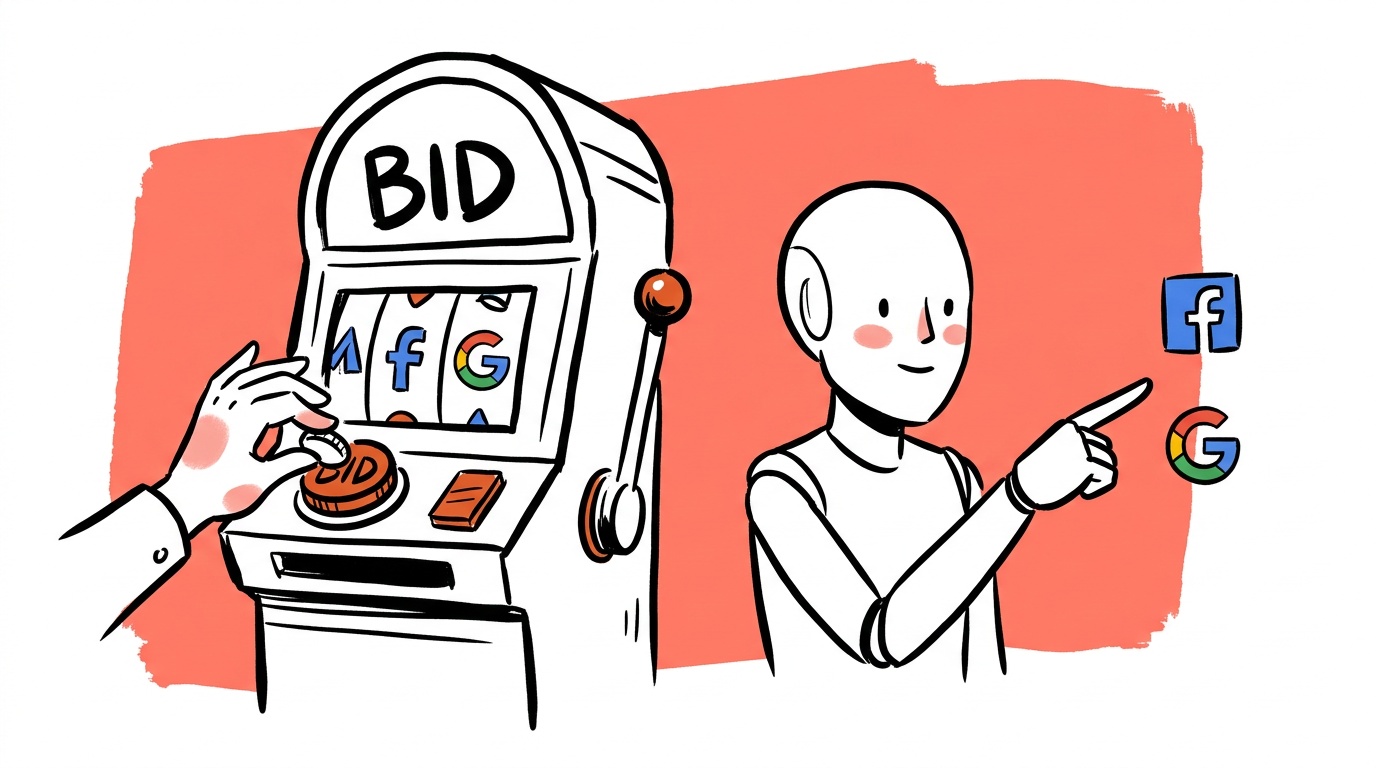
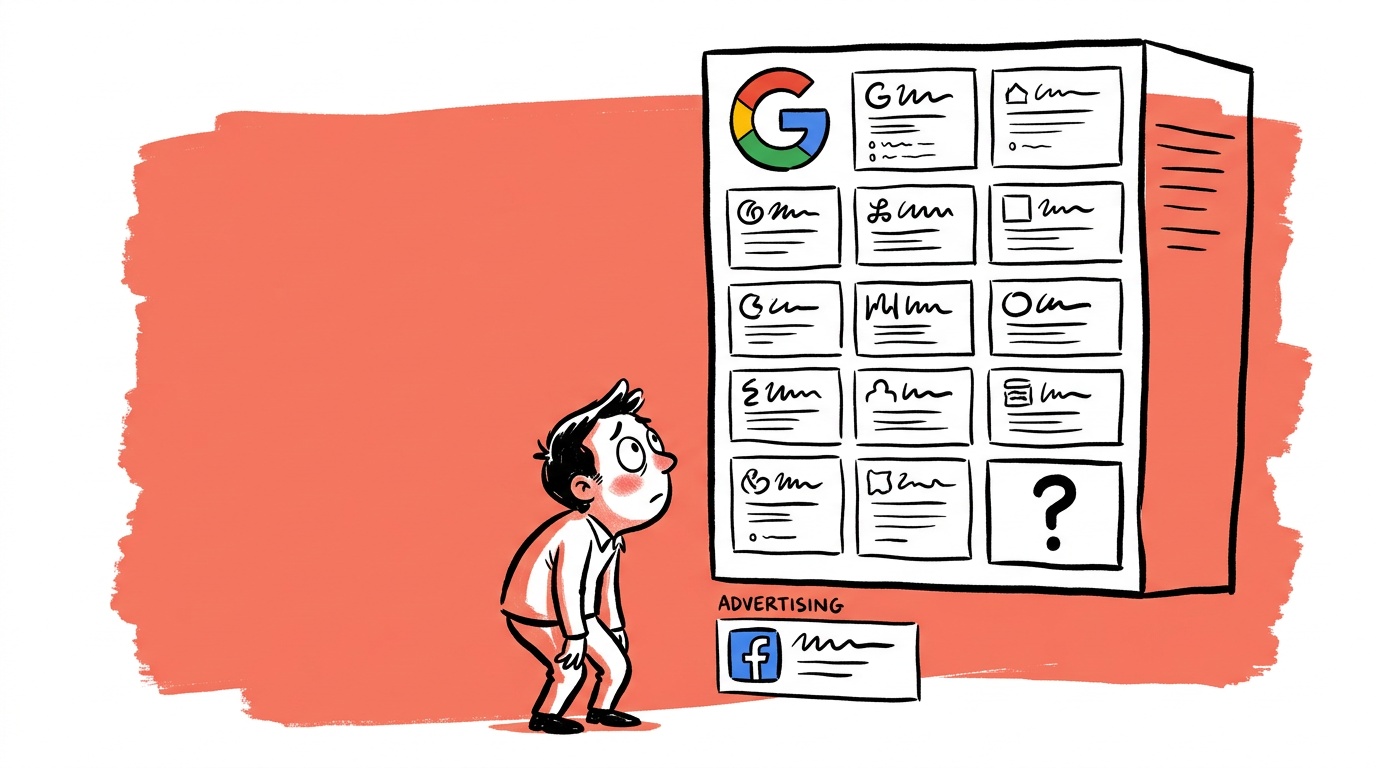
The brands that get cited by an AI search engine get the traffic. The brands that don't get cited don't exist in that moment — regardless of how much they spent on keywords.
When ChatGPT, Perplexity, or Google's AI Overviews answer a question, they pull from a small set of sources and surface those sources — sometimes with a link, sometimes with their content absorbed silently into the answer. There is no auction for that placement. There is no bid you can raise. And the query still happened, the intent was real, the purchase potential was there — but the traffic never materialized for any advertiser. This is already changing click patterns in ways that show up in search term reports, and founders running paid campaigns are starting to feel it without fully understanding what hit them.
TL;DR — AI Search and Ad Traffic
- AI-generated answers are replacing the top of the search results page for many high-intent queries, shrinking the inventory that paid ads can capture.
- Being cited by an AI engine now functions like ranking in position one — but you can't buy it directly.
- Paid position and AI citation are currently independent systems. Winning one does not guarantee the other.
- Brands that invest in authoritative, well-structured content are more likely to get cited, which creates a compounding advantage over pure paid-only strategies.
- The right response is not to abandon paid ads — it's to rethink what paid ads are defending against and what organic signals now need to support them.
What "Page One" Actually Meant for Paid Traffic
For years, the logic was simple. High-intent query → top of the SERP → ad or organic result → click → conversion. Paid search owned the top slots. SEO owned the next several. If you had budget, you could buy your way into the moment of intent.
That funnel assumed a human was reading a list of links and choosing one. AI Overviews and AI chat interfaces break that assumption. Instead of a list, the user gets a synthesized answer. Instead of ten blue links, they might get one cited source — or none at all if the AI considers the answer self-contained.
The ad unit still exists on many of these pages. But the surface area of intent that ads can intercept is shrinking. When a user's question is fully resolved by the AI answer, they don't click anything. The query still happened. The intent was real. But the traffic never materialized.
This is the structural change that makes AI citations the functional equivalent of the old page-one placement.
How Citations Work and Why You Can't Simply Buy Them
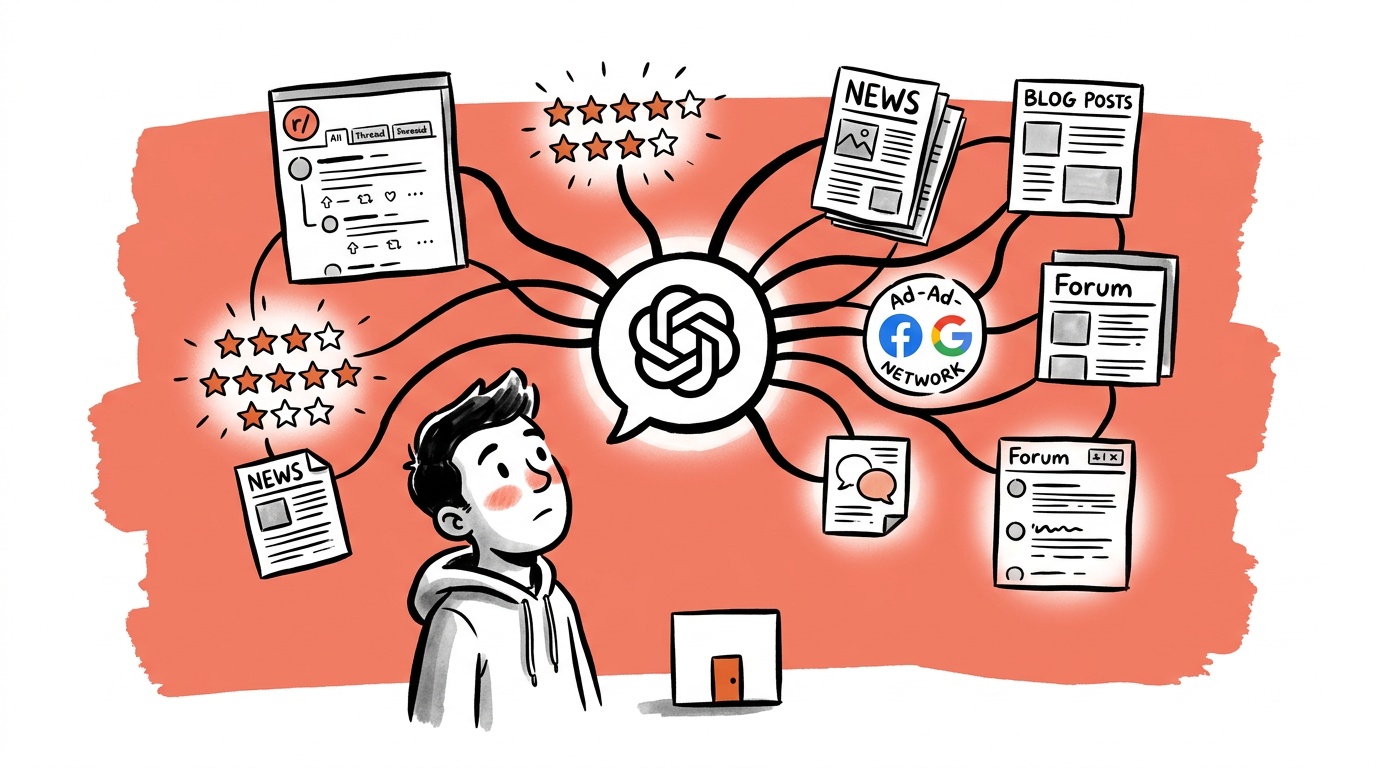
AI citation is not a paid channel. There is no auction. Perplexity, ChatGPT, and Google's AI Overviews all use some combination of retrieval-augmented generation and pre-training data to decide which sources to pull from when composing an answer. The signals they appear to weight include:
- Topical authority: Does this domain consistently publish accurate, specific content on this subject?
- Structure and clarity: Is the content written in a way that a model can parse and excerpt cleanly?
- Freshness: For time-sensitive topics, is this source recently updated?
- Existing citation patterns: Sources that are already cited frequently across the web tend to get cited more.
None of those are things you can buy through a media placement. You can invest in them — through content, through product documentation, through earned press coverage — but the timeline is slower than launching a campaign.
This creates a real problem for founders who have been running pure paid strategies. They have been trading money for immediacy, which is a rational choice when the underlying system rewards it. But if the underlying system is shifting toward rewarding earned authority, then pure paid strategies are now paying for a smaller and smaller share of available intent.
A brand can rank in position one on Google's traditional results and still be completely absent from the AI Overview for the same query. Paid position and AI citation are currently independent systems. Winning one does not guarantee the other.
How to Run an AI Citation Audit
Before adjusting strategy, you need to know where you actually stand. This takes about an hour and tells you more than most competitive analyses.
Step one: build your query list. Pull the top informational queries from your search term report — the "how does X work", "best Y for Z", "compare A and B" type questions. Add the questions your sales team hears most often. You want 10 to 20 queries that represent the research and consideration phase of your funnel.
Step two: run them across systems. Open ChatGPT, Perplexity, and Google with AI Overviews enabled. Run each query. Note who gets cited, who gets mentioned without a link, and who is absent entirely. Do this in a private window to reduce personalization effects.
Step three: score your presence. For each query, mark yourself as cited (link surfaced), mentioned (brand name appears in the answer without a link), or absent. Do the same for your two or three closest competitors. A pattern will emerge quickly.
Step four: map gaps to content. Where competitors are cited and you are absent, look at what they have published that you have not. Specific, well-structured content that directly answers the query tends to get pulled into AI answers more reliably than general marketing copy. The gap is usually a specific article or resource that exists on their site and not on yours.
This audit is repeatable. Run it quarterly. The citation landscape shifts as AI systems update their retrieval behavior and as new content enters the index.

Live today.
The full campaign — copy, images, targeting — generated for your site and deployed paused for your approval.
What Meta's AI Shift Means for Campaign Control
The disruption to advertising is not only coming from search. It is also changing how social ads work from the inside.
Meta's Advantage+ campaigns already operate with significant AI autonomy — the advertiser sets a budget and an objective, and the system decides most targeting, placement, and creative selection decisions. The trajectory Meta has described publicly points toward AI taking on progressively more of what currently requires human judgment. The advertiser provides goals and assets; the machine handles execution.
For founders, this is worth sitting with carefully. The tactical knowledge of audience stacking, manual placement exclusions, and bid cap strategies will matter less as these systems mature. What will matter more: the quality of the creative inputs you give the system, the clarity of your conversion signals, and your ability to interpret AI-generated results rather than direct them.
Meta's Advantage+ documentation outlines what the system currently controls autonomously — a useful baseline for understanding how much of your campaign is already being run by AI.
The Double Squeeze on Paid Traffic
Put the two trends together and you get a specific kind of pressure on paid ad budgets:
-
AI search reduces the pool of clicks that paid ads can capture. When AI answers replace search results, there is simply less inventory of high-intent traffic to buy.
-
AI ad systems are absorbing more of the control that made paid advertising predictable. As platforms automate targeting and delivery, advertisers lose the manual handles they used to tune performance.
The result is that paid ads become simultaneously less predictable and less able to compensate for weaknesses elsewhere. If your organic presence is thin and you have no AI citation footprint, you cannot simply outbid your way back to the traffic you had two years ago. The inventory may not be there to buy.
This does not mean paid advertising is dying. It means it is changing function. Paid ads are increasingly useful for:
- Defending branded queries where AI answers might surface competitor mentions instead of yours.
- Retargeting users who discovered you through AI-cited content and then left.
- Testing creative and messaging quickly at small scale before investing in slower organic channels.
- Driving traffic to content that you want AI systems to crawl and potentially cite.
That last use case is underused. Paid traffic to an authoritative article or product page increases engagement signals on that page. Better engagement signals improve the likelihood that AI retrieval systems treat that page as a credible source. It is indirect, but it is a real connection between your ad budget and your citation potential — and it is one of the few places where paid spend and organic authority reinforce each other.
The Measurement Problem This Creates
One thing that makes this shift genuinely hard is that it is difficult to measure what you are losing to AI answers. If a user gets their question answered by an AI Overview and never clicks, that event is invisible in your analytics. You see fewer clicks and lower conversion volume, but the attribution path to "AI answered this and we got nothing" does not exist in standard reporting.
The practical proxy is tracking organic click-through rates for your most important query clusters over time. A sustained decline in organic CTR without a corresponding decline in rankings is a reasonable signal that AI is absorbing the click. On the paid side: pull your search term report, identify your high-impression informational queries, check whether they now trigger AI Overviews in Google Search, and compare CTR trends for those queries against queries that do not trigger AI Overviews. If the divergence exists in your account, it will be visible in that comparison.
If you want to understand how Google designs AI Overviews to interact with search results, Google's own documentation on the feature is worth reading for context. Perplexity's approach to citations differs meaningfully from Google's — understanding both systems matters if you want to appear in either.
What to Do Right Now
The strategic response is not complex, but it requires accepting a longer time horizon than most paid-only founders are used to.
Run the citation audit described above. Do it before adjusting any budget. You need to know whether your brand is cited, mentioned, or absent for the queries that matter most.
Restructure existing content for machine readability. Clear headers, direct answers in the first sentence of each section, and factual specificity all improve the likelihood that your content gets excerpted correctly by AI retrieval systems. This is the same discipline that makes content rank well in traditional SEO, applied to a new retrieval context.
Treat paid ads as signal amplifiers, not signal replacements. Use paid to drive engagement on the content you most want AI systems to notice. Use paid to capture branded queries that AI might otherwise answer with a competitor citation. Use paid for the short-term intent you can still buy — but stop assuming that budget alone will maintain the traffic share it once delivered.
Watch impressions versus CTR by query type. Stable impressions alongside falling CTR is the signature of AI Overviews absorbing intent before the user reaches your ad. That pattern, if it is appearing in your account, tells you exactly where the pressure is coming from.
FAQ
Does AI search actually reduce ad clicks, or is this theoretical? It is not theoretical. When an AI Overview or AI chat answer resolves a query fully, users have less reason to click any result — paid or organic. Advertisers running search campaigns on queries that now trigger AI Overviews frequently see stable impression volumes alongside falling CTRs, which is consistent with AI absorbing intent before the click happens.
Can I pay to appear in AI citations? Not directly. None of the major AI search systems currently sell placement in their cited sources the way Google sells ad slots. Citation is earned through content quality, topical authority, and structural clarity. Some AI systems, including Perplexity, have begun experimenting with sponsored placements adjacent to AI answers, but those are separate from the organic citation and do not substitute for it.
What kinds of queries are most affected by AI search? Informational queries — "how does X work", "what is the best Y for Z", "compare A and B" — are where AI answers most reliably replace click-through behavior. Transactional queries with strong commercial intent ("buy X near me", "X discount") still tend to surface traditional results and ads more reliably. The risk is highest in the research and consideration phase of the funnel.
Should I reduce my paid search budget because of this? Not automatically. The right adjustment depends on which query types drive your paid performance. If your campaigns run heavily on informational queries, the pressure is real and worth responding to. If you are primarily buying transactional, branded, and high-commercial-intent terms, the near-term impact is smaller. Audit by query type before cutting anything.
How is Meta's AI approach different from Google's AI search threat? They are different problems. Google's AI search reduces the traffic pool available to buy. Meta's AI automation changes how campaigns are managed within a platform where the ad inventory still exists. Both require adapting, but the adaptation is different: one is about building organic authority to defend traffic, the other is about improving creative quality and conversion signals to feed a system that is taking over the controls.
How do I know if AI Overviews are affecting my specific campaign performance? Pull your search term report and segment by query type. Cross-reference your high-impression informational queries against whether they now trigger AI Overviews in Google Search. Then compare CTR trends for those queries over the past year against queries that do not trigger AI Overviews. The divergence, if it exists in your account, will be visible in that comparison.
Will this shift back, or is it permanent? The structural direction is toward more AI-mediated search, not less. The specific products and designs will change — Google has already modified AI Overviews multiple times based on quality and advertiser feedback — but the underlying shift toward AI-synthesized answers is not reversing. Planning around a return to earlier search behavior is not a useful strategy.
Run your top ten purchase-intent queries through ChatGPT and Perplexity right now. Is your brand cited, mentioned, or absent? That answer tells you more about your actual exposure than your ROAS dashboard does.
Live today.
The full campaign — copy, images, targeting — generated for your site and deployed paused for your approval.
We build AdControlCenter — AI-powered ad management for small businesses, online stores, SaaS companies and service providers. We write what we'd want to read: real numbers, no fluff, the things we wish we'd known when we started.
More from the team →