Google's own case studies show strong AI Max numbers. Practitioners testing in their own accounts describe results that range from "clear improvement" to "flat with more chaos." That gap — between what Google publishes and what people actually experience — is the most useful starting point for figuring out whether this feature belongs in your account right now.
TL;DR — AI Max Readiness in 2026
- AI Max expands Search campaigns beyond exact keyword matching, using query matching and auto-generated creative assets to cover more territory — which is the entire source of both the upside and the risk.
- Early practitioners report visible performance lifts in some accounts, but also describe significant loss of query-level control and asset transparency that makes troubleshooting hard.
- The "readiness" question isn't binary: AI Max is likely already appropriate for brand-tolerant accounts with strong first-party signals, and almost certainly premature for accounts with strict query exclusion requirements.
- Google has not yet offered granular search term reporting inside AI Max at parity with standard Search campaigns — the single loudest complaint from serious practitioners.
- The correct 2026 move for most accounts is a controlled isolation test — one campaign, capped budget, tight conversion tracking — rather than an all-in migration or a flat refusal to engage.
What AI Max Actually Changes (Not the Marketing Version)
AI Max is not a new campaign type. It is a feature layer you can enable on top of existing Search campaigns. When you turn it on, two things happen simultaneously, and it's worth separating them because they carry very different risk profiles.
First, query matching expands. Google's systems are authorized to match your ads to queries that are semantically related to your keywords, not just syntactically close. This is meaningfully more aggressive than broad match — it's closer to "here is our intent model, trust it." For accounts with mature negative keyword lists, the expansion risk is manageable. For accounts that have never done a proper negative audit, this will surface expensive irrelevant traffic fast. The pre-enable audit checklist is in what advertisers must do about AI Mode ads and AI Max.
Second, creative assets are generated and tested automatically. AI Max can write headlines and descriptions using your landing page, your existing assets, and signals about the query context. This is the part that makes brand-sensitive advertisers nervous, and reasonably so. If you've spent months on brand voice and legal review of ad copy, handing that generation step to a model — even a good one — introduces variance you can't fully audit before it goes live.
You give up query precision and creative predictability upfront. The promised return — better coverage and higher conversion volume — arrives slowly and unevenly. Most practitioners find this asymmetry uncomfortable at scale.
Where the Practitioner Hesitation Is Coming From
The practitioner community has spent the first half of 2026 wrestling with AI Max openly. Across multiple published discussions — including Should you use AI Max?, Have you tried AI Max yet?, and What is your experience with AI Max? — a few consistent complaints surface regardless of account size or vertical.
Reporting opacity is the loudest grievance. Standard Search campaigns show you search terms. AI Max, at the time of these discussions, does not surface the same level of query-level detail. You can see aggregate performance, but tracing a spike in CPL to a specific cluster of irrelevant queries is significantly harder. For anyone doing weekly account reviews with a client, that's a real problem — not a philosophical one.
Asset generation quality is inconsistent. Some advertisers report generated headlines that are grammatically fine but tonally off. There is currently no "show me every auto-generated variant that ran" report — which means you're often discovering what served after the fact, not before.
The lift narrative is hard to verify independently. Google's benchmark numbers look clean. Account-level results don't. The accounts that do well tend to share a profile: high conversion volume, rich first-party data, relatively permissive query intent. That profile excludes a significant portion of mid-market advertisers.
The Account Profile That Should Test AI Max Now
Not everyone should wait. If your account hits most of these conditions, the expected value of a controlled AI Max test is positive:
- You're running — enough signal for Google's model to optimize against something real.
- Your conversion tracking is event-based (not just page views), with values attached where possible.
- You have a functioning negative keyword list audited in the last 90 days.
- Your legal or brand team can tolerate a defined testing window where some auto-generated assets run without individual pre-approval, as long as there's a kill switch.
- Your primary concern is coverage and volume, not query-level purity.
eCommerce accounts with product feed integration tend to show cleaner early signals than lead generation accounts. Lead gen in tight geographic or professional niches sees more noise because the query expansion lands in adjacent intent territory faster.

Live today.
The full campaign — copy, images, targeting — generated for your site and deployed paused for your approval.
The Account Profile That Should Wait
There are real categories of advertiser for whom AI Max is currently a more expensive experiment than opportunity:
Regulated industries — finance, healthcare, legal — where every ad claim needs to be defensible and documented. Auto-generated assets create a compliance surface that most legal teams aren't staffed to monitor at the cadence AI Max would require.
Accounts with low conversion volume — fewer than. The model doesn't have enough signal. You'll get coverage expansion with no performance anchor, which means you're paying for impressions on Google's behalf.
Accounts where the current keyword strategy is a competitive moat. Some Search accounts carry years of negative keyword sculpting and match type architecture that reflects hard-won market knowledge. AI Max starts from the model's priors, not yours. Rolling it out without a proper isolation test risks degrading what's already working.
The Control vs. Opacity Checklist
Before you enable AI Max, map each risk to what's actually available inside the platform to mitigate it. This is the table we wish Google published clearly.
| Risk | What AI Max Does | Mitigation Available Today |
|---|---|---|
| Query expansion into irrelevant territory | Matches beyond your keyword set using intent signals | Negative keyword lists (still honored); URL exclusions |
| Auto-generated assets serving without review | Headlines and descriptions written by Google's model | Provide pinned assets; review Asset Report weekly |
| Search term opacity | Reduced query-level visibility vs. standard Search | Search terms report still accessible, but less granular |
| Compliance exposure | Claims in generated copy may not be pre-approved | Asset-level disapproval after the fact; no pre-serve review |
| Attribution confusion | AI Max and standard campaigns can compete for same queries | Campaign-level isolation; use campaign experiments where available |
| Brand voice drift | Model may generate copy that's off-tone | Supply rich, on-brand asset inputs; monitor Combinations report |
None of these mitigations are perfect. They're the actual controls that exist right now, not a wish list. If the "mitigation available" column looks thin relative to your risk tolerance, that's your answer on timing.
How to Run an Honest Test
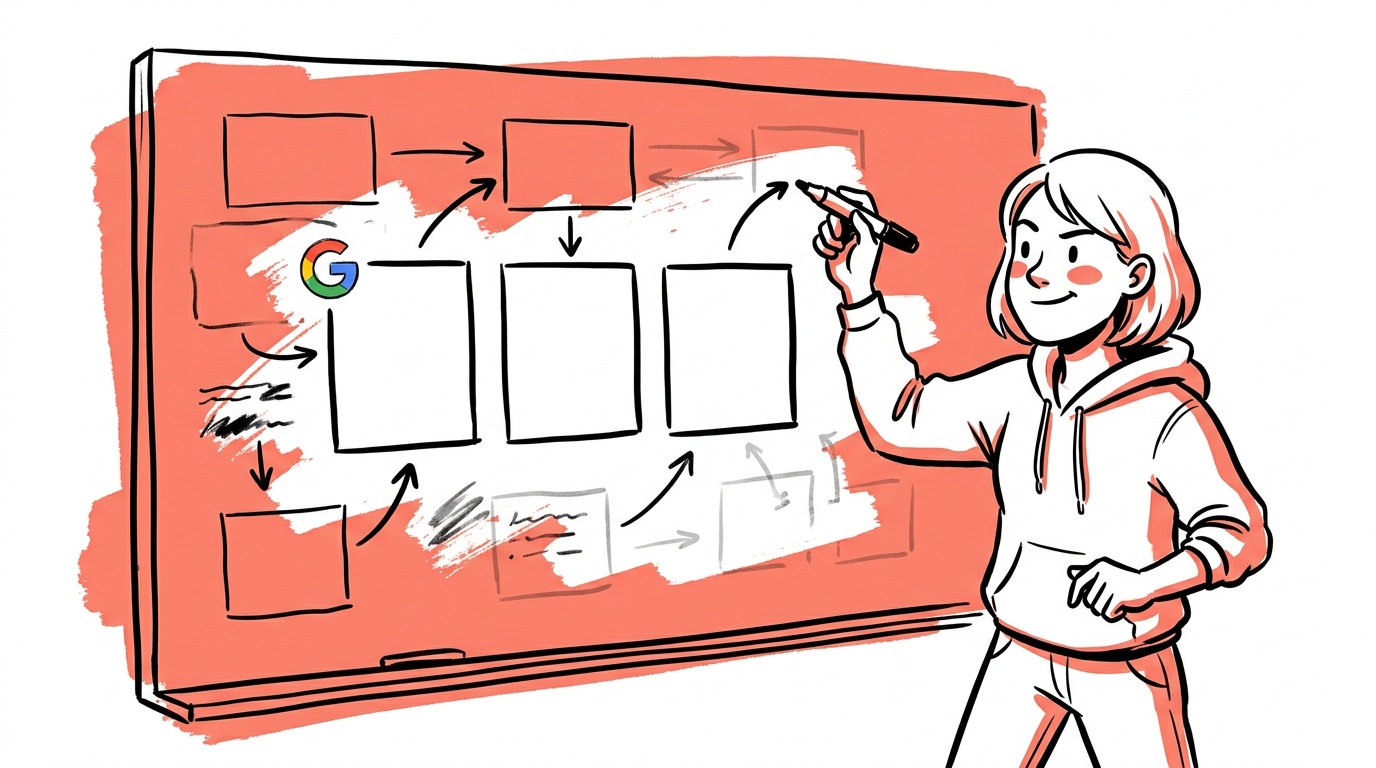
If you're going to test AI Max, design the test so you can actually learn from it. Sloppy tests waste budget and produce ambiguous data that leads to bad decisions in either direction.
The isolation setup
Create a new campaign specifically for the test. Do not enable AI Max on an existing top-performing campaign — the baseline will shift and you won't know why. The test campaign should:
- Target the same keywords as a control campaign you're running in parallel.
- Share the same landing page and conversion tracking setup.
- Have a defined budget cap — enough to generate meaningful impression and conversion volume, not so much that a bad week is catastrophic.
- Run for a minimum of four weeks before you draw conclusions. Two weeks is too short for Google's model to stabilize.
Track these specific metrics at the campaign level, comparing test to control:
- CPL or ROAS (your primary KPI)
- Impression share and search term overlap with the control campaign
- Asset performance reports — what's running, what's generated, what's serving most
- Search terms report, even if incomplete, to flag obvious irrelevant traffic
At week four, if CPL is within 15% of the control and volume is meaningfully up, you have a positive signal worth pursuing further. If CPL is worse, dig into the search term data before writing off the feature entirely — the problem is often a specific intent cluster, not the feature wholesale.
What We're Watching Before We'd Recommend It Broadly
We've been tracking AI Max rollout across our user base. The accounts where it's working went in with a test mindset, not a migration mindset. The accounts where it caused problems mostly made the same two mistakes: they enabled it broadly too fast, and they hadn't tightened conversion tracking beforehand. That is the same failure we see with ads inside AI Mode — see what early AI Mode testing actually shows.
The feature we'd need to see from Google before recommending AI Max as a default move: full search term reporting at parity with standard Search, and a way to flag specific auto-generated assets as disapproved without disabling asset generation entirely. Neither exists at the level of granularity serious practitioners need.
Google has consistently reduced search term visibility over the past several years — from the 2020 search terms report cuts to current AI Max opacity. AI Max isn't an anomaly; it's the next step in that direction. Decide how much opacity you can tolerate in exchange for scale, and make that a deliberate choice rather than something that happens to you.
Until reporting catches up with the feature's actual footprint, AI Max remains a well-designed black box. That's not a reason to ignore it. It's a reason to approach it with the checklist open.
FAQ
What is AI Max for Google Ads? AI Max is a feature layer available on Google Search campaigns that expands keyword matching using Google's intent models and enables automatic generation of creative assets based on your landing page and existing ad copy. It is not a separate campaign type — you opt in at the campaign level.
Is AI Max the same as Performance Max? No. Performance Max is a separate campaign type that runs across all Google inventory (Search, Display, YouTube, Shopping, Discover, Gmail). AI Max is specifically a Search campaign feature. They share some underlying automation philosophy, but they operate in different contexts and have different control surfaces.
Does AI Max hurt search term transparency? Based on current practitioner reports, yes — AI Max provides less granular search term data than a standard Search campaign. You can still access a search terms report, but the visibility into exactly which queries triggered which assets and at what cost is reduced compared to manually managed campaigns.
Which types of accounts should try AI Max first? Accounts with high conversion volume, strong first-party data, event-based conversion tracking, and flexible brand guidelines are the best early candidates. eCommerce accounts with product feeds tend to see cleaner results than lead generation accounts in regulated or niche verticals.
What should I do before enabling AI Max? At minimum: audit and refresh your negative keyword lists, verify that conversion tracking is firing correctly with values attached, and set up a clean isolation test campaign rather than enabling the feature on your best-performing existing campaigns.
Can I control which assets AI Max generates? Partially. You can provide preferred assets and pin certain elements, but the degree of asset-level control is lower than in a manually managed campaign. There is no pre-approval workflow for auto-generated assets before they serve, which is a significant concern for brand-sensitive advertisers.
Is AI Max worth using in 2026? For accounts that meet the right profile and run a properly isolated test, yes. For accounts with strict query control requirements, low conversion volume, or compliance constraints, the risk currently outweighs the potential gain. The honest answer is: it depends on your account, not on Google's benchmark numbers.
If you're running a Search campaign with strong conversion data and you haven't tested AI Max yet, the cost of not knowing is starting to outweigh the cost of a controlled experiment. Run the four-week isolation test. The question worth asking at the end isn't "did AI Max work?" — it's "what did I learn about how much control I'm actually willing to trade for scale?"
Live today.
The full campaign — copy, images, targeting — generated for your site and deployed paused for your approval.
We build AdControlCenter — AI-powered ad management for small businesses, online stores, SaaS companies and service providers. We write what we'd want to read: real numbers, no fluff, the things we wish we'd known when we started.
More from the team →