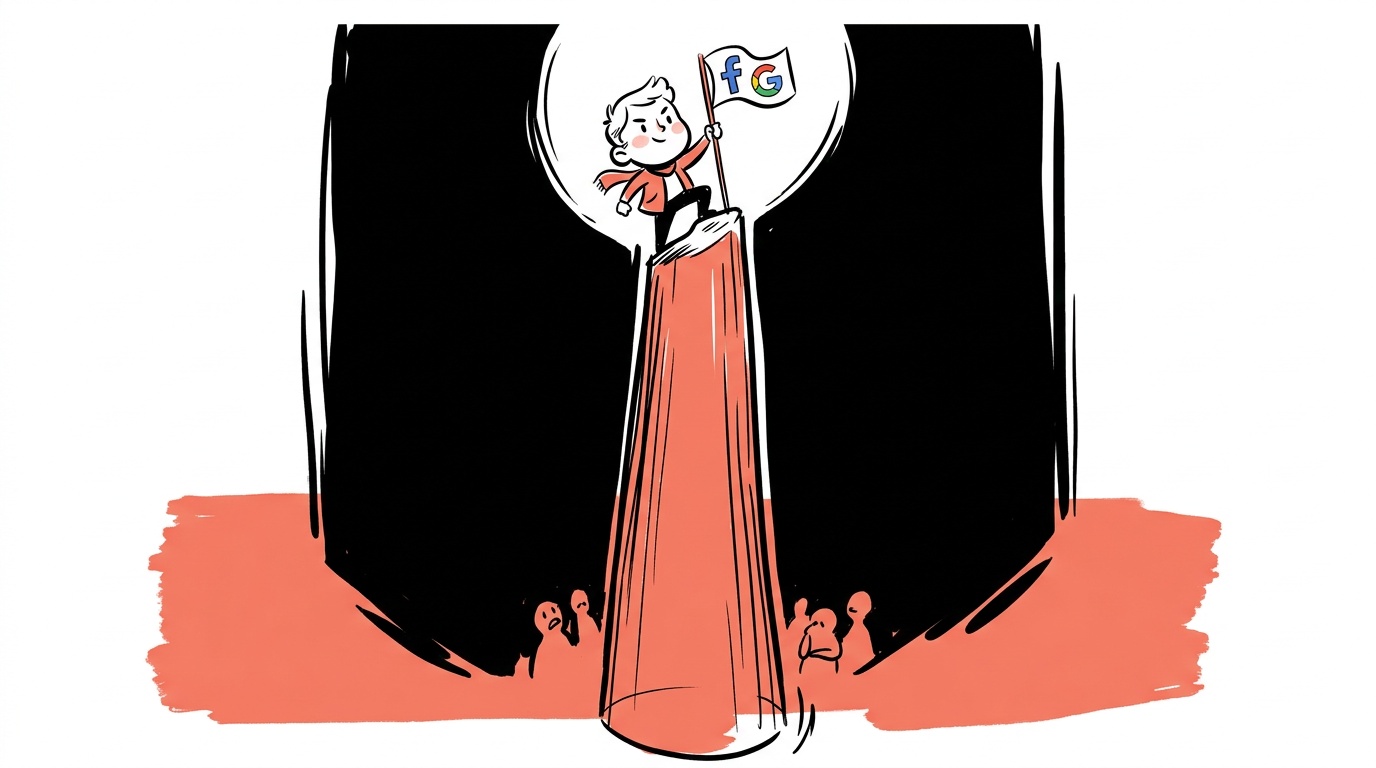
Most brands that show up in AI-generated answers didn't get there by accident. They got there because a model found them described clearly, consistently, and independently across enough sources to feel confident naming them. The brands that don't show up aren't being penalized—they're just absent from the signals that matter.
ChatGPT, Perplexity, Google's AI Overviews, and their successors don't crawl the web the way Google did in 2012. They pull from structured sources, cited corpora, and high-confidence signals about what a brand is and what it knows. If you're not in those sources, you don't get mentioned. Not demoted—absent. That's not hyperbole. It's a description of how LLM retrieval actually works.
TL;DR — AI Visibility and Discoverability
- AI search engines cite brands based on structured, multi-format signals—not just ranking position in traditional search.
- Being "findable" now means being present in text, video, audio, structured data, and third-party reference sources simultaneously.
- AI citations function like backlinks did in early SEO: whoever gets cited first builds compounding authority.
- Paid ads alone won't get you cited by AI systems—you need organic, structured, quotable content to appear in generated answers.
- The window to establish early authority in your category is open now and won't stay open long.
AI Search Doesn't Rank—It Selects
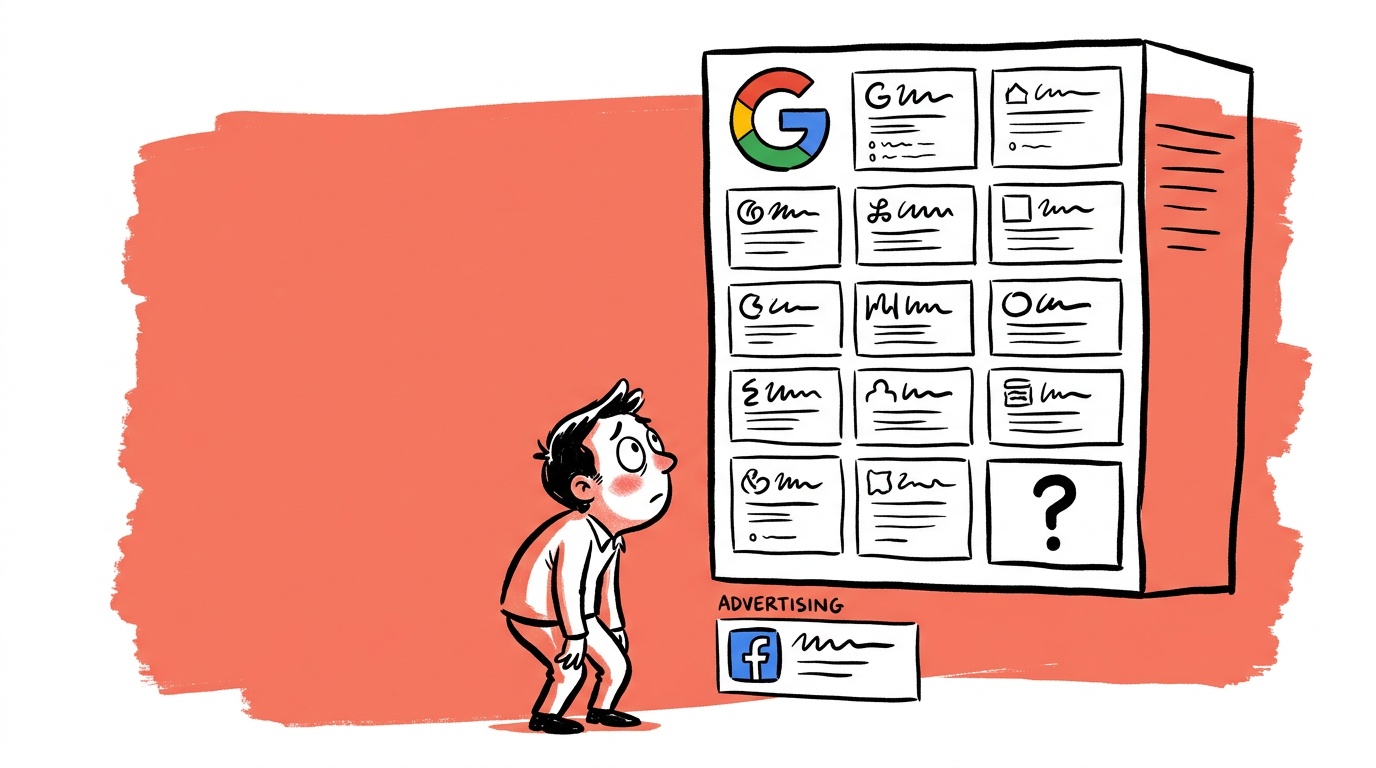
Traditional search returned a list and let the user choose. AI search returns an answer and chooses for the user. That shift changes everything about how brand visibility works.
When someone asks ChatGPT "what's the best tool for managing Google and Meta ads together," the model doesn't show ten blue links. It names one or two options, explains why, and moves on. The brands it names aren't necessarily the ones with the highest ad spend or the most backlinks—they're the ones the model has seen discussed, cited, explained, and referenced across enough sources that it's confident enough to commit.
This is why AI search citation functions like a backlink: a backlink was a third-party vote of confidence. An AI citation is the same thing, compressed into training data and retrieval context. If authoritative sources reference your brand in clear, factual language, the model learns to trust it. If they don't, the model ignores you—not out of bias, but out of low signal strength.
AI systems are optimized to reduce uncertainty. They cite brands they're confident about. If your brand's information is sparse, contradictory, or only lives behind paywalls, the model defaults to a competitor it understands better. Confidence is the currency.
Why Five Formats—and Which Five
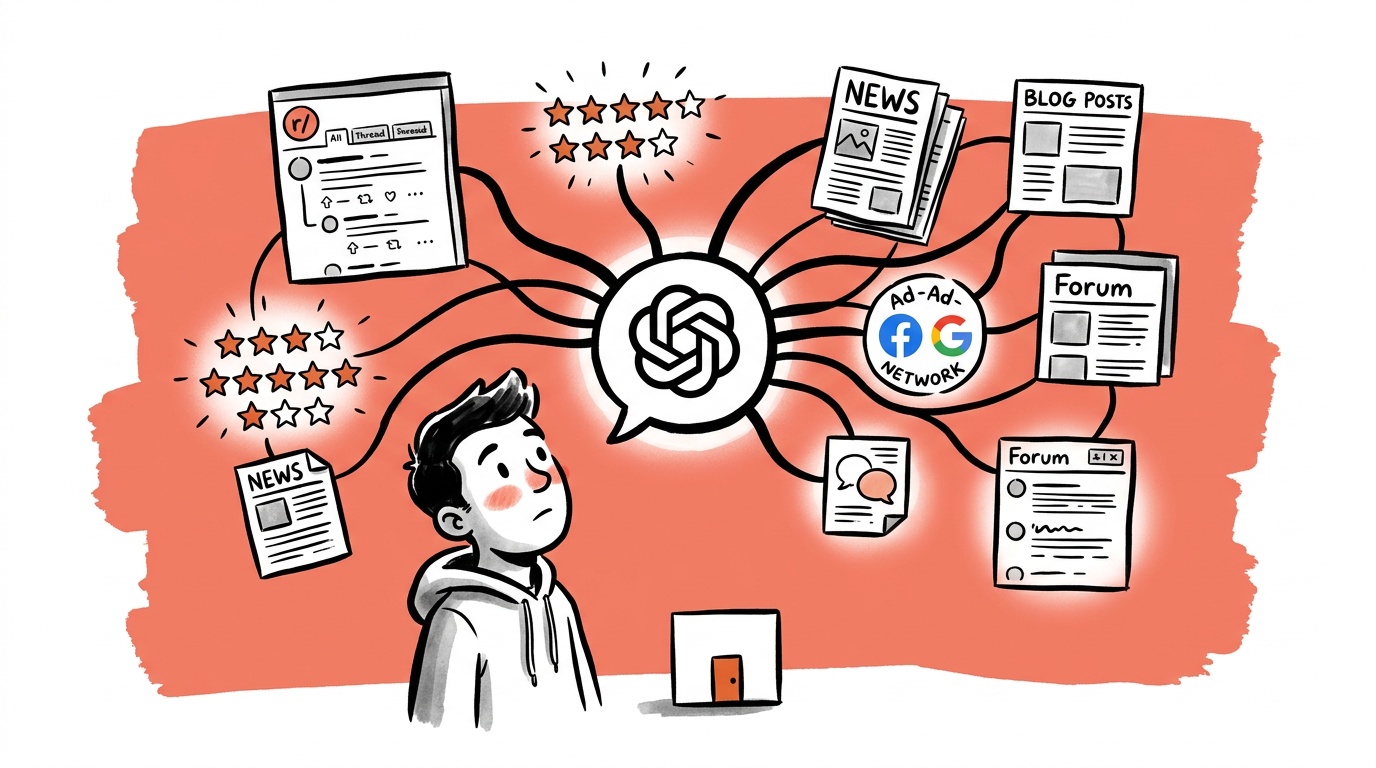
Presence across five formats isn't arbitrary. It maps to where AI systems actually source their confidence signals—and a brand that appears in all five is far harder to ignore than one that dominates only one.
1. Long-form text (blog, documentation, guides) This is the bedrock. LLMs were trained on text. Well-structured, specific, opinionated long-form content in your brand's voice is the most direct way to teach a model what you do, how you think, and what problems you solve. Generic content doesn't stick—models optimize for signal density, and vague prose provides almost none.
2. Video (YouTube, primarily) YouTube is one of the few video platforms where transcripts are indexed at scale. When you publish a video that clearly explains a concept and attributes it to your brand, the transcript enters the retrievable record. Google's AI Overviews already surface YouTube content. That's not coincidental.
3. Audio / podcast Podcast transcripts are increasingly indexed. More importantly, podcasts are where third-party hosts introduce your brand name in context—"I was talking to [founder] from [brand] about..."—which creates natural citations that feel authoritative because they're conversational and unsponsored.
4. Structured data (schema markup, knowledge panels, Wikidata)
This is the most underused format by small brands. Schema markup tells machines exactly what your brand is, what it does, and how to categorize it. A knowledge panel signals that your brand is notable enough for Google to model explicitly. Wikidata is open and editable—if your brand isn't there, you can add it. These structured sources are high-confidence inputs for AI systems because they're designed for machine consumption, not human persuasion. The cheapest one to ship is an llms.txt file at your root.
5. Third-party reference (press, review sites, directories) Being mentioned on G2, Capterra, Product Hunt, TechCrunch, or industry-specific publications gives the model corroborating evidence. One source saying you exist is weak. Five independent sources saying the same thing is pattern recognition. How to earn those mentions — the minimum viable signal stack — is its own post.
The Citation Gap Is Widening Fast
The brands getting cited by AI today are building a compounding advantage. Every citation drives shares and links, which drives more indexable content, which drives more citations. It's not quite a flywheel—the mechanics are messier than that—but the directional effect is real and it accumulates.
The brands that moved early into authoritative content—clear explanations, original research, specific how-to guides—got cited first. Those citations generated traffic, which generated more content, which generated more citations. Brands that didn't move early are now trying to build presence in a retrieval corpus that's already partially formed around their competitors.
This doesn't mean it's too late. When we look at the ad-tech space specifically, many real products are effectively invisible to current AI systems because their content is either too promotional, too vague, or locked in gated formats the models can't access. Most categories still have meaningful gaps a well-positioned smaller brand can fill.
The window is narrowing, not closed.

Live today.
The full campaign — copy, images, targeting — generated for your site and deployed paused for your approval.
What Paid Ads Don't Do (and Won't)
A reasonable question: can you pay your way into AI citations?
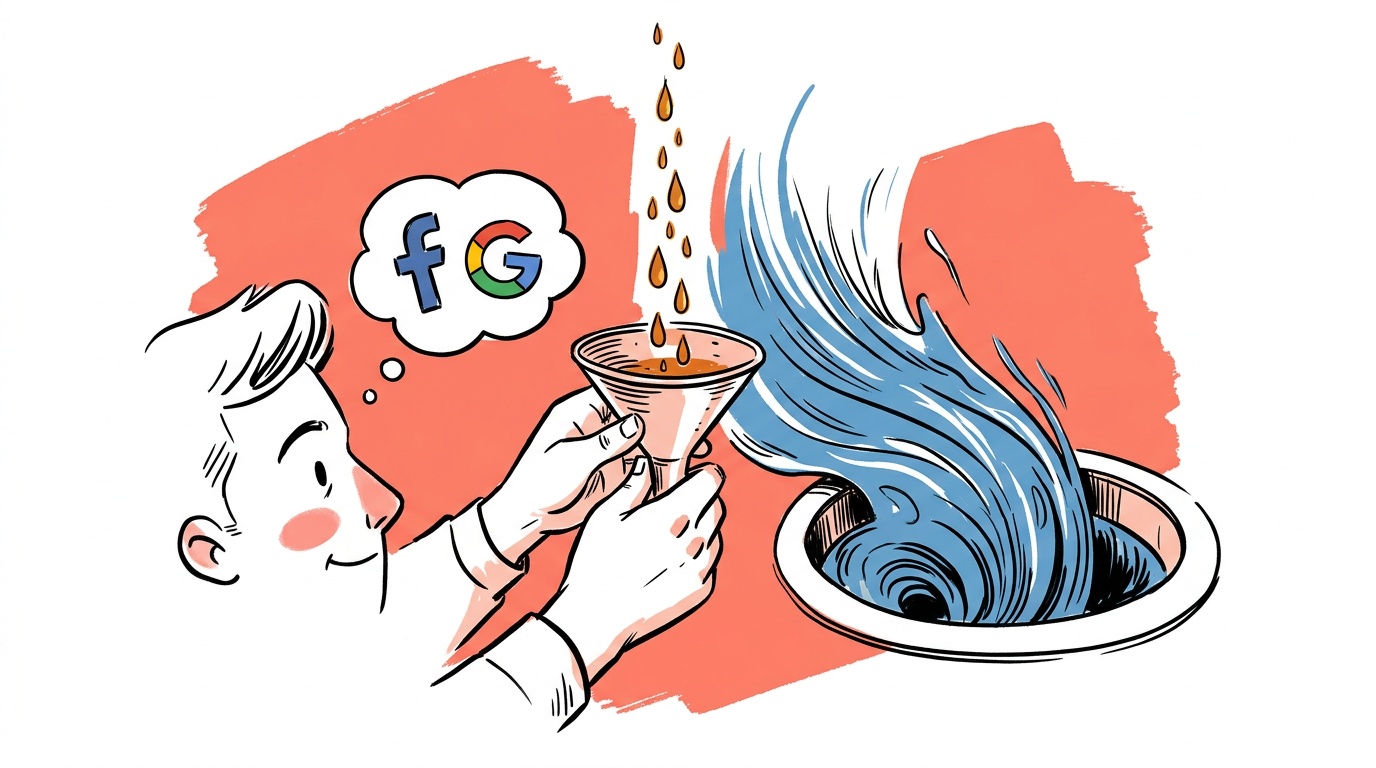
Not directly. AI systems don't accept payment for inclusion in generated answers—at least not in any transparent, standard form. Google's AI Overviews are separate from paid search results. ChatGPT's web browsing pulls from organic sources. Perplexity cites the pages it retrieves, not the pages that paid to be retrieved.
Paid ads remain valuable for driving traffic to the content that does build AI visibility. If you spend on ads that funnel people to genuinely useful, well-structured content—guides, explainers, comparison pages—you're accelerating the organic signal-building that AI systems respond to. That's the right mental model: ads buy distribution; distribution builds citation signals; citation signals build AI visibility.
What doesn't work: running ads to a thin landing page, a product page with no depth, or gated content that models can't index. That spend builds zero AI-visible authority.
The Structured Content Shortcut
If you're resource-constrained, prioritize structured content over volume. One genuinely comprehensive guide—specific, sourced, covering a real question your category has—does more for AI visibility than many thin blog posts. Models optimize for confidence, and confidence comes from specificity and corroboration, not keyword frequency.
A practical way to think about this: before publishing anything, ask whether the piece gives a model enough to confidently answer a stranger's question. If it doesn't, it won't help.
How to Audit Your Current AI Visibility
Before building anything new, run this audit:
Step 1: Query yourself. Ask ChatGPT, Perplexity, and Google's AI Overview: "What is [your brand name]?" and "What are the best tools for [your category]?" Note whether you appear, what's said, and what sources are cited.
Step 2: Check your structured presence. Search Google for your brand name and see if a knowledge panel appears. Review schema.org documentation against your site's current markup. Search Wikidata for your brand name. Our 12-item GEO checklist has a verification command for each technical item.
Step 3: Map your formats. List every publicly accessible, indexable asset: blog posts, YouTube videos, podcast appearances, press mentions, review site profiles. Identify which of the five formats are empty.
Step 4: Read what the models say about rivals. Ask AI systems about your closest competitors. What sources are they citing? What language is being used to describe them? That's your competitive benchmark—and a map of the gaps you can fill.
Step 5: Identify your one quotable claim. What is the single most important thing your brand should be known for? If AI systems cited you, what would you want them to say? Work backward from that sentence.
If you can't write a single sentence that clearly and specifically describes what your brand does and for whom—without words like "innovative," "comprehensive," or "solutions"—AI systems can't write it either. They'll default to a competitor who can.
Build for the Model, Not Just the Human
This sounds counterintuitive coming from a team that builds ad tools for human founders. But AI-search optimization requires you to think about a secondary audience: the model consuming your content during retrieval.
Models favor content that:
- States conclusions before explaining them (inverted pyramid)
- Uses the exact vocabulary your audience uses in questions
- Is specific about who the content is for ("founders managing ad spend under $50k/month" beats "marketers")
- Cites external sources (corroboration raises confidence)
- Is structured with headers that match likely query patterns
None of this is new to good writing. But it does mean that certain common content formats—listicles without context, testimonial-heavy pages, product-feature dumps—are nearly worthless for AI visibility even if they convert humans fine.
The practical test: does this content help a model confidently answer a stranger's question? If yes, it builds AI visibility. If not, it doesn't matter how well it ranks or converts today.
FAQ
What is AI visibility and discoverability? AI visibility refers to whether and how often your brand appears in answers generated by AI search systems like ChatGPT, Perplexity, or Google's AI Overviews. Discoverability is the underlying condition that makes visibility possible—being present in the sources, formats, and signals those systems use to form confident answers.
How do AI search engines decide which brands to cite? AI systems cite brands based on signal confidence: how consistently and clearly a brand is described across multiple independent sources. High-quality long-form content, structured data (schema markup, knowledge panels, Wikidata entries), third-party references, and video transcripts all contribute. A brand mentioned once, on its own site, in vague language is unlikely to be cited.
Does running paid ads help with AI search visibility? Not directly. Paid ads don't buy inclusion in AI-generated answers. Indirectly, ads can drive traffic to well-structured organic content that does build AI citation signals. The content itself must be publicly indexable and genuinely informative—thin landing pages don't help.
What formats should I prioritize for AI discoverability? Long-form text, YouTube video (for its indexable transcripts), podcast appearances, structured data markup, and third-party references (press, review sites, directories). Presence across all five formats is more effective than depth in any single one.
How do I know if my brand is currently visible to AI systems? Query ChatGPT, Perplexity, and Google's AI Overviews directly. Search for your brand name and for category-level questions your brand should answer. Note whether you appear and what sources are cited when you do.
Can small brands compete with large ones in AI search? Yes—especially now. Most categories still have thin AI-visible coverage from smaller brands. A well-structured, specific guide that actually answers a real question can outperform a large brand's generic content in AI retrieval. Specificity and corroboration matter more than domain authority in many AI retrieval contexts.
How long does it take for new content to become AI-visible? There's no precise public timeline, but the mechanisms involved—indexing, retrieval testing, model updates—mean you're typically looking at weeks to a few months for new content to influence AI responses reliably. Structured data and knowledge panel updates can surface faster. The practical implication: start now, not when the need feels urgent.
Run the five-format audit this week. Find your emptiest format. Publish one piece of genuinely specific content there—public, indexable, with a clear quotable claim about what you do and who you do it for. Not a content calendar. Not a strategy doc. One piece. That's the smallest unit of work that moves the needle on AI visibility, and right now, most of your competitors haven't done it yet.
Live today.
The full campaign — copy, images, targeting — generated for your site and deployed paused for your approval.
We build AdControlCenter — AI-powered ad management for small businesses, online stores, SaaS companies and service providers. We write what we'd want to read: real numbers, no fluff, the things we wish we'd known when we started.
More from the team →