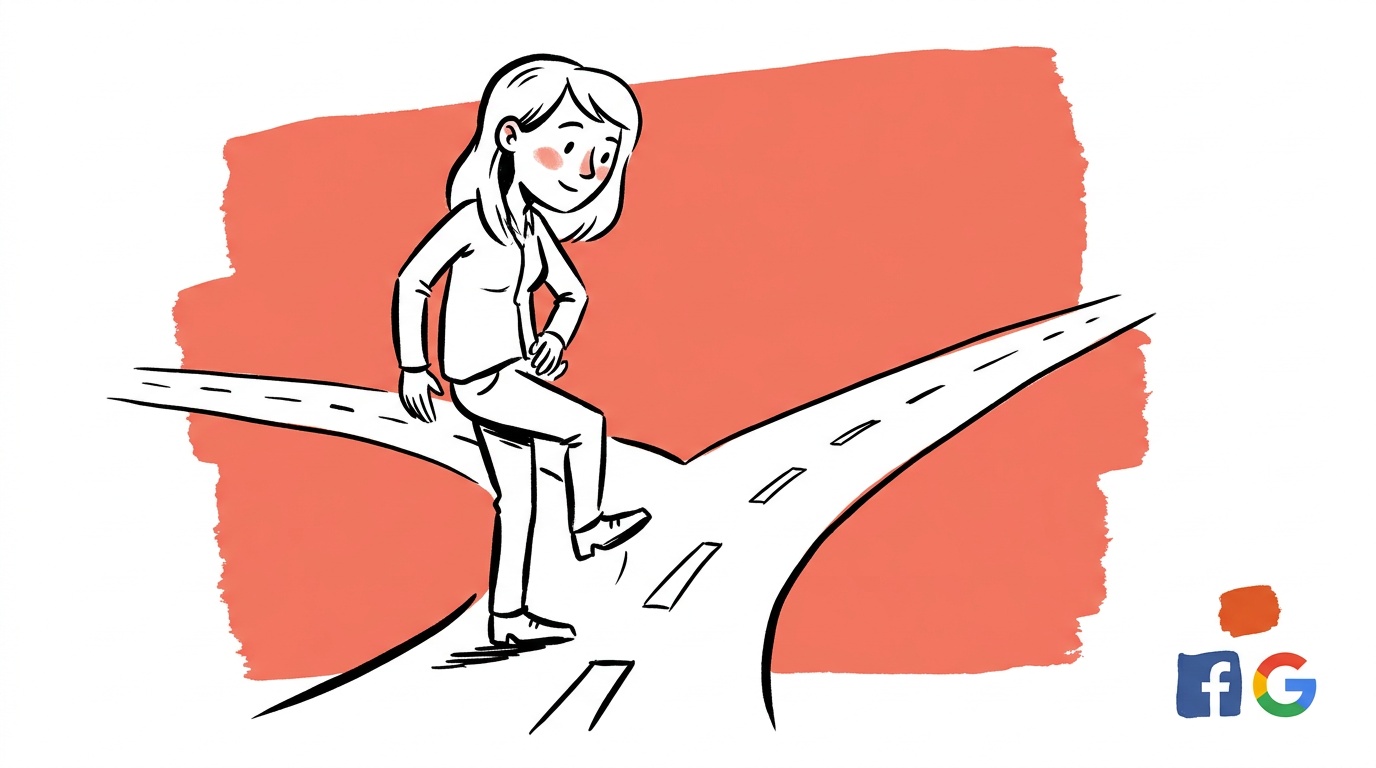
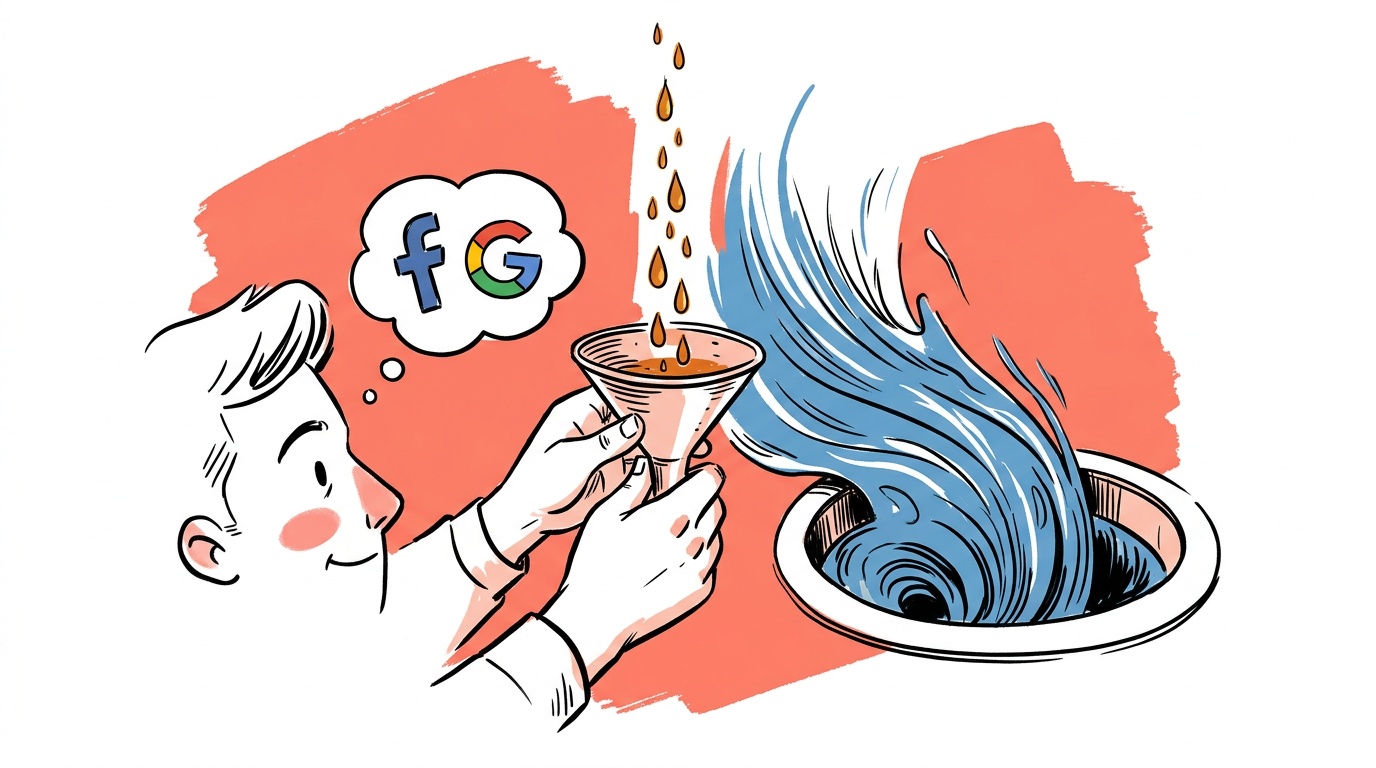
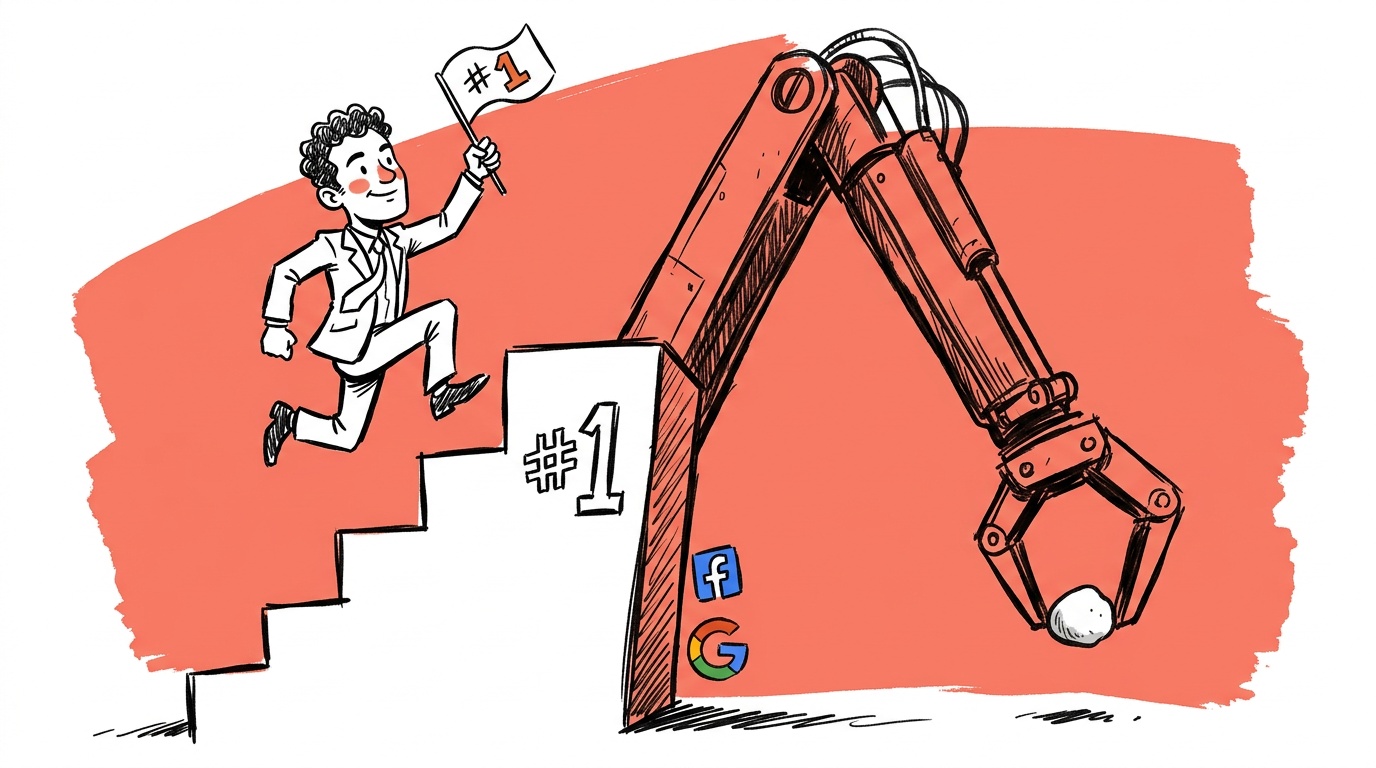
Founders who pivot entirely away from SEO toward "AI search optimization" are about to learn an expensive lesson: the signals that make AI systems trust and cite your content are the same signals that make Google rank it. Dropping one to chase the other is not a strategy. It is a self-inflicted wound.
The question isn't GEO or SEO. It's understanding what each one actually does, where they overlap, and why abandoning either right now is a gamble you don't need to take.
TL;DR — GEO vs SEO in 2026
- GEO (Generative Engine Optimization) is the practice of structuring content so AI systems like ChatGPT, Perplexity, and Google's AI Overviews cite and surface it in generated answers.
- Traditional SEO still drives a large share of high-intent traffic — particularly from users who click through to compare options before buying.
- The signals that make content rank in Google (authority, clarity, structured data, backlinks) are the same signals that make AI systems trust and cite your content.
- Founders who drop SEO for GEO lose compounding domain authority; founders who ignore GEO miss citations in the AI-generated answers that now sit above organic results.
- The fastest path to winning both: write genuinely useful, well-structured content once, then format it explicitly for machine readability.
What GEO Actually Means (It's Not Just "Write for AI")
Generative Engine Optimization is the set of practices that increases the probability an AI system cites, quotes, or surfaces your content inside a generated response. When someone asks ChatGPT "what's the best project management tool for a five-person startup," ChatGPT doesn't run a live crawl — it draws on its training data and, increasingly, on retrieval-augmented generation (RAG) pipelines that pull live web results. GEO is about being in both places.
Concretely, GEO involves:
- Factual density. AI systems prefer sources that state specific, verifiable claims. Vague thought leadership gets skipped. Precise explanations get quoted.
- Citation surface area. FAQ sections, numbered lists, definition blocks, and clear H2 structure all create discrete chunks that a retrieval system can extract cleanly.
- Entity clarity. AI models build knowledge graphs. If your content clearly defines who you are, what you do, and what problem you solve — with consistent language across your site — models are more likely to represent you accurately.
- Third-party mentions. When other credible sites reference your brand or content, that signal flows into the models that index the web. This is nearly identical to traditional link-building logic.
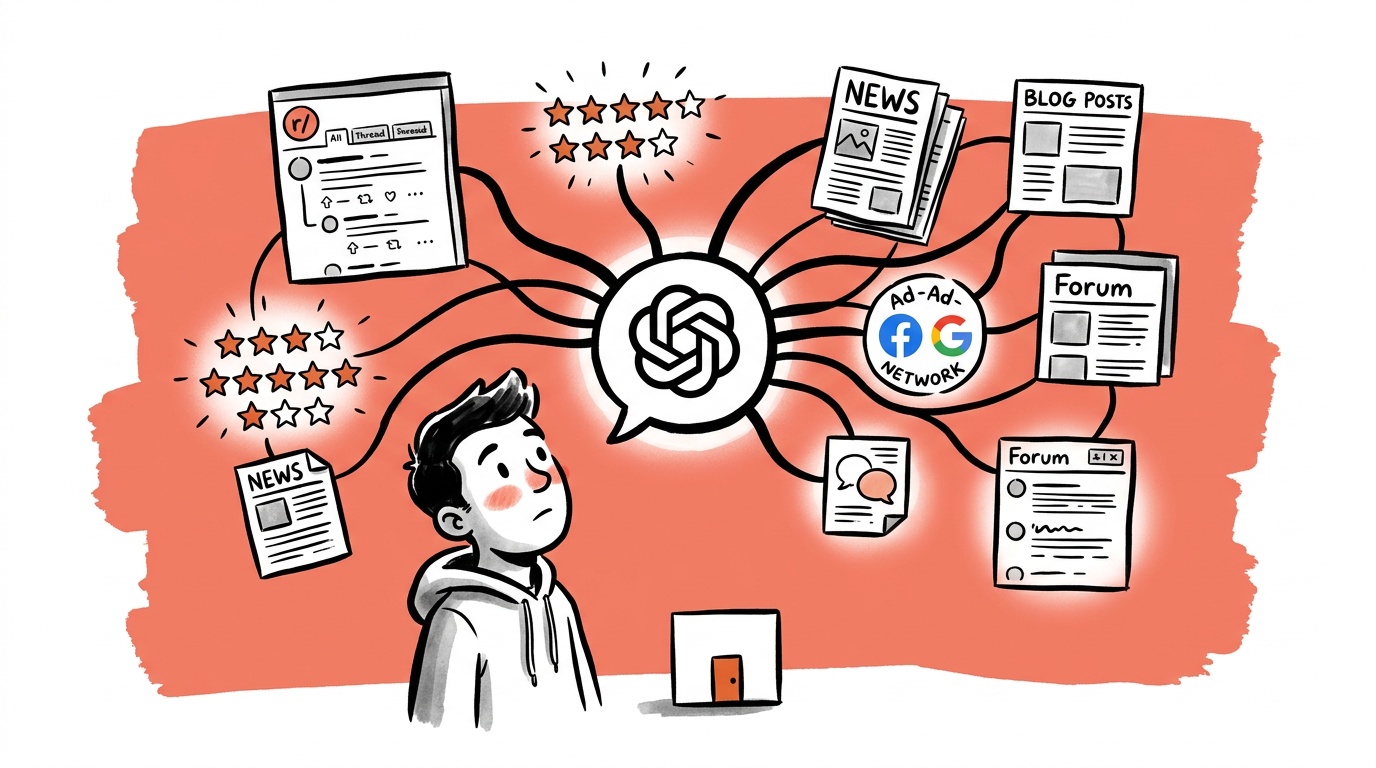
Modern AI search doesn't consult one source. Perplexity, for example, runs real-time web searches and synthesizes across multiple results. Being the single best result matters less than being consistently present across the top cluster of results on a given topic. That's a content distribution problem, not just a content quality problem.
What SEO Still Gets Right
Here's the contrarian part: SEO is not dying. It is changing shape.
Google still processes an enormous volume of searches every day, and a large share of those queries end in a click to a website — especially commercial and transactional queries where users want to compare options, read reviews, or verify claims before spending money. AI-generated summaries are fast and convenient for informational queries. They are less useful when someone wants to see actual pricing, read a real case study, or verify a vendor's credibility before a purchase.
Traditional SEO signals — domain authority, crawlability, page speed, structured data markup, backlink quality — remain the foundation. And those same signals are what AI systems use to decide whether your content is trustworthy enough to cite.
Google's own documentation on how it evaluates content for AI Overviews points back to the same E-E-A-T framework (Experience, Expertise, Authoritativeness, Trustworthiness) it has used for years. The AI layer is new. The trust signals feeding it are not.
If you spend the next 12 months ignoring your technical SEO while chasing AI citations, you will erode the domain authority that makes those AI citations possible in the first place.
Where GEO and SEO Diverge
They are not identical, and pretending otherwise causes real mistakes.
Keyword targeting vs. topic authority. SEO has traditionally rewarded keyword-specific optimization — matching the exact phrase a user types. GEO rewards topical depth. AI systems summarize across a topic; they don't rank for a specific keyword string. A page that answers five related questions in depth is a better GEO target than five thin pages each optimized for one keyword. This is a genuine strategic shift, not just a new name for the same thing.
Click-through vs. citation. SEO success is measured partly in clicks — you want someone to visit your site. GEO success can mean your brand gets mentioned in an AI answer even when the user never visits your URL. That citation still builds brand awareness and purchase consideration, but it won't show up in your GA4 dashboard. Most analytics stacks are not yet built to measure this, which means founders are systematically under-counting their GEO impact and over-panicking about traffic declines.
Structured data becomes more important, not less. In traditional SEO, schema markup was often treated as optional. In a world where AI systems are parsing your content programmatically, structured data is how you communicate unambiguously. FAQ schema, HowTo schema, and Article schema are not just for rich snippets anymore — they are machine-readable signals that help retrieval systems extract and attribute your content correctly.
The Content Format That Wins Both Channels
In our corpus — content from accounts across multiple industries, tracked over rolling 90-day windows — the pages that showed up in both traditional organic results and AI-cited responses shared the same structural characteristics:
- A direct answer to the core question in the first 100–150 words
- Clear H2 sections that each address a discrete sub-question
- Specific, citable claims (numbers when you have them, qualitative precision when you don't)
- An FAQ section that mirrors the language real users type into ChatGPT or Perplexity
- At least one outbound link to a primary source, signaling to both Google and AI systems that the content doesn't exist in a vacuum
This isn't a new content format. It's what good technical writing has always looked like. The AI era is punishing the shortcuts more visibly.

Live today.
The full campaign — copy, images, targeting — generated for your site and deployed paused for your approval.
The Traffic Reality Check
There's a real phenomenon worth naming: organic click-through rates on informational queries have dropped for many sites as AI Overviews capture the answer directly on the results page. This is documented and ongoing. Research from SparkToro and others has tracked the rise of zero-click searches for years, and AI Overviews have accelerated that trend for top-of-funnel content.
But "less informational traffic" is not the same as "SEO is dead." What's actually happening is a sorting effect:
- Informational queries (how does X work, what is Y) are increasingly answered in the AI layer. You want GEO here.
- Navigational queries (going directly to a specific brand or site) still convert to direct clicks. Brand authority matters here.
- Transactional and commercial queries (best X for Y use case, X pricing, X alternatives) still drive significant click-through because users want to verify before spending. Technical SEO and conversion-optimized landing pages still matter here.
The founders who are panicking are often running primarily informational content that was already thin. The traffic they're losing was never converting well anyway. The founders who are thriving have deep content across all three query types and are layering GEO practices on top.
A Practical Stack for 2026
You don't need two separate strategies. You need one strategy that satisfies both audiences — human readers and machine retrievers.
Step 1: Audit your existing content for factual density. Every page that makes a vague claim ("we help companies grow") is invisible to AI systems. Rewrite those pages with specific, defensible statements.
Step 2: Add FAQ sections to every substantive page. Write the questions the way someone would actually type them into ChatGPT. Answer each one in two to four sentences. This creates citable chunks and directly targets AI retrieval patterns.
Step 3: Implement schema markup where you haven't already. Google's Structured Data documentation is the right starting point. FAQ, Article, and Organization schema are the highest-leverage places to start.
Step 4: Build topical clusters, not keyword pages. Pick five to eight topics that are genuinely central to your business. Create one authoritative long-form piece per topic. Build supporting content around each. This serves both Google's topic authority signals and AI systems' preference for comprehensive sources.
Step 5: Track brand citations in AI tools. Manually check ChatGPT, Perplexity, and Google's AI Overviews for your core queries weekly. Screenshot when you appear. This is manual and slow — it's also currently the most honest way to measure GEO performance until better tooling matures.
The Compounding Argument for Doing Both
Here is the clearest reason not to drop SEO: compounding authority.
Domain authority accumulates over time. Backlinks, crawl history, content depth, engagement signals — these take months or years to build and erode slowly when you stop investing. If you abandon SEO for 18 months chasing AI citations, you don't just lose today's Google traffic. You weaken the trust signals that make AI systems cite you in the first place.
GEO and SEO are not in competition. They feed from the same aquifer. The sites that AI systems trust most are, almost without exception, the sites that have built strong traditional SEO foundations. That's not a coincidence — it's because both Google and AI retrieval systems are solving the same underlying problem: figuring out which sources are trustworthy enough to surface to a user.
The founders who will win AI search in 2026 are not the ones who pivoted fastest. They're the ones who kept building real content authority and added machine-readable formatting on top of it.
FAQ
What is the difference between GEO and SEO? SEO (Search Engine Optimization) is the practice of improving a website's visibility in traditional search engine results like Google. GEO (Generative Engine Optimization) is the practice of structuring content so that AI-powered systems — like ChatGPT, Perplexity, and Google's AI Overviews — cite or surface your content in generated responses. The core trust signals overlap significantly, but GEO places more weight on factual density, topical depth, structured formatting, and FAQ-style content that AI retrieval systems can extract cleanly.
Does SEO still matter in 2026 with AI search taking over? Yes. Traditional SEO signals — domain authority, backlink quality, structured data, page speed, crawlability — are still foundational. They're also the same signals AI systems use to evaluate whether a source is trustworthy enough to cite. Dropping SEO weakens your GEO performance. The two are complements.
How do I optimize my content for AI search (GEO)? Focus on factual density over vague claims, add explicit FAQ sections using language real users type into AI tools, implement schema markup (FAQ, Article, Organization), write comprehensive topical content rather than thin keyword pages, and build third-party mentions through genuine link-earning. Direct answers to core questions should appear in the first 150 words of any page.
Why is my organic traffic dropping even though my SEO hasn't changed? Informational queries — "how does X work," "what is Y" — are increasingly answered directly in AI Overviews or AI chat interfaces, reducing clicks to source pages. This is a real trend. But if your transactional and commercial content is well-optimized, those pages tend to hold traffic better because users still want to click through and verify before spending money.
How do I measure GEO performance? There's no mature universal tool for this yet. The most practical approach: manually query ChatGPT, Perplexity, and Google's AI Overviews weekly for your core topic queries and track when your brand or content is cited. Track referral traffic from Perplexity in GA4 (it shows as a referrer). Monitor branded search volume as a proxy for AI-driven awareness. It's imperfect and manual — that's the honest current state.
Should I create separate content for AI search vs. traditional search? No. The content format that performs best for both is the same: clear structure, specific claims, FAQ sections, outbound citations, and comprehensive topical coverage. Creating separate content for each channel doubles the workload without proportional return. Write once for humans, format explicitly for machines.
How long does it take to see results from GEO? GEO results depend partly on how frequently AI systems update their retrieval indexes and training data. For retrieval-augmented systems like Perplexity, well-structured new content can surface in days. For underlying model training, the cycles are longer and less transparent. The practical answer: invest in GEO now and measure monthly. The sites already building topical authority today have a meaningful head start over those who wait for the channel to "mature."
Live today.
The full campaign — copy, images, targeting — generated for your site and deployed paused for your approval.

We build AdControlCenter — AI-powered ad management for small businesses, online stores, SaaS companies and service providers. We write what we'd want to read: real numbers, no fluff, the things we wish we'd known when we started.
More from the team →