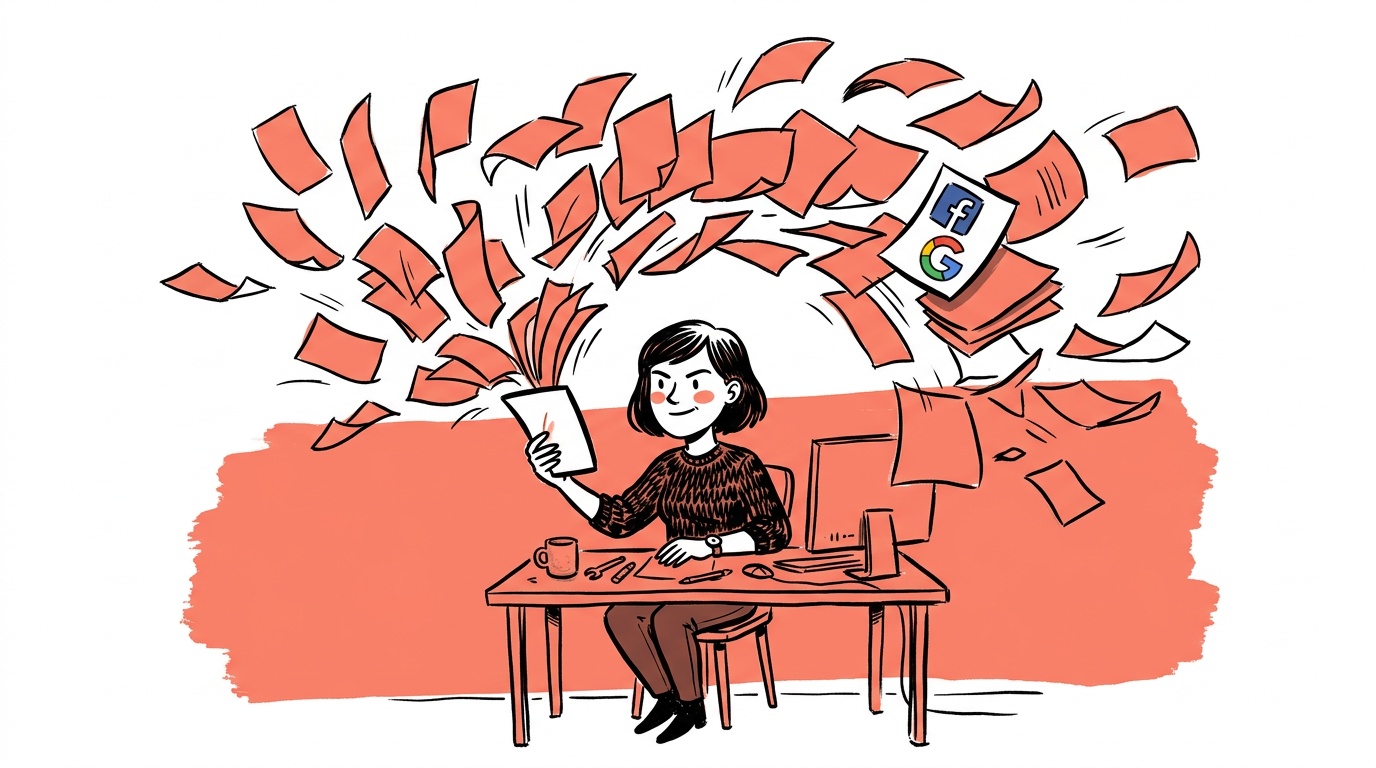
Most founders hit the same wall: they have one great piece of content — a product demo, a customer testimonial, a founder video — and they need it to run on six platforms, in three languages, with five different hooks. Hiring a creative team to do that manually costs more than most early-stage ad budgets. The constraint isn't willpower or money anymore. It's knowing which AI tools actually work and which ones produce generic slop that burns impressions.
Here's an honest map of what's worth your time.
TL;DR — AI creative tools for ads
- Meta's AI Business Assistant can generate ad copy, suggest creative variants, and pull from your existing catalog inside Ads Manager — no third-party tool required.
- AI video localization tools can redub, subtitle, and resize a single video for multiple markets without a reshoot, which changes the unit economics of international testing.
- The tools that produce the best output are the ones you give the most context to — raw prompts without brand voice, audience, or objective almost always produce mediocre creative.
- Transformation (taking something you already made and adapting it) tends to beat generation (creating from nothing) for ad creative, because transformation preserves authentic signal.
- Platform-native AI tools are fast enough that the gap between "made by a human" and "assisted by AI" is closing on direct-response formats — but storytelling and brand nuance still need a human hand.
Meta's AI Business Assistant Is More Useful Than Its Announcement Made It Sound
When Meta rolled out its AI Business Assistant inside Meta Business Suite, the initial coverage was skeptical — and fair. Early AI ad tools from the big platforms were headline features that produced copy no competent human would approve. The newer iteration is meaningfully different.
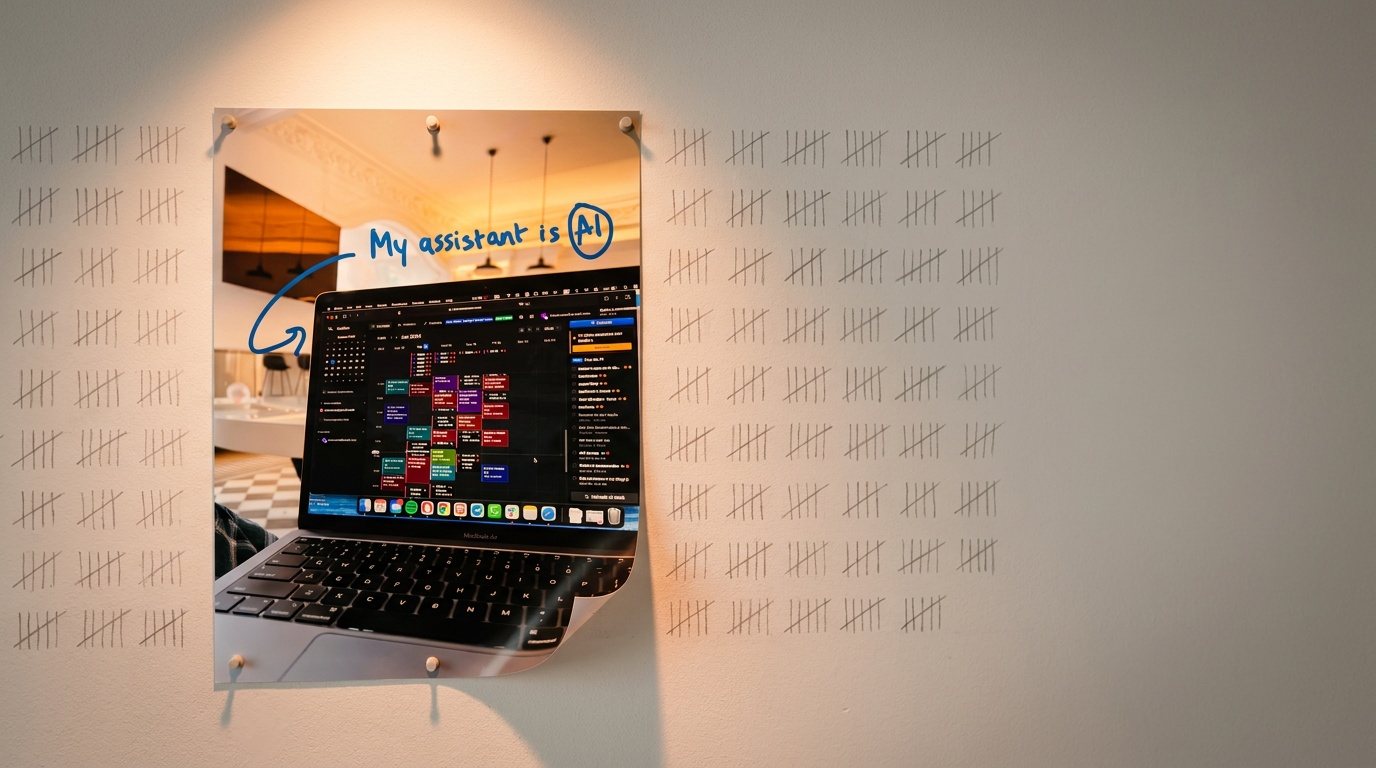
The assistant pulls context from your connected catalog, your existing ad history, and your page content to generate copy variants that are at least in the right territory for your brand. It's not writing your ads for you. What it's doing is faster than a blank-page brief: it gives you several drafts in the time it used to take to write one, and at least one of those is usually close enough to build from.
Use it for headline and primary text variation testing, not for concepting. If you already know your angle — social proof, urgency, feature-benefit — the assistant is fast at producing syntactic variants of that angle. It's weak at finding the angle in the first place.
The honest limitation: it's constrained to Meta's ecosystem. You can't take that creative intelligence and run it on a TikTok or a Google PMax campaign without copying and pasting. For founders running multi-platform strategies, that's a real friction point.
You can see Meta's Business Assistant in action in this breakdown on YouTube, which runs through the actual Ads Manager interface rather than a polished demo environment.
AI Video Localization Is the Highest-Leverage Tool Most Founders Haven't Tried
The traditional calculus for international ad testing was brutal: shoot in English, decide a market is worth it, then spend on translation, voiceover recording, resync, re-export. By the time that process completed, the market signal you were chasing was often cold. Most founders just didn't do it. They ran English-language ads in non-English markets and accepted the performance hit.
AI video localization — tools that can redub a speaker's voice in another language while preserving lip sync, or at minimum produce accurately timed subtitles that match the original pacing — changes that math. You make one video. You get versions that can run in multiple markets without a reshoot.
This demonstration shows the current state of AI-driven content transformation for global distribution. The quality isn't perfect for every language and every speaker, but it's past the threshold where it would embarrass a direct-response ad. Branding campaigns where voice authenticity matters more — that's still a harder call.
What to watch for when evaluating localization tools
- Lip sync accuracy: Some tools do full lip movement synthesis. Others just do voice replacement and leave the mismatch. The latter is fine for subtitled formats; it's jarring for undubbed video.
- Tone preservation: Does the translated audio match the energy of the original? A high-urgency sales pitch that comes out flat in the dubbed version will tank your conversion rate.
- Turnaround time: The tools worth using return a draft in minutes, not hours. If you're testing markets, speed matters more than perfection.
The Tools That Work Best Are the Ones You Feed the Most Context
This sounds obvious, but it's where most founders underinvest, and it's why AI creative tools develop a reputation for producing bland output.
Every AI creative tool — whether it's inside Ads Manager, a standalone copy tool, or a video editor with AI features — produces better output when you give it:
- A defined audience: Not "small business owners" but "bootstrapped SaaS founders running their first paid ads campaign who are worried about wasting budget."
- An explicit objective: Awareness creative looks different from conversion creative. The AI needs to know which one it's writing for.
- A brand voice reference: Paste in three to five pieces of copy you've already approved. Most tools can pattern-match from examples.
- A constraint: "Under 125 characters for the headline" or "no questions, only statements" forces the tool away from its default middle-ground output.
The accounts getting strong AI-assisted creative aren't using more sophisticated tools. They're using better prompts and more specific inputs. The tool is almost secondary.

Live today.
The full campaign — copy, images, targeting — generated for your site and deployed paused for your approval.
Transformation Beats Generation for Ad Creative
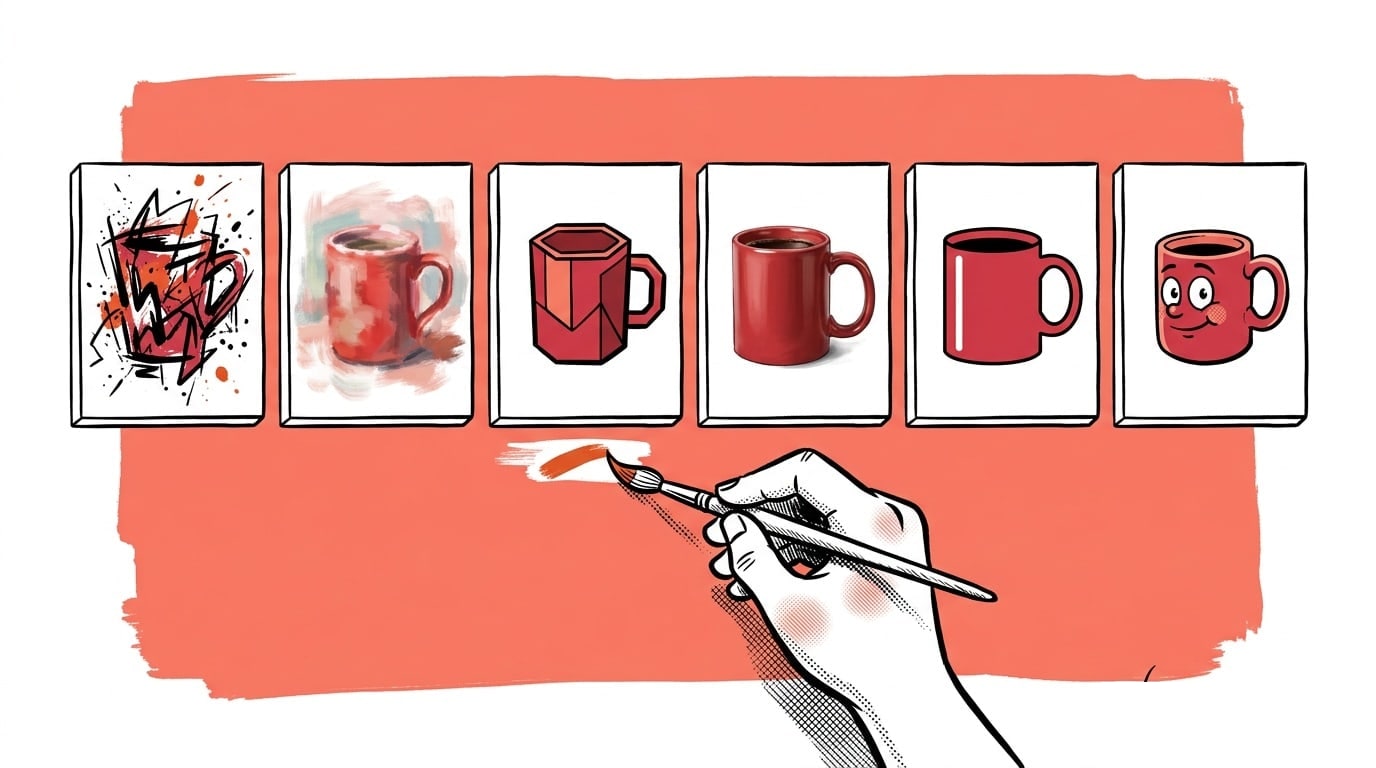
There's a meaningful difference between asking an AI to create an ad from scratch and asking it to transform something you already made.
Generated-from-nothing AI ads tend toward the generic because the model has no authentic signal to anchor on. It's producing statistically likely ad copy, which is the opposite of what makes an ad stop a scroll.
Transformation — taking a real customer review, a product demo video, a founder's 60-second explainer, or a sales call transcript and using AI to adapt that material into ad formats — preserves the authentic details that make creative work. The specific language a customer uses to describe their problem. The exact feature that made someone convert. The way your founder naturally explains the product.
The best AI workflow we've tested is:
- Capture raw authentic material (customer interviews, support tickets, sales calls).
- Feed that material to an AI tool with a specific transformation brief.
- Adapt the output for platform specs and format requirements.
- Test variants, not concepts.
This is faster than a traditional creative process and produces ads that sound like they came from a real person — because they did. Which hooks and formats to turn those into on Meta is covered in Meta ad creative that actually converts.
How to Benchmark AI Creative Against Your Human-Made Control
Before you swap your whole creative process over to AI, establish a baseline. The fastest way is a structured split: take a campaign where you already have a human-made ad that's performing at a known cost per result. Run an AI-assisted variant — same angle, same offer, same audience — and measure on five criteria:
- Output quality: Would you run this without editing, or does it need a rewrite? Track edit time, not just subjective quality.
- Time to launch: How many hours from brief to approved creative? AI tools only win if they're actually faster end-to-end.
- Compliance pass rate: What share of AI-generated ads clear your internal review and platform policies without revision?
- Localization fidelity: If you're adapting across languages or formats, does the core message survive the transformation intact?
- Creative testing velocity: Are you shipping more variants per week than before? More variants means faster learning, which compounds over time.
You don't need a statistically significant sample to get useful signal. Even a two-week head-to-head on one campaign tells you whether AI is closing the gap or creating more work. We ran that comparison for six months — the results are in our LLM vs human ad copy comparison. Run it before you commit to any tool's annual plan.
Platform-Native vs. Third-Party: Where to Start
Start with platform-native tools if:
- You're primarily on one platform (Meta, TikTok, Google).
- You want to reduce tool sprawl.
- You're generating copy and image variants more than video.
Consider third-party tools if:
- You're running on three or more platforms and need creative that travels across all of them.
- You're doing serious video localization — platform tools don't do this well yet.
- You need to transform a large batch of creative assets at once (product launches, seasonal campaigns).
The third-party category includes tools built specifically for ad creative generation, video editing with AI features, and localization platforms. (If you want to see what a generator does with your own site first, our AI ad generator builds a first set of ads from a URL.) The tools worth evaluating are the ones with documented research and accuracy benchmarks and clear pricing — not the ones with the longest feature lists.
What AI Still Can't Do (and What to Do About It)
AI creative tools are currently weak at:
- Finding the insight: The core strategic truth about why your product matters to a specific customer is still a human job. AI can express the insight once you have it; it can't reliably surface it.
- Brand storytelling at depth: Short-form direct response is where AI performs well. A 90-second brand film with emotional arc and character development is not there yet.
- Knowing when to break the rules: The best ad creative sometimes violates category conventions on purpose. AI optimizes toward conventional output.
- Cultural adaptation in new markets: Localization tools can translate. Understanding which angle actually lands in a specific market still requires human judgment or market-specific testing.
Use AI for what it's fast at — variant generation, format adaptation, copy testing — and keep humans responsible for what it's slow at: insight, strategy, cultural nuance.
The founders getting the most out of AI creative tools right now treat them as a fast junior creative partner — useful for drafts, volume, and adaptation — not as a replacement for knowing what to say in the first place.
FAQ
What are the best AI tools for creating ads in 2025 and 2026?
The most useful AI creative tools fall into three categories: platform-native assistants (Meta's AI Business Assistant inside Ads Manager), standalone copy generation tools that work across platforms, and AI video tools that handle resizing, dubbing, and localization. Which category matters most depends on your channel mix and whether your primary bottleneck is copy volume or video adaptation.
Can AI actually write good ad copy?
It depends on what you give it. With a generic prompt, most AI tools produce generic copy. With a specific brief — defined audience, objective, brand voice examples, and a constraint on format — the output is often close enough to edit into something you'd actually run. Transformation workflows (adapting real customer language into ad copy) tend to produce better results than asking AI to generate from nothing.
What is AI video localization and is it ready for real campaigns?
AI video localization uses machine learning to redub video audio in a new language — sometimes with lip sync synthesis — or to generate accurately timed subtitles. The technology has improved enough to be viable for direct-response ad formats. For branding work where authentic voice matters, the quality bar is harder to clear, but the gap is closing. This video shows the current state of the technology in a practical context.
How does Meta's AI Business Assistant compare to third-party tools?
Meta's assistant is tightly integrated into Ads Manager and pulls from your catalog and ad history, which gives it useful context. Its limitation is that it only works within Meta's ecosystem. Third-party tools are more flexible across platforms but require more setup and cost more. If Meta is your primary channel, the native tool is worth using first before adding third-party complexity.
What's the biggest mistake founders make with AI creative tools?
Treating them as push-button creative solutions rather than fast drafting tools. The founders who get poor results run a generic prompt and publish the output directly. The ones who get good results use AI for volume and speed, then apply their own judgment to the best drafts.
Do I need to hire someone to use these AI creative tools?
No, but you need to invest time in learning how to brief them well. The tools themselves are designed to be used by non-designers and non-copywriters. The skill that matters is knowing your audience and objective well enough to write a good input — which is really just the skill of knowing your own business.
Is AI-generated ad creative effective compared to human-made creative?
For direct-response formats — conversion ads, lead generation, catalog ads — AI-assisted creative is performing well enough in split tests that the gap with purely human-made creative is narrowing. For brand storytelling and emotionally complex campaigns, human creative still has a meaningful edge. The practical answer for most founders is to use AI to increase the volume of variants you can test, and let performance data tell you what works.
Before you evaluate any AI creative tool, write down your single biggest creative bottleneck — copy volume, format adaptation, language coverage, or something else. The tool that solves that exact problem is worth a two-week test. The one that solves a problem you don't have is just another subscription.
Live today.
The full campaign — copy, images, targeting — generated for your site and deployed paused for your approval.
We build AdControlCenter — AI-powered ad management for small businesses, online stores, SaaS companies and service providers. We write what we'd want to read: real numbers, no fluff, the things we wish we'd known when we started.
More from the team →