
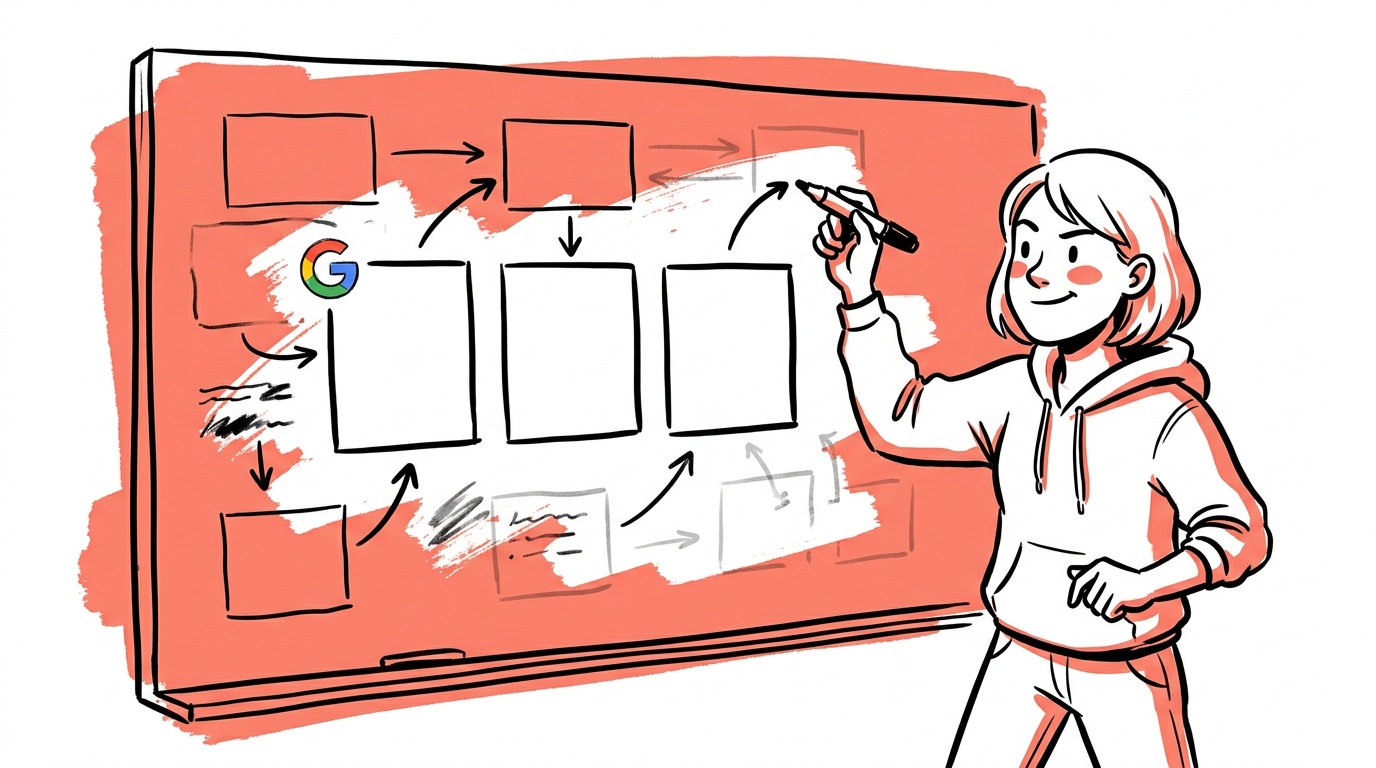
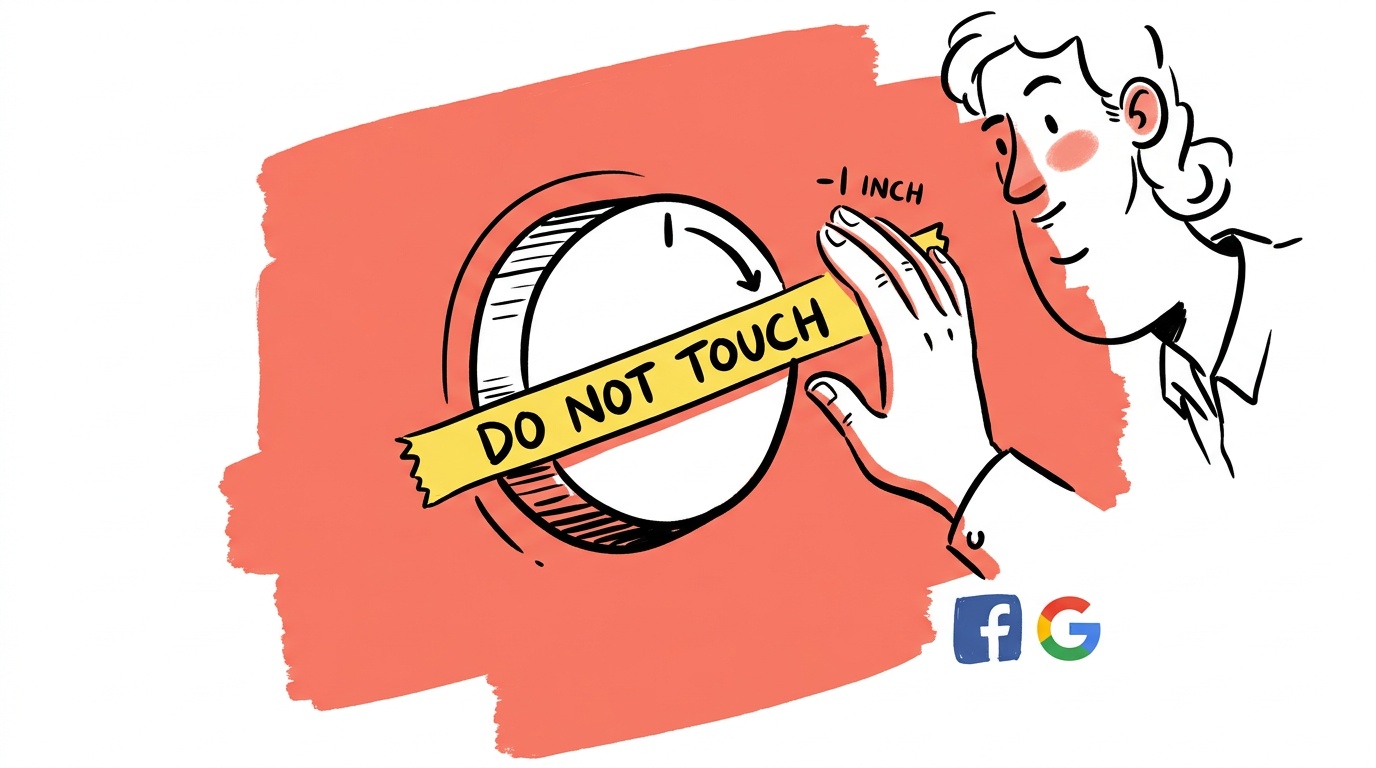

One founder on r/PPC recently cut their B2B ad budget by 50% and held lead volume flat. Their takeaway wasn't "spend less." It was that the original structure was hiding waste so well they couldn't see it until they forced the account to do more with less. When the budget pressure hit, the garbage queries stopped converting and the real signal became visible. That is the structural problem at the center of most Google Ads accounts: the setup obscures information instead of surfacing it.
This post is about how to build a campaign structure that fights back—and which bidding strategy belongs at each stage of account maturity.
TL;DR — Google Ads campaign structure and bidding
- Smart bidding needs clean conversion data first. Running tCPA or tROAS on a fresh campaign without enough signal will drain budget into Google's learning period with no return.
- Query sculpting (separating high-intent and low-intent traffic into distinct campaigns) is still worth doing in 2025, but exact execution depends on whether you're on manual or automated bidding.
- Manual CPC does not throttle volume by design—but raising bids alone on a supply-constrained auction won't unlock more clicks if the inventory ceiling is low.
- B2B accounts benefit from tighter campaign segmentation because conversion rates vary so sharply by query type that pooling them corrupts the smart bidding model.
- Budget allocation between campaigns is a structural decision, not a daily tuning task. Get the skeleton right first; then let bidding optimize within it.
The structural question nobody asks early enough
Most founders start by picking a bid strategy. That's the wrong order. Structure determines what data flows into your bid strategy, which queries get matched to which campaigns, and where your budget actually goes. A perfect tCPA target sitting on top of a broken structure will fail—not because tCPA is bad, but because it's optimizing against noise.
The decisions that matter structurally:
- How many campaigns, and by what axis? (intent tier, product line, geography, device)
- Which keywords live together? Keywords that share a budget should have roughly similar economics.
- How tight are your negatives? Negatives are the part of structure Google never reminds you to do.
- What conversion action is each campaign optimizing toward?
Get those four things right before you touch a bid strategy toggle.
Manual CPC: still useful, not dead
Manual CPC has a reputation problem. Google has been quietly deprioritizing it in the UI, and many operators have abandoned it in favor of Maximize Clicks as a "starter" bid strategy. That's often a mistake.
A question that surfaced in the PPC community recently asked whether Google throttles volume when you raise Manual CPC bids. The answer is no—Google doesn't throttle by design. But raising a manual bid doesn't unlock traffic that doesn't exist. If your keyword has a hard impression share ceiling (small niche, low search volume, tight geography), adding bid above the auction floor does nothing except raise your CPC on the existing clicks. The volume problem is structural, not a bidding problem.
Manual CPC earns its place when conversion volume is genuinely thin (fewer than 20 conversions per month per campaign), when your conversion tracking is unreliable, or when you're in a niche where one bad week of smart bidding can wipe a month of budget. It gives you a hard ceiling Google can't breach.
The cost is real: manual bidding doesn't adjust for time-of-day, device, audience, or query-level signals the way automated strategies do. At scale, that gap is expensive. But "at scale" requires data, and data requires structure. Once you have both, scaling spend without blowing out CPCs is the next problem.
Smart bidding: the data threshold problem
Smart bidding (tCPA, tROAS, Maximize Conversions) works when Google has enough signal to model probability of conversion per auction. Google's own documentation recommends at least 30 conversions in the past 30 days before tCPA can exit learning mode reliably—and that's a floor, not a target. Campaigns we've audited that ran comfortably above 50 conversions per month showed meaningfully more stable CPA than those hovering at the minimum.
The failure mode we see most often: a founder launches a tCPA campaign on a lead form submit, lead quality is bad, so they tighten targeting, which starves the campaign of data, which pushes it back into learning mode, which burns budget on exploratory clicks, which produces more bad leads. The loop repeats.
The fix is usually structural. Separate high-intent campaigns from broad exploratory campaigns. Let the broad campaign run Maximize Clicks or a loose tCPA to gather data cheaply. Feed the clean signal from high-intent campaigns into a tighter tCPA target. Don't try to run one campaign with one bid strategy across wildly different query intent levels.
Structure by stage: a decision framework
Rather than one-size-fits-all advice, the right structure depends on where your account sits today. Here's how we map it:
Early stage (fewer than 20 conversions/month total): Consolidate into one or two campaigns maximum. Use Manual CPC or Maximize Conversions without a target. Your only goal is to accumulate clean conversion data. Segmentation at this stage fragments the signal you can't afford to fragment. If that's where you are, the beginner structure from zero clicks to real results covers the setup in detail.
Hybrid stage (20–50 conversions/month): Introduce intent-based segmentation—one campaign for clear buyer-intent queries, one for research and broad terms. Run tCPA on the buyer-intent campaign if it individually clears 20 conversions. Keep the research campaign on Maximize Clicks with aggressive negatives.
Mature stage (more than 50 conversions/month per campaign): Full query sculpting by intent tier is viable. Separate bid strategies per campaign make sense. Performance Max can run alongside search campaigns if you've built enough negative and audience signal to constrain it.

Live today.
The full campaign — copy, images, targeting — generated for your site and deployed paused for your approval.
Query sculpting: what it is and when it's worth the maintenance cost
Query sculpting means distributing your keywords across campaigns or ad groups in a way that gives you explicit control over which queries trigger which campaign—and therefore which budget, bid strategy, and ad copy applies.
A recent PPC thread asked whether query-sculpted campaigns are still viable when Google keeps expanding match types and ignoring negatives. The honest answer: partially. Google's match type behavior has degraded the precision of sculpting, but the logic behind it is still sound. If "buy CRM software" and "what is CRM software" are both triggering the same campaign, your conversion rate on that campaign is a blend of two very different intents, and your tCPA bid is optimizing toward the blend, not the buyer.
Sculpting that blend into two campaigns gives you:
- Separate budgets, so informational traffic can't starve buyer-intent traffic
- Separate bid strategies if the data supports it
- Accurate performance data per intent tier
The maintenance cost is real. Negatives have to be maintained across campaigns, and Google's broad match increasingly crosses them. We test negative exact and negative phrase aggressively on sculpted accounts and audit cross-campaign search term overlap monthly.
B2B-specific structure problems
B2B accounts are the hardest environment for smart bidding because conversion volume is structurally low. A software company getting 40 demo requests a month cannot feed a reliable tCPA signal across multiple campaigns. This is not a Google problem—it's math.
The B2B scaling thread where a founder cut budget 50% and kept lead volume is instructive. The reduction forced the algorithm to concentrate spend on the queries that were actually working. The original structure was diffuse enough that smart bidding was spreading budget across low-quality adjacent keywords to hit volume targets.
For B2B specifically:
- Consolidate into fewer campaigns so conversion data pools into a usable signal
- Use a micro-conversion (time on site above a threshold, pricing page visit) as a secondary conversion action to supplement lead form data
- Segment by intent tier and product line, not by match type
- Run Manual CPC or tCPA with a high target if you're below 30 conversions per month total
The goal is to keep the smart bidding model fed without polluting it with mixed-intent traffic.
Maximize Clicks vs. high-intent segmentation
A question that comes up repeatedly: should you run Maximize Clicks for volume, or segment into a tight high-intent campaign even if it limits scale?
Maximize Clicks optimizes for the cheapest click to spend your budget. It does not care whether that click converts. In a competitive B2B niche, it will happily fill your day with research clicks, competitor comparison clicks, and clicks from people who bounced in four seconds. The CPC looks great. The pipeline looks broken.
High-intent segmentation limits volume but raises click quality. The tradeoff is real: if your product has a short sales cycle and broad demand, Maximize Clicks on a well-negated campaign can work as a data-gathering layer. If your product is expensive, high-consideration, and niche, spending the same budget on fewer, better-qualified clicks almost always wins.
When we've paused Maximize Clicks campaigns and redistributed that budget to sculpted high-intent campaigns running tCPA, the in-platform CPA typically rose in the first two weeks. What changed in the first 30 days—consistently—was the quality signal from the sales team. Fewer leads, more pipeline. That second number is the one that matters.
How to test this without breaking your pipeline
Run both approaches in parallel for 30 days with a 70/30 budget split favoring high-intent. Don't mix conversion data. Compare cost-per-qualified-lead, not cost-per-click or cost-per-form-submit. If your CRM doesn't tag lead source at this level, fix that before you touch campaign structure.
Budget allocation as a structural decision
Budget split between campaigns is where most founders make a recurring tactical mistake: they adjust it daily based on which campaign is "performing." That's noise-chasing.
Budget allocation should reflect the strategic role of each campaign:
- High-intent / bottom-funnel: gets the majority of budget if you're optimizing for direct revenue
- Mid-funnel / research queries: gets a capped secondary budget; its job is to feed retargeting audiences, not close deals
- Brand: cheap to run, high conversion rate, should never be starved
Change budget allocation when you see a sustained signal shift over two to three weeks—not because one day looked bad. The learning period for smart bidding resets partially with significant budget changes, so frequent reallocation actively prevents your bid strategy from stabilizing.
Think of your campaign structure as plumbing. Budget is water pressure. Bid strategy is the valve. If the pipes are routed wrong, adjusting pressure and valve settings won't fix the flow. Fix the pipes first.
The specific order of operations
If you're rebuilding or auditing an account, this is the sequence that works:
- Audit search terms — identify what's actually triggering your ads before touching anything else. Google's Search Terms report is the starting point.
- Segment by intent — separate clear buyer-intent queries from research and competitor queries.
- Build negatives — negative keyword lists shared across campaigns prevent cross-contamination.
- Set conversion tracking correctly — verify that the conversion action you're optimizing is firing accurately. Google Tag Manager's preview mode is fast for this.
- Choose bid strategy based on data volume — manual if you're thin on conversions, smart bidding once you have sustained signal above 30 conversions per month per campaign. (The full progression — Manual CPC → Maximize Conversions → tCPA → tROAS — is in how to pick the right bidding strategy.)
- Set budget by campaign role — allocate strategically, not reactively.
- Wait 30 days before drawing conclusions — most smart bidding decisions need at least one full learning cycle to evaluate fairly.
This is not exciting. It doesn't involve a new campaign type or a Google rep's recommendation. But it's the sequence that produces stable, readable performance data—which is the real output of a well-structured account.
FAQ
What is the best Google Ads campaign structure for a small budget?
For budgets under roughly $3,000/month, consolidation beats segmentation. Run one or two campaigns maximum so your conversion data pools into a usable signal for smart bidding. More campaigns means more learning periods and more budget split across campaigns that can't individually exit learning mode.
Should I use Manual CPC or Smart Bidding for Google Ads?
Use Manual CPC when you have fewer than 20–30 conversions per month per campaign, when your conversion tracking is unreliable, or when you need a hard spend ceiling. Switch to tCPA or Maximize Conversions with a target once you have sustained conversion data and trust the data source. Don't use Maximize Clicks as a "safe" default—it optimizes for cheap clicks, not conversions.
What is query sculpting in Google Ads and is it still worth doing?
Query sculpting is the practice of distributing keywords across campaigns so specific queries trigger specific campaigns with their own budgets, bid strategies, and ads. It's still valuable for separating high-intent and low-intent traffic, but it requires active negative keyword maintenance. Google's broad match expansion has made sculpting leakier, so audit cross-campaign search term overlap monthly.
Why is my tCPA campaign stuck in learning mode?
Usually because conversion volume is too low (fewer than 30 conversions per month per campaign), because you changed bids or budgets too frequently (each significant change resets learning), or because your conversion action fires inconsistently. Fix the conversion tracking first, then stabilize budget, then wait at least two weeks before evaluating.
How should I structure Google Ads campaigns for B2B?
Consolidate campaigns around product lines or intent tiers rather than match types. Use a micro-conversion as a secondary signal if lead volume is low. Avoid splitting into too many campaigns—data fragmentation prevents smart bidding from working. Prioritize lead quality metrics from your CRM over in-platform metrics like conversion rate or CPA.
Does raising a Manual CPC bid increase traffic volume?
Not if the auction is supply-constrained. Raising your bid above the clearing price doesn't create more searches or more ad slots. It raises your CPC on existing traffic. If you're hitting an impression share ceiling set by inventory rather than budget, the fix is structural—broader match types, additional keywords, expanded geography—not a higher bid.
When should I segment by match type vs. by intent?
In most accounts, segmenting by intent tier (buyer-intent vs. research vs. competitor) produces more useful performance data than segmenting by match type (exact vs. phrase vs. broad). Match type segmentation made more sense when match types were more distinct. Today, phrase and broad overlap heavily enough that intent-based segmentation gives you cleaner signal with less management overhead.
Live today.
The full campaign — copy, images, targeting — generated for your site and deployed paused for your approval.
We build AdControlCenter — AI-powered ad management for small businesses, online stores, SaaS companies and service providers. We write what we'd want to read: real numbers, no fluff, the things we wish we'd known when we started.
More from the team →