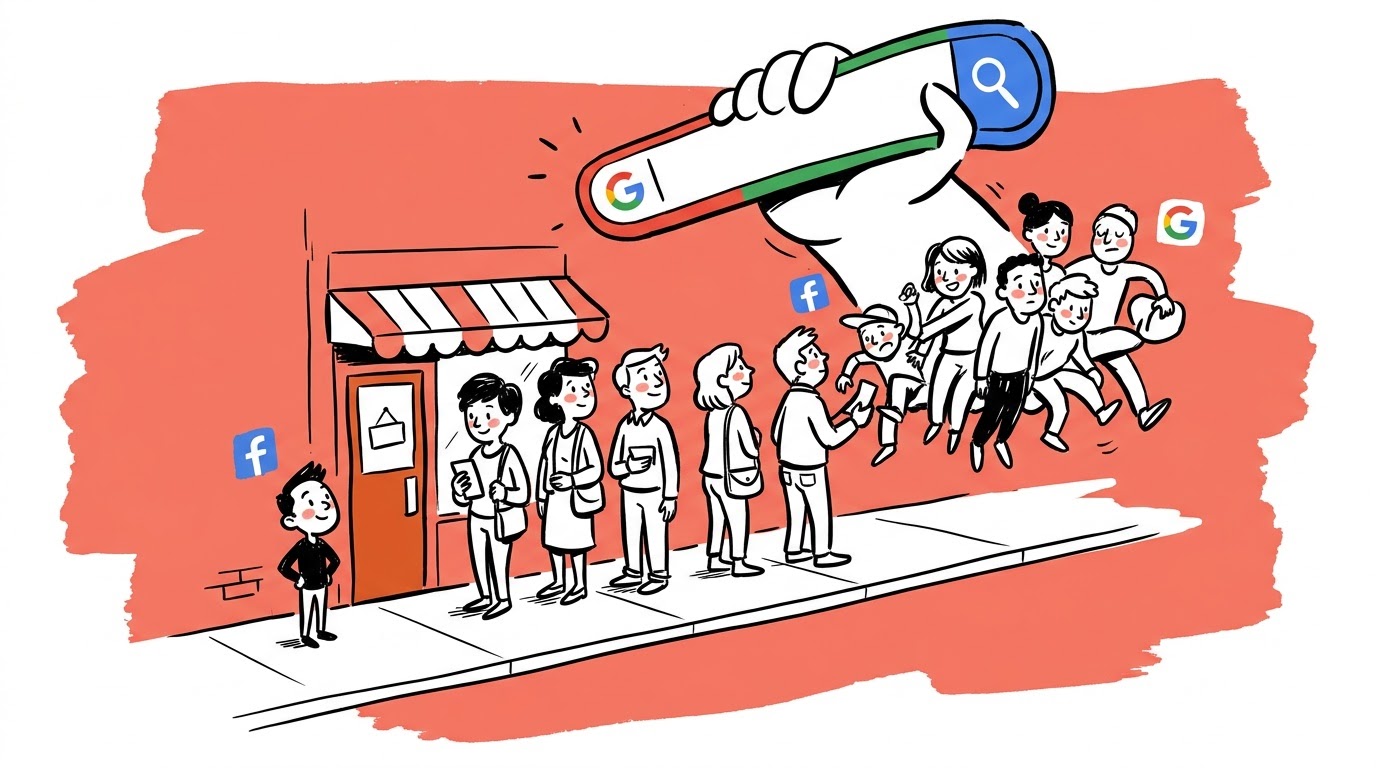
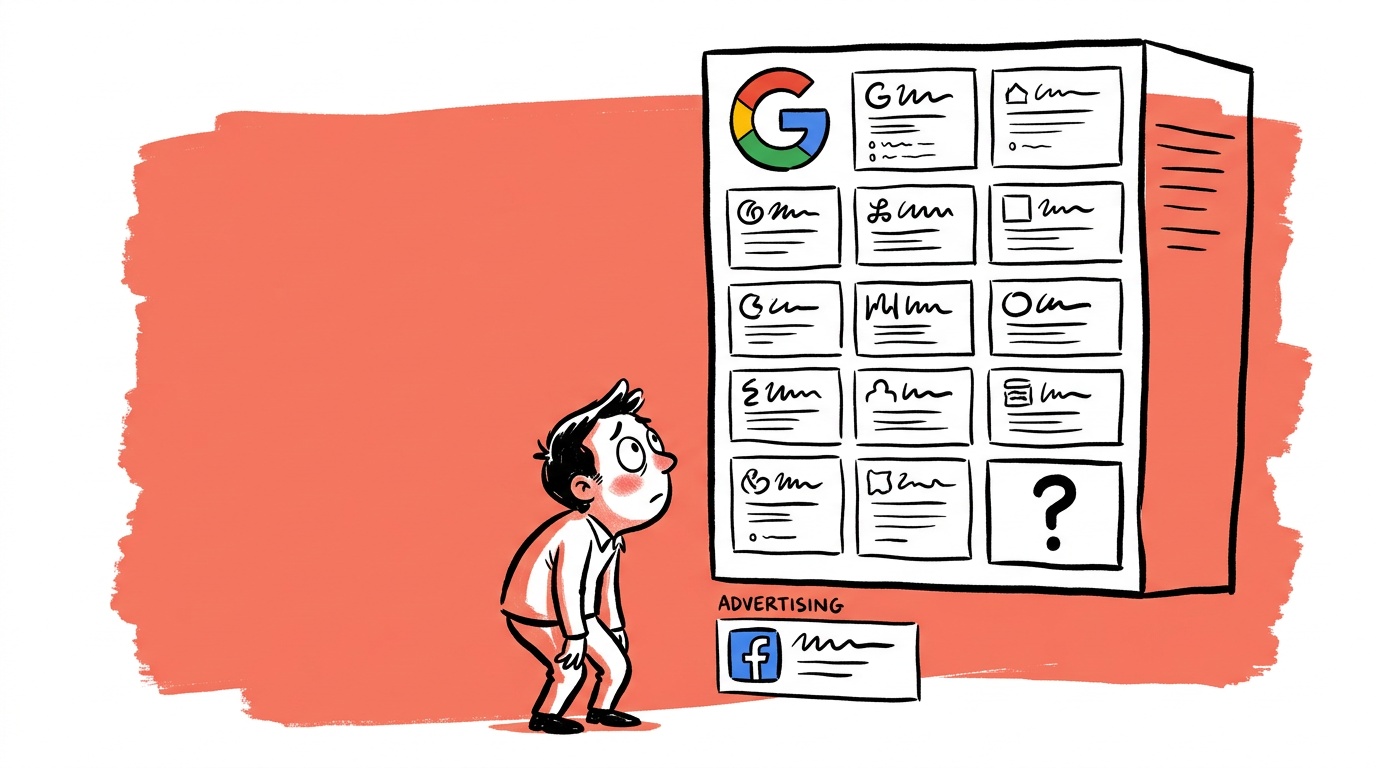
The most uncomfortable thing about AI Overviews is not that organic clicks are falling. It's that the metric most founders watch to detect the problem, rankings, can look perfectly healthy while the traffic behind it drains away. You can hold position three for a query and still lose the visit, because the answer now sits above you and the searcher is done.
If you run paid ads, you're not exempt. Paid placements sit on the same restructured page, and the informational, top-of-funnel clicks many of us used to harvest are the ones most likely to be answered in place.
The direct answer to "how do AI Overviews affect my Google traffic?": Google is moving from sending people to pages toward answering on its own results page. Informational queries are the most likely to end without a click, and the clicks that remain skew toward commercial, comparison, and brand-specific intent. Founders should measure click-through by query type, shift effort toward queries that still need a site visit, and build brand demand that bypasses the summary entirely.
- AI Overviews answer informational queries on the results page, so ranking well no longer guarantees a visit.
- Impressions and rankings can hold steady while clicks fall, so track clicks and conversions by query type, not position.
- Commercial and transactional queries still need a site visit, which is where paid and organic effort should concentrate.
- Being cited inside an AI answer is a new, separate visibility channel, and it rewards specific, quotable, sourced content.
- Branded demand is the most durable defense because people who search your name skip the summary.
What's actually changing
Two things are happening at once, and they're easy to blur together.
First, the results page is changing shape. A generated summary appears above the traditional listings for many queries, and it tries to resolve the question without a click. Second, the economics are shifting with it. Publishers that monetize through display and affiliate links depend on visits, and a summary that answers the question reduces them. Advertisers can lose some of the exploratory traffic that used to feed retargeting pools.
We're not going to quote a single industry click-loss figure as if it applied to you. Published studies vary widely by query mix, and your site's mix is what matters. The reliable source is your own Search Console data, and the next section shows how to read it.
Why rankings are now a misleading metric
Position was always a proxy. It stood in for "how likely is a person to reach me." That proxy worked when the first screen was ten blue links. It breaks when the first screen is a paragraph of generated text.
The practical symptom: impressions stay flat or grow, average position looks fine, and clicks decline. If you only watch rank trackers, you'll see nothing wrong until revenue shows it.
How to see it in your own data
In Search Console, export queries and split them into three buckets: informational ("what is", "how to"), comparison ("best", "vs", "alternatives"), and transactional or branded. Then compare click-through rate on each over the last several months. The informational bucket is the one to watch first, since it's the type of query a summary can answer outright. Check whether the pattern holds for your site rather than assuming it does.
Where clicks still happen
An AI summary is good at definitions, simple how-tos, and quick facts. It is worse at things that require a decision, a price, a live inventory check, a demo, or trust in a specific vendor.
That points to the queries still worth fighting for:
- Comparison and evaluation queries. People weighing options often want to see real pages, reviews, and pricing.
- Transactional queries. Someone ready to buy needs somewhere to buy.
- Brand queries. A person typing your name wants you.
- Tool and calculator queries. If the answer is an interaction, not a sentence, a summary can't replace it.
If a page of yours exists only to define a term, assume it is the most exposed asset you have. If a page lets someone do something, it's far safer.

Live today.
The full campaign — copy, images, targeting — generated for your site and deployed paused for your approval.
What to do with paid search
Paid is not a clean escape hatch, but it behaves differently from organic.
- Audit your broad informational spend. If you bid on research-stage queries to build audiences, check whether those clicks still arrive at the same cost and quality. A two-week test beats finding out from a quarterly review.
- Shift budget toward queries with purchase intent. These are the least likely to be fully answered on the page.
- Protect brand terms. Check your auction insights for competitors or aggregators bidding on your name. If they are, a brand campaign is cheap insurance.
- Judge on conversions, not clicks. If click volume falls but conversion rate on the remaining clicks rises, your account may be healthier than the dashboard suggests. Evaluate cost per acquisition, not traffic.
None of this requires a new tool. It requires looking at the account by intent instead of by campaign name.
Getting cited instead of clicked
There's a second visibility channel now: being the source an AI answer draws from, in Google and in assistants like ChatGPT and Perplexity. A citation doesn't always produce a visit, but it puts your name in front of a person at the moment they're forming an opinion.
What tends to get content cited:
- A direct answer to a specific question near the top of the page.
- Concrete, attributable claims with a named source, rather than vague generalities.
- Original data or first-hand testing that can't be found elsewhere.
- Clear structure, with headings that match how people phrase questions.
This is why we put a short answer and a summary box at the top of our own posts. If you can't state your point in two sentences, a model can't reliably quote it either. Google's own guidance on AI features and your website is worth reading directly, since it describes how your content can appear in these features and what controls you have. For the measurement side, Google's Search Console performance report documentation explains how clicks, impressions, and position are calculated, which matters when you're diagnosing a gap between them.
Build demand Google can't intercept
The most durable response is the least technical. A person who already knows your name searches for it, and no summary stands between them and you.
That means putting real effort into channels that create recall outside the search page: a newsletter, communities where your buyers gather, partnerships, short-form video, and a product people mention to each other. Paid social and video can introduce your brand to people before they ever start searching, which then shows up later as branded search.
A founder with a small budget should ask one question: of the traffic I rely on, how much comes from people who typed my name, and how much from people who typed a problem? The second group is the one being summarized away. Growing the first is slow and unglamorous, and it is the only part of this you fully control.
What we'd do this week
- Export Search Console queries and bucket them by intent.
- Compare click-through rate by bucket across recent months.
- Identify your five most exposed informational pages and decide whether to add an interactive element, original data, or a clear next step.
- Review paid spend on research-stage terms and move a test slice to commercial terms.
- Make sure brand campaigns are live and your brand query returns the page you want.
FAQ
Are AI Overviews really reducing website traffic?
For many informational queries, yes: the answer appears on the results page and fewer people click through. The size of the effect depends heavily on your query mix, so check your own Search Console data rather than relying on a headline number.
Do AI Overviews affect Google Ads?
They change the page layout that ads appear on, and informational clicks that were once cheap to buy may now convert differently. Commercial and brand queries are likely less exposed because they need a site visit. Test by intent segment before changing budgets broadly.
How do I know if AI Overviews are hurting my site?
Look for impressions holding steady or rising while clicks and click-through rate fall, especially on "what is" and "how to" queries. Position staying flat while clicks drop is the classic signature.
Can I opt out of AI Overviews?
Google documents the controls available to site owners in its AI features guidance. Opting out of features can also reduce your visibility in search, so weigh the tradeoff before changing anything.
What kind of content still gets clicks?
Pages where the visitor must do something: compare, calculate, buy, book, or verify. Pages that only define or summarize are the most exposed.
How do I get cited in AI answers?
Lead with a direct answer, make specific claims with named sources, include original data or first-hand testing, and use headings that mirror real questions. There's no guarantee, but vague content is rarely quoted.
Should I stop doing SEO?
No. Stop treating rankings as the goal. Keep SEO for commercial and comparison intent, and add brand and citation work alongside it.
Pull your Search Console queries today and split them by intent. If informational clicks have fallen while branded and transactional clicks haven't, you know exactly where to stop spending effort. If they've all fallen together, that's a different problem, and the first thing to check is whether something other than the summary, like seasonality or a tracking change, explains it.
Live today.
The full campaign — copy, images, targeting — generated for your site and deployed paused for your approval.
We build AdControlCenter — AI-powered ad management for small businesses, online stores, SaaS companies and service providers. We write what we'd want to read: real numbers, no fluff, the things we wish we'd known when we started.
More from the team →