Most ad platforms announce themselves loudly. ChatGPT ads arrived quietly — woven into conversations, not stamped on a sidebar — and a lot of founders are still not sure whether they're real, whether they're accessible, or whether they're worth budget. All three answers are yes. The more interesting question is: what do you have to believe about conversational intent to make them work?
The system is early, access is genuinely gated, and the advertisers who understand how conversational targeting differs from keyword bidding before the platform opens wide will have a real structural advantage. That's the reason to read this now.
- OpenAI runs a managed partner program for advertisers; direct self-serve access is limited, but third-party platforms including AdControlCenter can get small businesses in.
- ChatGPT ads surface inside conversations as sponsored responses or product suggestions — not banner placements — so creative must match conversational tone.
- Targeting is intent-based, built from what the user is actively asking, which is fundamentally different from keyword bidding on Google.
- Before you run a single dollar, you need a specific offer, a fast landing page, and copy that answers a question — not copy that shouts a promotion.
- Realistic first-campaign goals: learning about conversational intent in your category, not immediate ROAS parity with your best Google campaign.
What ChatGPT Ads Actually Are (and Where They Show Up)
ChatGPT ads are not display units. There is no rectangle in the corner of the screen. What OpenAI has built is a sponsored-content layer that surfaces inside the conversation flow itself — when a user asks a question that has commercial intent, a relevant sponsored result can appear alongside or within the model's response.
Think about the difference between a user Googling "best CRM for freelancers" and a user typing that same question into ChatGPT. On Google, they get a list of links with ads mixed in. In ChatGPT, they get a synthesized answer — and if a CRM brand has purchased relevant placement, a sponsored mention or product card can appear as part of that answer, labeled clearly as sponsored.
The placement formats vary by surface:
- Sponsored product suggestions appear when users ask for recommendations in a category.
- Sponsored response modules attach to informational answers where a product or service is a natural next step.
- Conversation-exit placements appear at the natural end of a thread when the user's next action is likely a purchase or sign-up.
The ad environment is less cluttered than most platforms — which benefits early buyers on inventory and attention alike.
OpenAI labels sponsored content clearly within the chat interface. Sponsored placements carry explicit labeling — "Sponsored" or equivalent — so users know they're seeing paid content. Advertisers running through partner platforms are bound by OpenAI's content and safety policies, which include restrictions on misleading claims, prohibited categories, and required disclosure formatting. When we onboard clients onto ChatGPT placements, we review creative against those guidelines before anything goes live.
Who Can Buy ChatGPT Ads Today
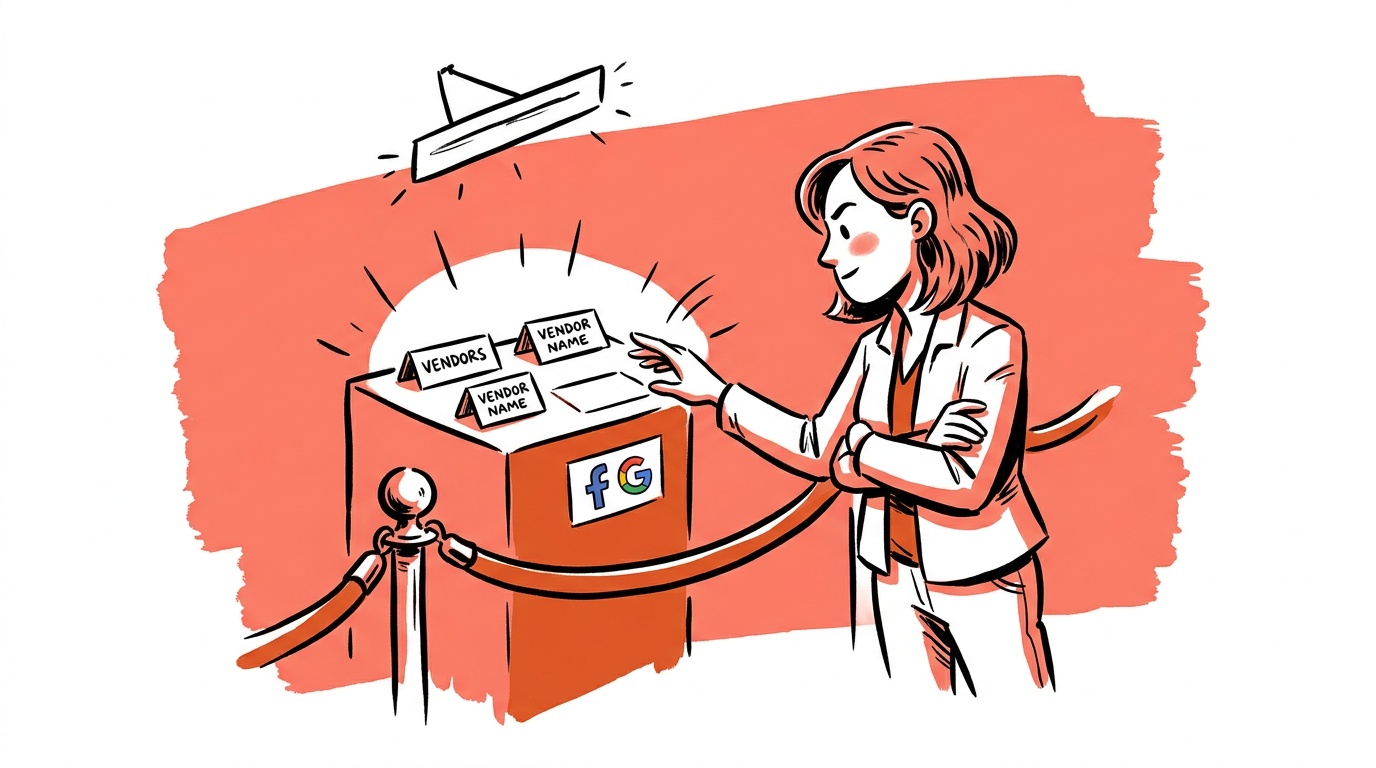
Access to ChatGPT advertising runs through OpenAI's managed partner program. This is not a self-serve dashboard you can find by clicking around on openai.com. It operates more like the early days of Facebook Ads or LinkedIn's managed programs — where certain agencies, platforms, and large direct advertisers get structured access, and everyone else waits.
For small businesses, this creates a real barrier. Most founders don't have a direct relationship with OpenAI's sales team, and minimum spend thresholds in managed programs are typically sized for enterprise budgets. We break down the three access paths and the pricing logic in ChatGPT ads: costs, formats and eligibility.
This is where third-party ad management platforms matter. Platforms like AdControlCenter hold partner-level access to emerging ad networks — including OpenAI's ecosystem — and can execute campaigns on behalf of clients who would otherwise be locked out. If you want to advertise on ChatGPT as a small business today, going through a platform with an existing OpenAI relationship is the fastest practical path.
The partner model also means your account structure matters. OpenAI's program uses a key-per-client model, meaning each advertiser's campaigns are isolated under their own credential set, managed through the partner's dashboard. This is important for small businesses: your data, your conversions, and your targeting signals stay yours even when running through an intermediary platform.
On privacy: ChatGPT's ad targeting is built on what users are actively expressing in conversation, not on persistent behavioral profiles assembled across the web. That's a meaningful architectural difference from cookie-based platforms, and it shapes both what you can target and what you can't. You won't find the granular demographic layering you get on LinkedIn. What you get instead is direct access to expressed intent — which in many categories is more useful anyway.
How Conversational Intent Differs from Search Keywords
This is the part most advertisers get wrong on their first ChatGPT campaign, and it's worth spending real time on.
Google keyword targeting works on exact and broad-match signals from typed queries. You bid on "accounting software small business" and your ad shows when someone types something close to that. The query is a fragment — a few words stripped of context.
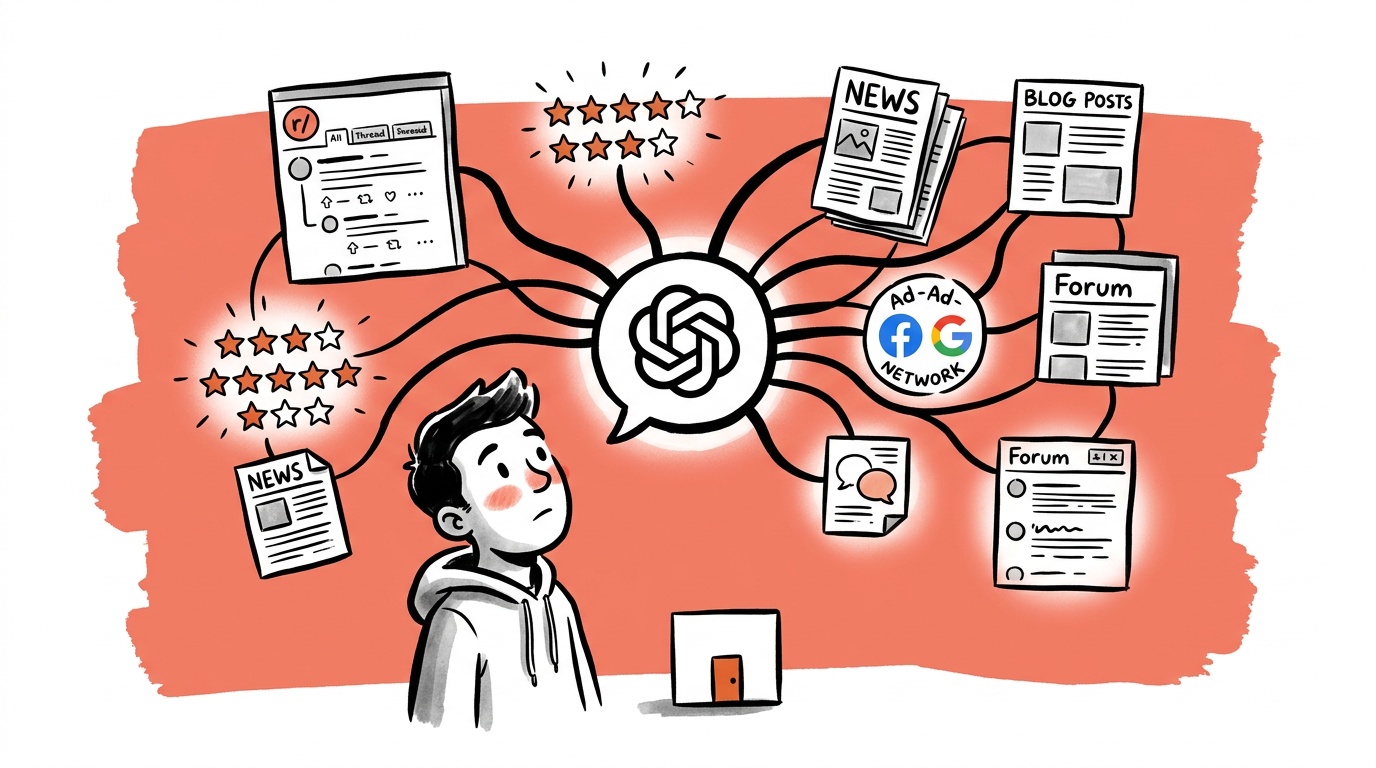
A ChatGPT conversation is the opposite. By the time a sponsored placement is eligible to show, OpenAI's system has often processed a multi-turn exchange. The user might have spent several messages describing their situation before asking for a recommendation. That full context — their constraints, their frustrations, their decision criteria — is the targeting signal.
What this means practically:
Your creative needs to answer a question, not just assert a benefit. A headline like "The fastest invoicing app for freelancers" works on Google because it matches a search fragment. In a ChatGPT context, the user may have already explained they're a freelancer who hates chasing payments. Your sponsored content needs to feel like a relevant answer to their specific situation, not a generic ad dropped into the thread.
Negative intent is as useful as positive intent. A user who has just told ChatGPT "I tried three CRMs and they're all too complicated" is signaling strong purchase intent combined with a specific objection. If your product is genuinely simpler, that's the moment to surface. Conversational targeting lets you reach users at the exact point of articulated frustration.
Keyword lists don't transfer directly. Your Google keyword list is a useful starting point for understanding what your customers search, but conversational placements are bought against topic and intent clusters, not exact strings. Plan to rebuild your targeting logic from scratch, informed by but not copied from your search campaigns.

Live today.
The full campaign — copy, images, targeting — generated for your site and deployed paused for your approval.
Formats and Targeting Basics
Current ChatGPT ad formats for small businesses running through partner platforms generally fall into a few practical categories:
Product Cards — structured units with a product name, short description, and a link. These tend to perform best when the user's query is explicitly shopping-oriented.
Sponsored Mentions — the model references a product or service by name within a longer response, with a sponsored label. These require copy that reads naturally in a conversational context. Stilted marketing language stands out badly here.
Follow-Up CTAs — a prompted next step offered at the end of a response. "Would you like to compare pricing?" or "Want to see how this works for your team size?" These drive clicks from users who are already engaged with a topic.
Targeting is built around:
- Topic clusters — broad content categories the conversation falls into
- Intent signals — is the user researching, comparing, or ready to buy?
- Negative topic exclusions — conversations you explicitly don't want to appear in
- Geographic and language filters — available from launch
Demographic targeting in the traditional sense (age, income, job title) is more limited than on platforms like LinkedIn or Meta, because ChatGPT's ad system is designed around what the user is actively expressing rather than who they are on paper. For many small businesses, this is an advantage — you're not paying to reach a demographic that might want your product, you're paying to appear when someone is actively looking for it.
What to Prepare Before You Spend a Dollar
Running a ChatGPT ad before your fundamentals are right is an expensive way to learn nothing. Here's what needs to be in place:
The Offer
You need a single, specific offer. Not "learn more about us." Not "we help businesses grow." A specific thing: a free trial, a fixed-price service, a comparison tool, a template. Conversational ads live inside a context where the user is already engaged with a topic — if your offer doesn't fit cleanly into that context, it reads as noise.
The fastest way to test your offer's clarity: read it out loud as if a ChatGPT response had just recommended your product. Does it answer the user's next obvious question? If not, sharpen it.
The Landing Page
Your landing page needs to continue the conversation that just happened, not start a new one. A user who clicked a ChatGPT ad after asking about invoicing software for freelancers should land on a page that speaks directly to freelancers and invoicing — not your generic homepage.
Page speed matters here more than on most platforms. A user who just got a synthesized answer and clicked through is expecting immediate clarity on the other side. A slow or generic page kills the conversion before it starts.
The Creative
Write your ad copy as an answer, not a pitch. Draft it as if you were responding to the user's question yourself. Then shorten it. Then remove any word that sounds like it belongs in a banner ad.
Realistic Expectations for Your First Campaign
ChatGPT advertising is not going to replace your Google or Meta spend overnight. If you're deciding how to split a small budget, see ChatGPT ads vs Google Ads. It is a different surface with a different buying journey, and most first campaigns should be treated as paid research — you're learning what conversational intent looks like in your category before you scale.
A few honest expectations:
Volume will be lower than search. The inventory is newer and more selective. You may see fewer impressions than on Google for the same budget. That's fine if the intent quality is higher.
ROAS benchmarks from other platforms don't apply yet. You don't have enough data, and neither does anyone else. Set a learning budget, define what you want to learn, and evaluate against that — not against your Google Shopping ROAS.
The learning compounds. Conversational intent data — what users are actually saying when they're in the market for your product — is genuinely valuable beyond your ChatGPT campaigns. It can inform your Google ad copy, your landing page headers, your sales scripts. Many advertisers find this a useful side effect even before the direct ROAS math works.
Plan for iteration. First-run creative on conversational platforms rarely hits on the first try. Budget for at least three creative variations and plan to refresh based on what the data shows about which questions your best customers are actually asking.
FAQ
Can a small business advertise on ChatGPT directly? Direct self-serve access to ChatGPT advertising is currently limited to OpenAI's managed partner program, which is designed for larger advertisers. Small businesses can get access through partner platforms — like AdControlCenter — that hold relationships with OpenAI's ad ecosystem and can run campaigns on behalf of their clients.
How much does it cost to advertise on ChatGPT? There is no public rate card for ChatGPT ads. Pricing through managed programs is typically negotiated and varies by format, intent category, and volume. Through partner platforms, small businesses can often access lower effective entry points than going direct. Budget for a genuine learning phase rather than expecting fixed CPM or CPC benchmarks to apply from day one.
What makes ChatGPT ads different from Google search ads? Google search ads target keyword fragments. ChatGPT ads target conversational intent — the full context of what a user is actively asking, often after a multi-turn exchange that reveals not just the query but the user's situation, objections, and decision criteria. This requires different creative, different targeting logic, and different success metrics.
What ad formats are available on ChatGPT? Current formats include product cards, sponsored mentions within responses, and follow-up CTA prompts at the end of conversations. Format availability may vary depending on how you access the platform and which intent categories your campaign targets.
How do I target the right audience on ChatGPT? ChatGPT ad targeting is built around topic clusters, intent signals (research vs. comparison vs. purchase), geographic and language filters, and negative topic exclusions. It is less reliant on demographic data than platforms like LinkedIn or Meta, which can be an advantage if your product has clear use-case triggers but a broad potential audience.
Do ChatGPT ads work for local businesses? Geographic targeting is available, which means local businesses can restrict their campaigns to relevant areas. ChatGPT's user base tends toward higher-intent, research-oriented queries — which suits some local categories (home services, professional services, specialty retail) better than others. Test with a specific local offer before committing significant budget.
How do I measure success for ChatGPT ad campaigns? Start by defining what you want to learn, not just what you want to earn. Track clicks, landing page conversion rate, and downstream outcomes (sign-ups, calls, purchases) the same way you would any paid channel. Use UTM parameters on every link. In the early phases, pay attention to which creative angles drive clicks — that qualitative signal about conversational intent in your category is worth as much as the direct conversion data.
The most useful thing you can do this week is not set up a campaign. It's write down, in plain language, the three questions your best customers were asking when they decided they needed what you sell. That's your ChatGPT ad brief — and it's the thing most advertisers skip.
Live today.
The full campaign — copy, images, targeting — generated for your site and deployed paused for your approval.
We build AdControlCenter — AI-powered ad management for small businesses, online stores, SaaS companies and service providers. We write what we'd want to read: real numbers, no fluff, the things we wish we'd known when we started.
More from the team →