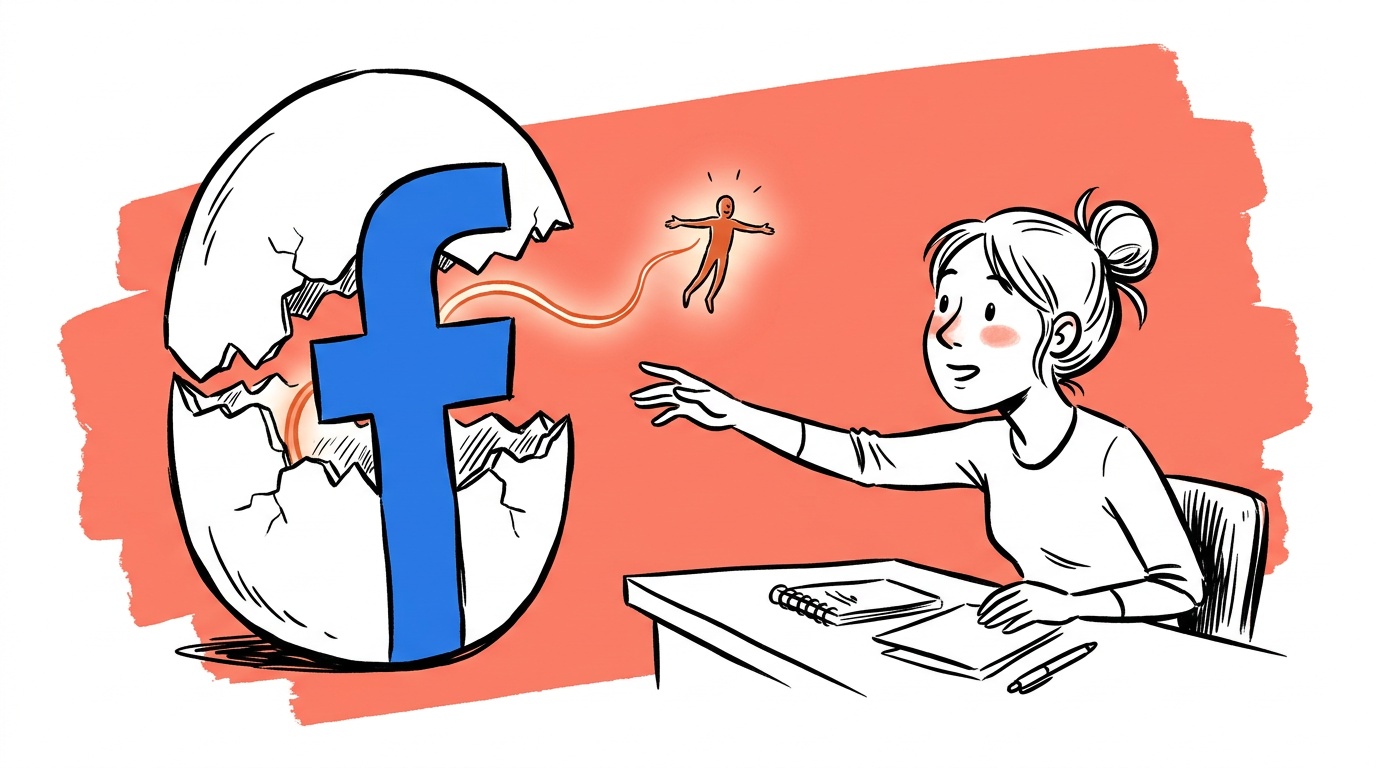
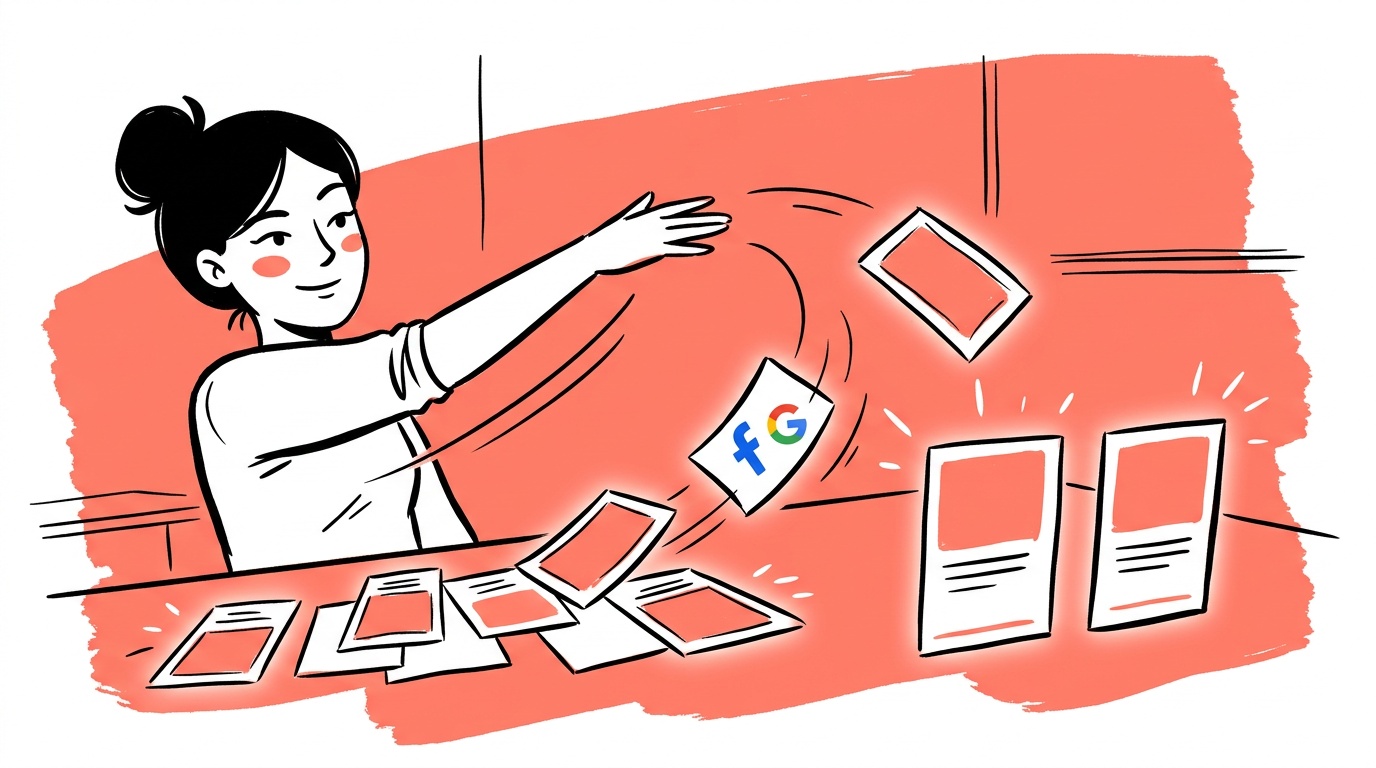
Meta's Creator Marketplace used to work the way most directories work: you searched, you filtered, you emailed, you waited. The AI rebuild changes the fundamental mechanic — it surfaces creators to brands instead of waiting for brands to find creators. That inversion is small on the surface and significant underneath.
If you manage Meta paid campaigns for a product business, this matters even if you've never touched influencer spend. The AI infrastructure now powering creator-brand matching sits inside the same stack Meta is deploying across feed ranking and ad format prioritization. These are not separate bets.
TL;DR: Meta AI Creator Marketplace Changes
- Meta rebuilt its Creator Marketplace so AI recommends creators to brands based on audience fit, not just keyword filters — shifting discovery from search-pull to AI-push.
- The matching logic draws on engagement patterns and brand ad history, not just demographic filters.
- Brands can now send partnership briefs directly through the platform, and creators can signal interest back — compressing a workflow that previously lived in spreadsheets and DMs.
- For paid-ads teams, the relevant consequence is that creator content approved through this flow can go straight into Partnership Ads without a separate whitelisting handshake.
- Brief quality is now your main bottleneck. The platform friction is dropping.
What Actually Changed Inside the Marketplace
The old Creator Marketplace was a filterable list. You could narrow by follower count, category, audience demographics. Useful, but it put the entire discovery burden on the brand side, and the signal quality was low — follower count and category are weak proxies for whether a creator's audience will buy your product.
The rebuilt version flips the first step. Meta's AI scans a brand's existing page, ad history, and stated campaign goals, then surfaces a ranked shortlist of creators whose audiences show genuine overlap with the brand's customer base. The matching logic draws on engagement patterns, not just demographics — which is a harder signal to game.
Demographic matching — age, location, interest category — is what every ad-targeting system has done for years. Engagement-pattern matching asks a different question: does this creator's audience actually behave like buyers in this category? That's closer to behavioral lookalike modeling than to a media kit comparison.
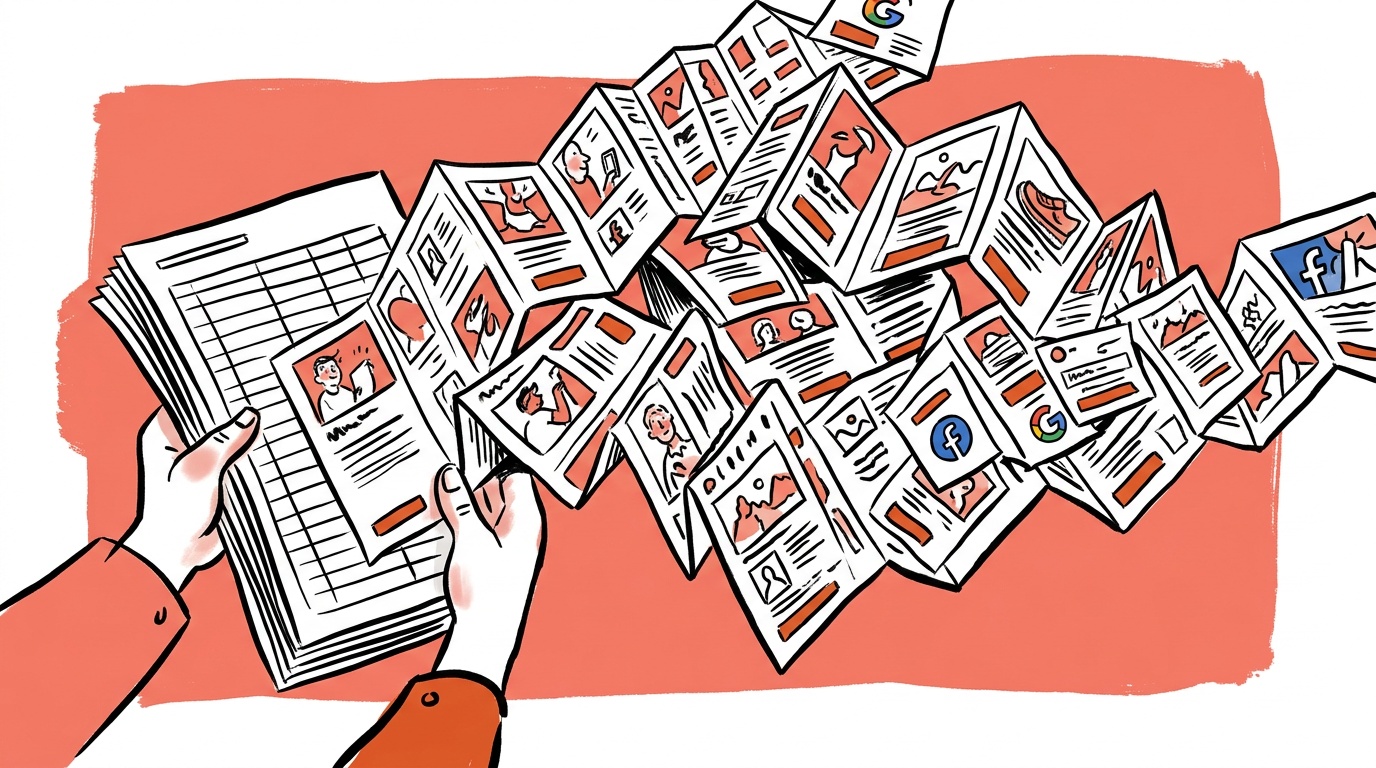
The brief flow is also new. Brands write and send a structured campaign brief inside the platform. Creators see it, signal interest or decline, and the whole conversation is logged in one place. Before, this handshake happened over email or Instagram DMs — no audit trail, painful reconciliation when usage rights or payment terms were disputed.
Before vs. After: The Workflow in Plain Terms
Old flow: search directory → export shortlist to spreadsheet → outreach via DM or email → wait → negotiate → send separate Business Manager access request → wait again → brief separately → hope the creator reads it.
New flow: AI surfaces shortlist → brand sends brief in-platform → creator accepts → Partnership Ads permissions are bundled into that acceptance → creative is ready to run.
The failure points that old flow killed campaigns — the access-grant step especially — are either removed or consolidated. That's the real change.
The "Couldn't Exist Before AI" Claim — What It Actually Means
Meta has said publicly that the scale of matching this system performs was not possible before recent model improvements. The honest read: they're not claiming no version of this existed before. They're saying the version that runs across millions of creator accounts and thousands of brand pages simultaneously — at low latency, with useful accuracy — required model capabilities that are genuinely recent.
That's a meaningful distinction. Many platforms have had "AI recommendations" that were glorified collaborative filtering. What Meta describes is closer to a real-time retrieval system that holds a representation of a brand's customer base and continuously searches a creator graph against it — not just when a brand logs in and clicks "find creators."
For ad-tech founders, the relevant question is: if Meta can do this for creator matching, what else is that infrastructure touching? Based on what Meta has published, the answer is most of their ad stack. Creative recommendations in Advantage+ Creative, audience expansion in Advantage+ Audiences, placement optimization — all run on the same family of models. The Creator Marketplace rebuild is a visible surface for infrastructure that was already there.
The Partnership Ads Connection
This is the part that matters most if your job is buying paid media.
Partnership Ads let you take a creator's organic post and run it as a paid ad from the brand's account, or as a co-branded unit showing both the creator and brand. The old workflow required the creator to grant ad account access through a separate Business Manager handshake — a step that confused many creators and caused campaigns to start late or stall entirely.
The new Marketplace flow bundles the permissions needed for Partnership Ads into the creator's brief acceptance. You don't chase a separate access grant. The creator said yes to the campaign; that yes includes the paid amplification rights.
This is a real operational improvement. The access-grant step was where influencer-to-paid workflows routinely broke down. Removing it doesn't make creative better — it just means the creative you have can move faster.

Live today.
The full campaign — copy, images, targeting — generated for your site and deployed paused for your approval.
What This Means for Paid Campaign Teams Specifically
Most paid media teams and influencer teams operate in separate silos, with separate budgets and separate reporting. Meta's architecture increasingly assumes they're part of the same loop. When a Partnership Ad performs well, that signal feeds back into Meta's broader targeting models. When your conversion campaigns build audience data, that data informs which creators the Marketplace recommends.
If your teams are siloed, you're leaving signal on the table. The brand page, ad account, and Creator Marketplace are all feeding the same model. Teams that connect these data flows — even loosely — get better recommendations from each individual surface.
Practical steps worth taking:
- Make sure your Business Manager houses both your paid ad account and your creator partnership activity, so Meta's system sees them as related.
- When a Partnership Ad performs well, document the creator's content style and brief it explicitly in future rounds — the AI can use engagement signals but cannot read your internal creative strategy.
- Test Partnership Ads against your standard dark post creative on the same audience. In accounts we've seen, creator-voice creative tends to perform differently on cold versus warm audiences — but the pattern varies enough by category that you should run the test before assuming which way it goes in your account.
The Measurement Problem This Doesn't Solve
The Marketplace rebuild is an operational improvement. It does not fix influencer measurement.
Attribution for creator content is still broken in the same ways it was before. View-through windows, organic reach contaminating paid lift measurement, and the fundamental problem that a creator's audience often converts on a different device than where they saw the content — none of that changes because the brief workflow is now in-platform.
What the platform does give you is better data on which creator's content reached which audience segment, because that's now tracked inside Meta's system rather than inferred from UTM parameters on a link in bio. Useful, but not a clean incrementality test.
If you want to know whether your creator spend is actually driving revenue, you still need a holdout test — a geography or audience segment that sees none of the creator content — and you need it running before you scale the partnership spend. The new Marketplace doesn't change this. It just means you spend less time on logistics and have more time to run the test properly.
For reference on Meta's current attribution documentation, see Meta's Business Help Center on Partnership Ads and Meta's published Advantage+ overview. For independent context on influencer measurement methodology, Nielsen's approach to brand lift offers a useful comparison framework.
Our Read: What's Real and What's Marketing
The AI matching is plausible as a genuine improvement. Meta holds more behavioral data on creator audiences than any other platform. If the retrieval system is actually using engagement patterns rather than just demographic buckets, the recommendations should outperform manual filtering for most consumer and DTC categories.
The brief flow and bundled Partnership Ads permissions are real operational improvements with clear, measurable impact on campaign launch timelines.
What's less clear is how well the AI matching performs for smaller or niche product categories. The system is trained on brands that have used the Marketplace — which skews toward consumer, lifestyle, and DTC. If you're selling into a specialized professional vertical, the creator graph may be too thin for AI matching to add much over manual search. Mid-tier creators in niche categories should also watch whether the system concentrates recommendations among already-prominent accounts, since models trained on engagement data tend to favor creators who already have strong signals — which could make discovery harder for smaller voices in thin categories.
The honest answer is: test it. Run the AI-recommended shortlist against your manually-curated shortlist, brief both sets, and compare on creative output quality and paid performance. That's a test you can run in a single campaign cycle.
FAQ
What is Meta's Creator Marketplace? Meta's Creator Marketplace is a platform inside Meta Business Suite that connects brands with Instagram and Facebook creators for paid partnerships. The recent rebuild added AI-powered matching, where Meta recommends creators to brands based on audience fit rather than requiring brands to search manually.
What changed in Meta's Creator Marketplace update? The main changes are: AI-driven creator recommendations (Meta surfaces creators to brands instead of waiting for brands to search), an in-platform brief and response flow, and bundled permissions for Partnership Ads so brands don't need a separate access-grant step from creators.
What are Partnership Ads on Meta? Partnership Ads are paid ad units that run using a creator's organic content, either from the brand's ad account or as a co-branded placement. They allow brands to amplify creator posts as paid media without producing separate ad creative. Previously called Branded Content Ads, they require creator permission to run.
How does Meta's AI decide which creators to recommend? Meta has indicated the matching uses audience engagement patterns and the brand's existing page and ad history, not just demographic filters. The exact model architecture isn't public, but the system is designed to surface creators whose audiences behave like the brand's existing customers — not just creators who share the same broad interest category.
Does the Creator Marketplace update affect my regular paid campaigns? Directly, no. Your standard conversion campaigns run separately. But the underlying AI infrastructure is shared across Meta's ad systems — Advantage+ Creative, Advantage+ Audiences, and now creator matching all draw on the same model stack. If your paid account and creator activity are in the same Business Manager, Meta's system can connect the signals.
Can small brands use the new Creator Marketplace? Yes. The Marketplace is available to any brand with a Meta Business account. The AI matching quality may vary depending on how established your page and ad history are — the system has more signal to work with for brands that have run campaigns longer.
Does the new Marketplace solve influencer attribution? No. Attribution for creator content is still a hard problem. The in-platform tracking gives you better data on which creator content reached which audience, but you still need a holdout experiment to measure true incrementality. The Marketplace improvements are operational, not measurement-related.
The specific test worth running: if you're managing Partnership Ads today with a manual creator workflow, use the new brief flow on your next campaign cycle and track whether the access-grant step — historically where campaigns stall — actually compresses your launch timeline. That's the easiest version of this to prove or disprove in your own account, and it's a smaller commitment than trusting AI-matched creator selection before you've seen how the recommendations perform in your category.
Live today.
The full campaign — copy, images, targeting — generated for your site and deployed paused for your approval.
We build AdControlCenter — AI-powered ad management for small businesses, online stores, SaaS companies and service providers. We write what we'd want to read: real numbers, no fluff, the things we wish we'd known when we started.
More from the team →