
Most founders who struggle with Meta ads are not failing at tactics. They're failing at the underlying model. They obsess over campaign structure, bidding strategies, and audience targeting while ignoring the thing that actually drives performance: whether the ad itself earns attention in a feed designed to skip everything.
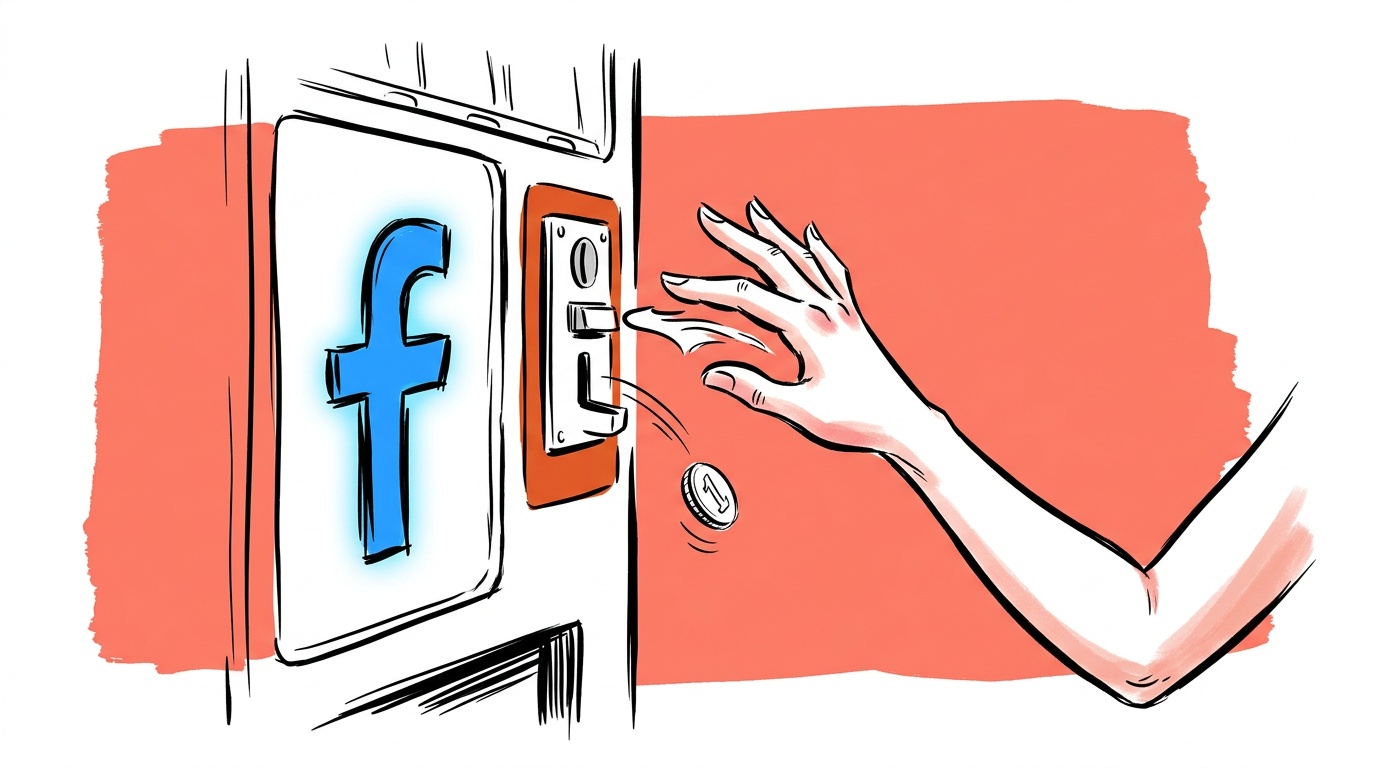
The shift that fixes most broken Meta accounts is not a new campaign type or a budget trick. It's understanding that Meta is an interruption auction, not a search auction. The user didn't ask to see your ad. The platform is deciding, on your behalf, whether your creative deserves to exist in that person's feed—and charging you more when it doesn't.
TL;DR — Meta Ads Fundamentals
- Meta is an interruption platform: users never asked to see your ad, so the first job of any creative is to earn attention before it can earn a click.
- The algorithm trades on predicted engagement—better creative gets cheaper distribution, not just better results.
- Ad format choice is not arbitrary: different formats serve different stages of the customer's decision-making process.
- Most accounts fail at the feed stop, not the landing page. Fix the hook before optimizing anything else.
- Simplify your account structure so the algorithm gets enough data per ad set to learn. Fragmentation is expensive.
Meta Is Not Google. Stop Running It Like Google.
Search ads exist in a moment of declared intent. Someone types "buy running shoes," and your ad appears. The work is matching supply to demand that already exists.
Meta ads create demand. The user is scrolling photos of their cousin's wedding. You have roughly one second—probably less—to make them stop. That is a fundamentally different job, and it requires a fundamentally different mental model.
When we see accounts that have been managed with a search mindset, the symptoms are predictable: highly segmented audiences (trying to replicate keyword targeting), low creative volume (one or two "approved" ads running for months), and heavy reliance on retargeting because cold traffic never converts.
The fix is not a new bidding strategy. It's accepting that on Meta, creative is the targeting. The algorithm is sophisticated enough that the best audience signal you can give it is a piece of creative that resonates with a specific type of person. Meta will find those people. Your job is to give it the raw material to work with.
When you run a video that opens with a woman in her 40s talking about joint pain, you are not just making a lifestyle choice—you are giving Meta's algorithm a signal about who responds to that message. The platform uses engagement patterns to find more people like them. Your creative brief is your targeting brief.
The Interruption Auction Explained
Here's the mechanical version of why creative quality has a direct cost impact.
Meta prices inventory through an auction where the winner is not simply the highest bidder. The platform estimates the probability that a user will take a meaningful action on your ad, then multiplies that by your bid. Predicted engagement factors into that estimate directly.
In practice, two advertisers targeting the same person with the same bid will pay very different CPMs if one has a high-engagement creative and the other has a static image that stops no one. The high-engagement creative gets cheaper reach because Meta makes more money showing it. Users engage, the platform looks good, the advertiser gets volume.
This is why accounts with strong creative can appear to "hack" the algorithm. They're not hacking it. They're giving it what it wants.
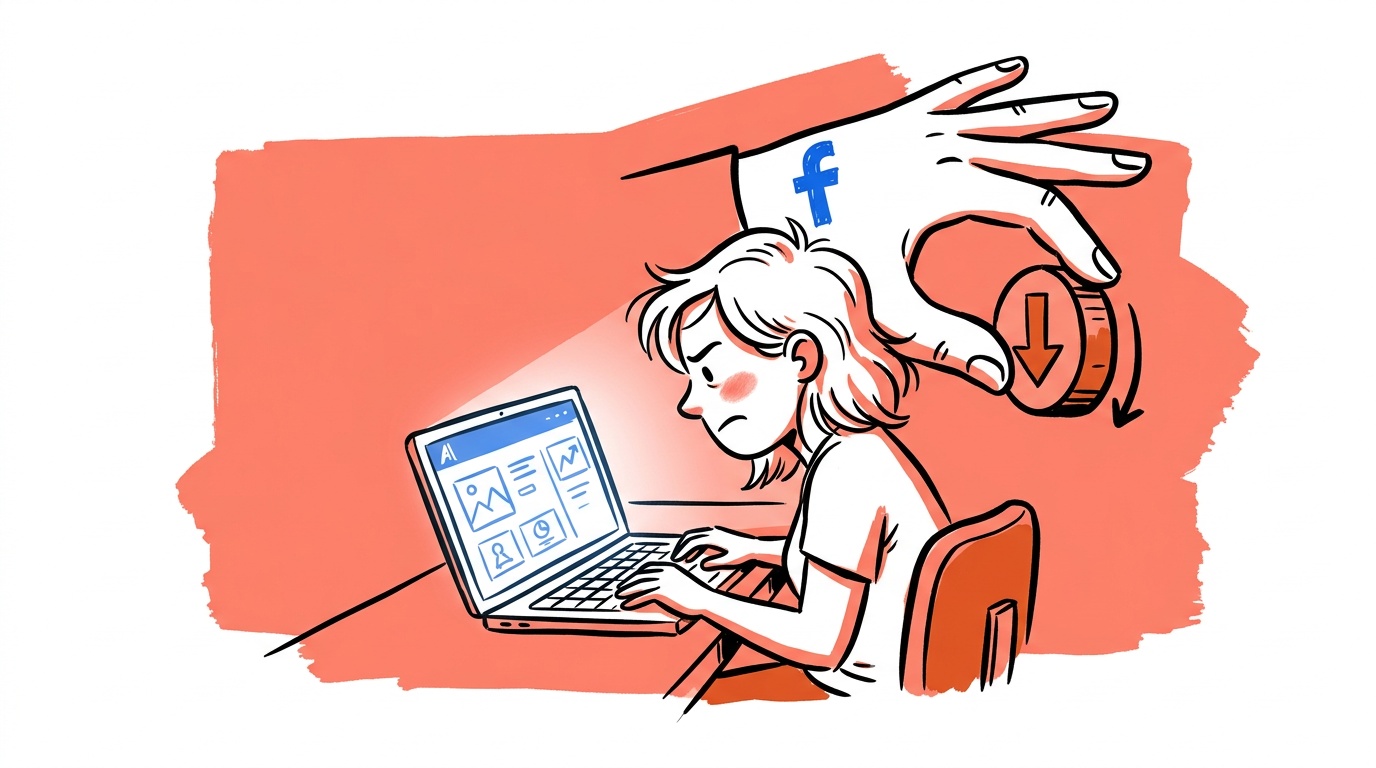
The inverse is equally true. If users consistently scroll past, hide, or mark your ads as irrelevant, your costs climb. The platform is penalizing you for wasting its users' attention.
The Feed-Stop Problem: Why Most Accounts Break at the Top of the Funnel
In our experience reviewing ad accounts, the most common failure point is not the landing page. It's the first frame.
Whether you're running video or static, the first moment of contact has to do one thing: stop the scroll. Not explain the product. Not present a discount. Stop. The. Scroll.
For video, the opening two to three seconds need to create a pattern interrupt—something unexpected, visually arresting, or emotionally provocative. A talking head starting with "Hey guys, today I want to talk about..." is not a pattern interrupt. It is the pattern.
For static images, the equivalent is visual contrast, human faces (especially with direct eye contact or strong emotion), or a text overlay that creates curiosity or signals a specific problem the viewer recognizes in themselves.
The format question is downstream of the hook question
Once you've accepted that stopping the scroll is the primary job, format choice becomes clearer. The exercise of evaluating formats purely on their ability to earn attention—rather than on familiarity or ease of production—tends to produce better decisions than defaulting to whatever you've always run.
Broadly, formats sort into roles:
- Short-form video (Reels-style) excels at cold interruption. Fast, native-feeling, low barrier to watch.
- Carousel earns its place mid-funnel, where a user already has some interest and wants to compare or explore.
- Static single image is fast to produce and test, making it valuable for rapid creative iteration, especially on direct-response offers where the image can carry the full message.
- Long-form video works when you need to explain something complex or build trust—but only after the hook has earned those extra seconds.
None of these is always best. The right format is the one that fits where the person is in their decision process and what your specific message needs to communicate.

Live today.
The full campaign — copy, images, targeting — generated for your site and deployed paused for your approval.
Account Structure: How Fragmentation Kills Learning
Many founders build Meta accounts that look sophisticated on paper—dozens of ad sets, tightly segmented audiences, specific bids per segment—and wonder why performance is volatile and unpredictable.
The algorithm needs data to learn. Each ad set is its own learning process. When you fragment spend across too many ad sets, each one gets too little signal to exit the learning phase properly. You end up with a collection of perpetually learning ad sets, all operating at sub-optimal performance.
The counterintuitive fix is to consolidate. Fewer ad sets, broader audiences, more budget per ad set. (Our CBO vs ABO sizing guide has the CPA-based math for how many sets your budget can fund.) Let the algorithm do the micro-targeting it's actually good at. Your job is to define the product, the offer, and the creative. Meta's job is to find the right people.
A reasonable working structure for most accounts at early to mid scale:
- One cold prospecting campaign — broad or interest-based, multiple creative variants in a single ad set or using Meta's Advantage+ setup.
- One retargeting campaign — people who've visited, added to cart, or engaged with your content.
- Optionally, a lookalike campaign once you have meaningful customer data to build from.
That's three campaigns. Most accounts don't need more complexity than that until spend and creative volume genuinely justify it.
Meta's Advantage+ Shopping campaigns automate a lot of the structural decisions described above. They work well for e-commerce accounts with a clean product catalog and enough purchase history to train on. They are not a substitute for strong creative, and they tend to over-index on retargeting audiences if you're not watching the audience breakdown in reporting.
Diagnostic Metrics: What to Read and What to Do
Most founders check CTR and CPA and stop there. Those numbers tell you what happened, not where it broke. Three earlier-funnel metrics diagnose the actual problem:
Thumb-stop ratio (also called video-start rate for static). What share of people who saw the ad paused on it at all? A low number here means the hook is broken. Nothing downstream matters until this improves.
3-second video view rate. Of everyone who started the video, how many watched at least three seconds? A sharp drop between impression and three-second view confirms the first frame is losing people, not the message.
Hold rate (sometimes called video average watch percentage). Are people staying through the core message? A low hold rate after a decent three-second view usually points to pacing or relevance problems in the body of the video, not the hook.
When any of these numbers is low, the fix is creative—specifically the part of the creative that corresponds to where the drop-off happens. Changing your audience, bid, or budget won't move these numbers. New creative will.
The Mental Model in One Sentence
If you internalize nothing else: Meta is a creative distribution system that rewards relevance with cheaper reach.
Your targeting settings are guardrails. Your bid is a budget ceiling. But your creative is the actual lever. It determines whether people stop, whether they engage, whether the algorithm decides your ad deserves to be seen again by more people.
The founders who get Meta are not running more sophisticated campaigns. They are shipping more creative, testing hooks faster, and reading engagement signals—view duration, hold rate, thumb-stop ratio—as diagnostic data rather than vanity metrics. Every structural decision reduces to one question: does this creative earn attention?
What to Do Next Week
Audit your current Meta account against these three questions:
- How many active creative variants are you running? If it's fewer than five, you are probably not generating enough signal to learn what works. Test more hooks before testing more audiences.
- How many ad sets are competing for the same audience? If it's more than three or four, consolidate. You're fracturing your own learning.
- What is your video hold rate or static thumb-stop ratio? If you don't know, find it in Meta's creative reporting. If the number is low, the problem is the first second—not the copy, not the CTA, not the landing page.
Fix the feed stop. Consolidate the structure. Ship more creative. That is Meta ads fundamentals in practice.
FAQ
What are the fundamentals of Meta ads? Meta ads fundamentals come down to three things: understanding that you're interrupting people who didn't ask to see your ad, knowing that creative quality directly affects your distribution cost, and keeping your account structure simple enough that the algorithm can learn. Most accounts fail on the first one—the creative doesn't earn attention.
Why do my Meta ads get lots of impressions but no clicks? High impressions with low clicks typically means your creative is getting served but not stopping the scroll. The algorithm will keep distributing the ad because it's spending your budget, but users are ignoring it. Audit your first frame—video or static—and test new hooks before changing anything else.
How important is audience targeting on Meta compared to creative? Less important than most founders think. Meta's algorithm is sophisticated enough to find the right people if you give it strong creative signal. Tight audience segmentation can actually hurt performance by limiting the pool and fracturing your learning data. Broad targeting with strong creative outperforms narrow targeting with weak creative in most accounts.
What Meta ad format works best? There is no universal answer. Short-form video excels at cold prospecting because it's native to the feed. Carousel formats work well mid-funnel when users want to compare options. Static single images are fast to produce and test, making them valuable for rapid iteration. The right format depends on where your audience is in their decision process.
How much should I spend on Meta ads before judging whether they work? Enough to exit the learning phase on your key ad sets. Meta's algorithm needs a meaningful volume of optimization events per ad set per week before it stabilizes. What that costs depends on your conversion rate and offer. As a working principle: don't kill or scale an ad set until it has generated enough events to exit learning—decisions made before that point are mostly guessing.
What is Meta Advantage+ and should I use it? Advantage+ campaigns automate audience selection and some bidding decisions. They work well for e-commerce accounts with purchase history and a clean product catalog. They are not a replacement for strong creative, and they can over-index on warm audiences if you're not monitoring the audience breakdown. Use them as a complement to, not a substitute for, a deliberate creative strategy.
Why does Meta keep showing my ads to the same people? Audience fatigue is real. If you're running a small retargeting pool or a narrow prospecting audience, the same people see your ad repeatedly, engagement drops, and your costs rise. The fix is either broadening your audience, refreshing your creative, or both. Frequency and creative rotation matter more than most founders realize until they see the cost curve climb.
Live today.
The full campaign — copy, images, targeting — generated for your site and deployed paused for your approval.
We build AdControlCenter — AI-powered ad management for small businesses, online stores, SaaS companies and service providers. We write what we'd want to read: real numbers, no fluff, the things we wish we'd known when we started.
More from the team →