Most founders who run paid ads assume the bottleneck is upstream: wrong audience, wrong creative, wrong bid strategy. So they test new copy, refresh the visuals, and tweak the targeting. The click-through rate nudges up. Sales don't move. The real bottleneck was never the ad — it was what the ad sent people to.
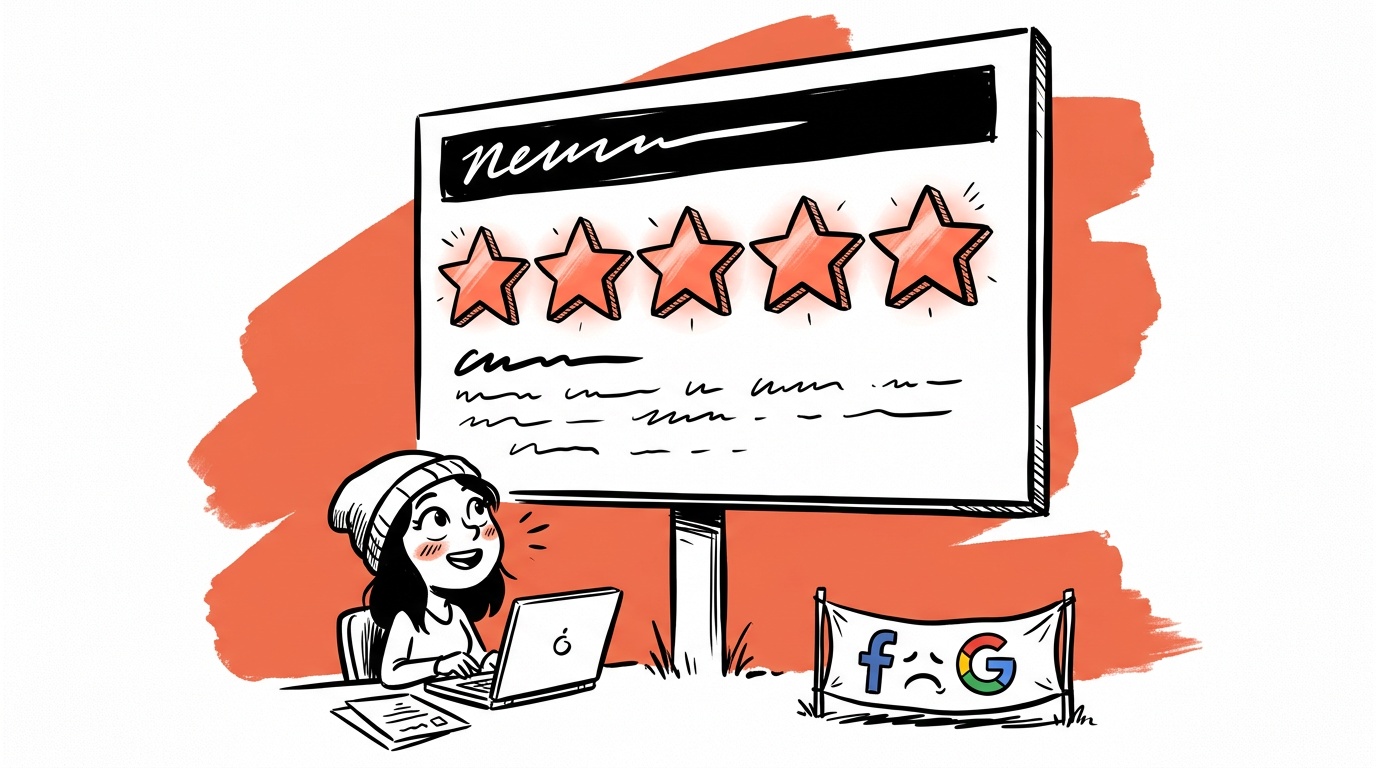
Reviews are doing the closing work. The ad just opens the door.
TL;DR — Social proof over paid ads
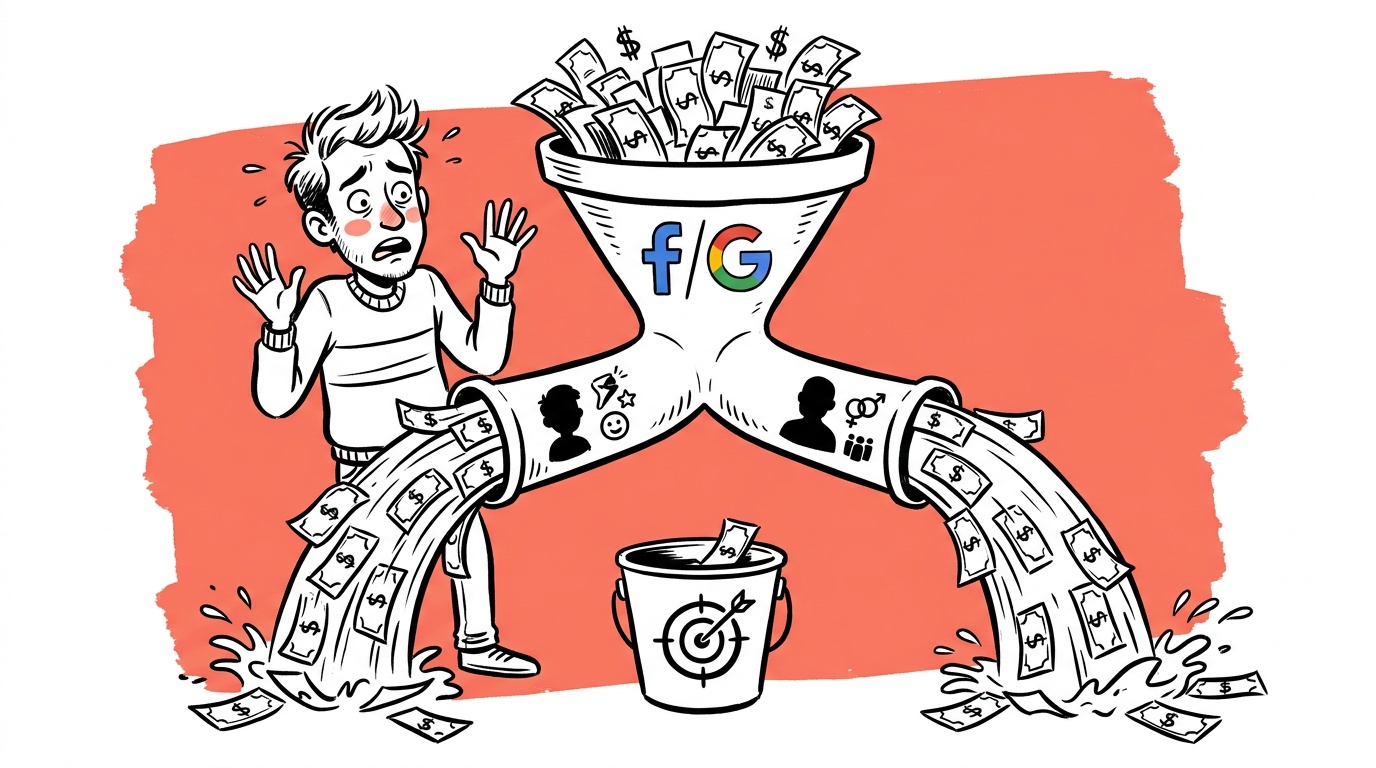
- Ads bring traffic. Reviews convert it. Fixing ads when reviews are weak is like turning up the tap on a leaking bucket.
- A strong review corpus creates a passive sales force that compounds over time — ads stop the moment your card is charged.
- The most expensive click you can buy is one that lands on a page with zero social proof.
- Review volume, recency, and specificity all matter. Vague five-star ratings barely move conversion; detailed, outcome-specific reviews move it significantly.
- Distribution strategy and trust signals are the actual constraint for most ad accounts — not content volume, not creative freshness.
The Bottleneck Is Almost Never the Ad Itself
Think about the last time you bought something after seeing a single ad with no prior exposure to the brand. It almost certainly didn't happen. You searched the brand name, looked for reviews, checked Reddit or a comparison site, and then — maybe — you bought. That entire journey outside the ad is where the real persuasion happens, and most founders are not building it deliberately.
The bottleneck was never the creative. It was the absence of a trusted third-party voice confirming that the thing you're selling does what you claim.
Anything a brand says about itself is discounted by the reader. They know you wrote the headline. They know you chose the photography. Reviews come from people with nothing to gain — and buyers know that too. That asymmetry is why a stranger's specific, honest review outperforms almost any ad copy you can write.
What "Social Proof" Actually Means in a Paid Ads Context
The term gets used loosely. Social proof in the context of running paid ads means any signal — on your landing page, in your ad creative, or in the broader environment around your brand — that tells a prospect "other real people have trusted this and were right to."
That breaks down into a few distinct categories:
Review quantity. Seeing that many customers have weighed in creates safety in numbers. A product with a large number of reviews feels like a known quantity.
Review recency. A wall of reviews from years ago signals a brand that may have stopped caring. Buyers weight recent reviews heavily, especially for anything where the product or service could have changed.
Review specificity. "Great product, 5 stars" does almost nothing. "I was skeptical because I'd tried three other tools and they all broke down past 10,000 rows, but this one handled our full export without a single error" does something real. It gives the skeptical buyer — the one your ad just acquired — a specific objection already handled by someone who was in exactly their position.
Review source. Reviews on your own site are trusted less than reviews on third-party platforms, because everyone knows you could just delete the bad ones. Google reviews, G2, Trustpilot, Reddit threads, and App Store ratings carry more weight precisely because you don't fully control them.
Are Your Reviews Actually Ready? A Simple Readiness Check
Before you touch your ad account again, run this four-part check on your review corpus. It works for SaaS, e-commerce, and service businesses alike — the thresholds shift by category, but the questions don't.
Quantity. Does a first-time visitor see enough reviews to feel safe? A handful of ratings signals a brand still finding its footing. Enough to suggest a real customer base signals a known quantity. If you're early, prioritize getting to a visible count before scaling ad spend.
Recency. Are your most recent reviews from the last 90 days? Buyers treat a long gap in review activity as a warning sign — they assume the product changed, the team left, or the support degraded. A recency gap is easy to fix with a structured outreach cadence, and it has an outsized effect on cold-traffic trust.
Specificity. Count the reviews that contain an outcome or a resolved objection — not just a rating. If most of your reviews are generic praise, you have a quality problem, not a quantity problem. Generic reviews don't answer the question a skeptical buyer is actually asking.
Third-party coverage. Google your brand name plus "reviews." What comes back? If the top results are your own site, a thin G2 page, and an old Reddit thread, a large share of your paid traffic is making its final trust decision in that search — and the environment isn't working for you. Third-party coverage is the category most founders neglect longest and regret most.
The Compounding Asset Your Ads Can Never Be
Ad spend is a cost that resets to zero the moment you stop paying. Every dollar you spend on clicks is gone when the campaign ends. Reviews are a compounding asset that keeps working whether your campaigns are running or not.
A hundred genuine, detailed reviews written over the course of a year will convert visitors in year three, year five, year ten — without any additional spend. The review corpus grows, the brand's trust signals deepen, and the cost per acquisition on any future paid push drops because the landing environment is now genuinely persuasive.
Ads also can't do one critical thing: they can't resolve late-stage doubt. By the time a buyer is deep in your funnel, they have a specific objection. Maybe it's price. Maybe it's "will this work for my exact situation?" Maybe it's "what happens if I need support?" No ad answers those questions credibly. A review from someone who had the same doubt and resolved it on the other side of a purchase — that closes the sale.

Live today.
The full campaign — copy, images, targeting — generated for your site and deployed paused for your approval.
How to Make Reviews Do More Selling Work
Most founders treat reviews as something that happens to them. Customers leave them (or don't), and you check in occasionally. That's a passive approach to your single most effective sales tool.
Surface the right reviews at the decision moment
The worst possible position for a great review is buried below the fold. Map your landing page to the specific objections a cold-traffic buyer from your paid ads is likely to carry. Then pull reviews that directly address those objections and put them at the friction points — near the pricing section, near the CTA, near any feature claim a skeptic would challenge.
If your ads are targeting a specific segment (say, small e-commerce operators versus enterprise), make sure the reviews visible to that segment are from people who identify as being in that segment. "As someone running a three-person team" in a review headline is worth more to a three-person-team founder than a generic five-star rating from an anonymous user.
Ask better questions in your review prompts. Most review request emails say "leave us a review!" That produces vague praise. Instead, ask: "What was your biggest concern before you started, and what did you find once you were up and running?" That question structure generates the before/after narrative that mirrors the buyer journey exactly.
Treat negative reviews as conversion data. A negative review that describes a real limitation, followed by a thoughtful brand response, converts skeptics. It proves you're listening and that the product is real, not a Potemkin front. Ignoring bad reviews creates a vacuum that the buyer fills with their own worst assumptions.
The Ad-to-Review Feedback Loop Most Founders Miss
Here's where paid ads and social proof connect more tightly than most people realize: your ads can be the fastest source of review intelligence you have.
When you see high click-through but low conversion, the gap is almost always a trust deficit — and reviews tell you exactly what kind. Read your one-, two-, and three-star reviews the way you'd read objection data. What did buyers expect that they didn't get? What did they want to trust that they couldn't verify? Those answers are your next round of landing page copy, your next review-request prompt, and your next creative brief.
The loop runs the other way too. Review language is often the best-performing ad copy you will ever write. Buyers use words and phrases that your marketing team wouldn't choose — and those exact words resonate with other buyers who think the same way. Pull direct quotes from your best reviews into your ad creative and test them. Buyer language reads as authentic in a way that polished brand copy rarely does, because other buyers recognize themselves in it.
When we tested ad variations where headline copy was lifted word-for-word from a detailed customer review versus copy written internally, the review-derived copy consistently generated stronger engagement. Buyers recognize themselves in the language of other buyers.
Distribution Strategy Is the Other Half of the Equation
Getting reviews isn't just about asking. It's about where they live and how findable they are.
A buyer who sees your ad on Meta, feels mild interest, and searches your brand name on Google is making a trust decision based on what they find in that search. If your Google Business Profile is thin, your G2 page is empty, and a Reddit thread from two years ago is the top result, you've lost that buyer — and your ad paid to bring them to that moment.
The distribution of your social proof needs to match the discovery behavior of your buyers. If your audience skews toward Google searches, Google reviews and third-party review sites that rank in Google matter most. If your audience is technical and uses Reddit as a research tool, your presence in relevant subreddit threads — organic, honest, not spam — is a trust asset. If they evaluate SaaS tools via G2 or Capterra, those profiles need active management.
This is not about being everywhere. It's about being present and trusted in the specific channels your buyer uses to verify before they buy. Map that journey. Build the proof into it deliberately.
What to Actually Do This Week
Pull up your current highest-spend ad campaign. Find the landing page it points to. Run the four-part readiness check above: quantity, recency, specificity, third-party coverage. If any one of those is broken, you have found your real bottleneck — and it's cheaper to fix than your ad account.
Three specific moves:
- Email your last 90 days of customers with a structured question, not a generic review request. "What problem were you trying to solve, and what happened?" gets better reviews than "Tell us what you think."
- Google your brand name plus "reviews." That search result page is your real landing page for a large share of paid traffic. What's there right now? What's missing?
- Pull the three most specific, outcome-rich reviews you already have and test them as ad headlines. Run them against your current best-performing copy.
Reviews are not a nice-to-have. They are the closing mechanism that your ads are paying to reach. Fix the environment before you increase the spend.
FAQ
Does social proof actually outperform paid ads for conversions?
They're not competing — they work in sequence. Paid ads generate the initial click and the intent. Social proof, primarily in the form of reviews, converts that intent into a purchase. Accounts that scale ad spend without building a review corpus typically see diminishing returns because they're driving traffic into a low-trust environment. The combination of paid traffic into a strong social proof ecosystem consistently outperforms paid traffic alone.
What kind of reviews actually increase conversion?
Specific, outcome-based reviews that mirror the buyer's situation and objections. A review that says "five stars, great product" moves very little. A review that says "I was worried it wouldn't handle our workflow, but it handled everything cleanly with no manual workarounds" answers an objection at the decision moment. Review specificity and narrative structure matter as much as rating.
Where should I display reviews on a landing page for paid traffic?
Near the specific friction points a cold-traffic buyer is likely to have: adjacent to pricing, near the primary CTA, and directly below any claim a skeptic would challenge. Don't aggregate all your reviews at the bottom. Map objections to page sections and surface the review that neutralizes each objection at that exact point.
Can I use customer review language in my ad creative?
Yes, and you should. Verbatim customer language in ad headlines frequently outperforms professionally written copy because it reads as authentic and buyers recognize themselves in how other buyers describe problems. Pull direct quotes from your most detailed reviews and test them as ad copy. Always attribute clearly so the platform doesn't flag it.
How do I get better reviews, not just more reviews?
Ask better questions in your review prompt. Instead of "leave us a review," ask something like: "Before you started using this, what were you worried about? And what did you find on the other side?" That structure produces before/after narratives that function as objection-handling assets. Send the request when the customer has just had a specific win with your product — timing and context shape the quality of what they write.
What's the fastest way to identify if reviews are my conversion bottleneck?
Compare your ad click-through rate to your landing page conversion rate. If CTR is reasonable but conversion is low, traffic quality isn't the problem — the trust environment is. Then run the four-part readiness check: quantity, recency, specificity, and third-party coverage. Gaps in those four areas tell you exactly where to focus first.
Do negative reviews hurt conversion or help it?
Handled well, a mix of ratings can increase conversion relative to a suspiciously perfect score. Buyers are skeptical of all-five-star profiles; they assume curation. A thoughtful brand response to a legitimate critical review demonstrates that the brand is real, responsive, and honest. The worst outcome is ignoring negative reviews — that leaves a gap that buyers fill with distrust.
Live today.
The full campaign — copy, images, targeting — generated for your site and deployed paused for your approval.
We build AdControlCenter — AI-powered ad management for small businesses, online stores, SaaS companies and service providers. We write what we'd want to read: real numbers, no fluff, the things we wish we'd known when we started.
More from the team →