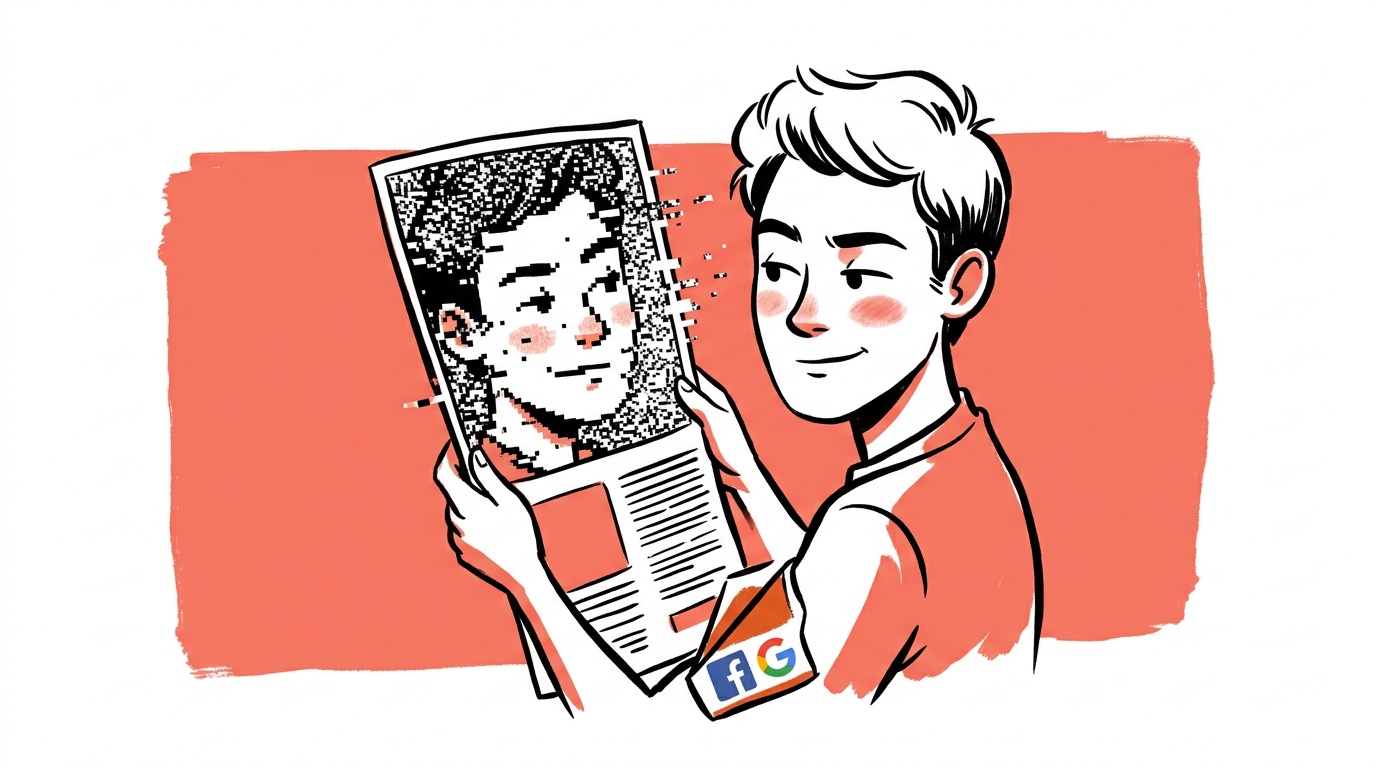
Gen Z is the first generation to grow up inside advertising—not just exposed to it, but fluent in it. They can identify a sponsored post from the thumbnail, a fake testimonial from the cadence of the copy, and a brand trying too hard from a single frame of the intro. The playbook most ad teams still run was written for an audience that trusted institutional framing. That audience is retiring.
If you are targeting Gen Z with the same funnel logic you used in 2018—awareness creative at the top, retargeting with discount codes at the bottom—you are paying to be ignored.
TL;DR — Gen Z audience targeting
- Gen Z reads ads the way marketers read ads: they see the structure before they feel the message, so authenticity must come first, not last.
- Broad interest targeting fails this cohort because their actual behavior is niche, fast-moving, and cross-platform in ways that standard taxonomy buckets miss.
- Short-form video is table stakes, but how you open the first two seconds is what separates spend that converts from spend that gets scrolled.
- Community signals—comments, shares, saves, DMs—predict purchase intent more reliably than click-through rate for this audience.
- The best-performing Gen Z campaigns we have analyzed treat the ad unit itself as content: something worth watching even if you never buy.
The Fluency Problem Nobody Talks About
Every generation grows up with advertising, but Gen Z grew up studying it. YouTube ad-skipping mechanics, sponsored TikTok audits on Reddit, entire accounts dedicated to breaking down why a campaign worked or failed—this cohort does not just consume media, they critique the machinery behind it.
That fluency creates a specific failure mode for brands: the more polished and "professional" an ad looks, the more it triggers skepticism. High production value used to signal quality. For Gen Z, high production value often signals distance—a company that spent money on aesthetics instead of having something real to say.
This is not an aesthetic preference. It is an informational heuristic. They have been burned by aspirational imagery enough times to treat it as a warning sign.
Authenticity for Gen Z is not lo-fi video or shaky iPhone footage. It is specificity. A brand that says "this product works because of X specific mechanism" reads as more credible than one that says "you'll feel amazing." Vague positive claims are the new stock photography—everyone knows what they are.
Why Standard Audience Taxonomy Breaks Down
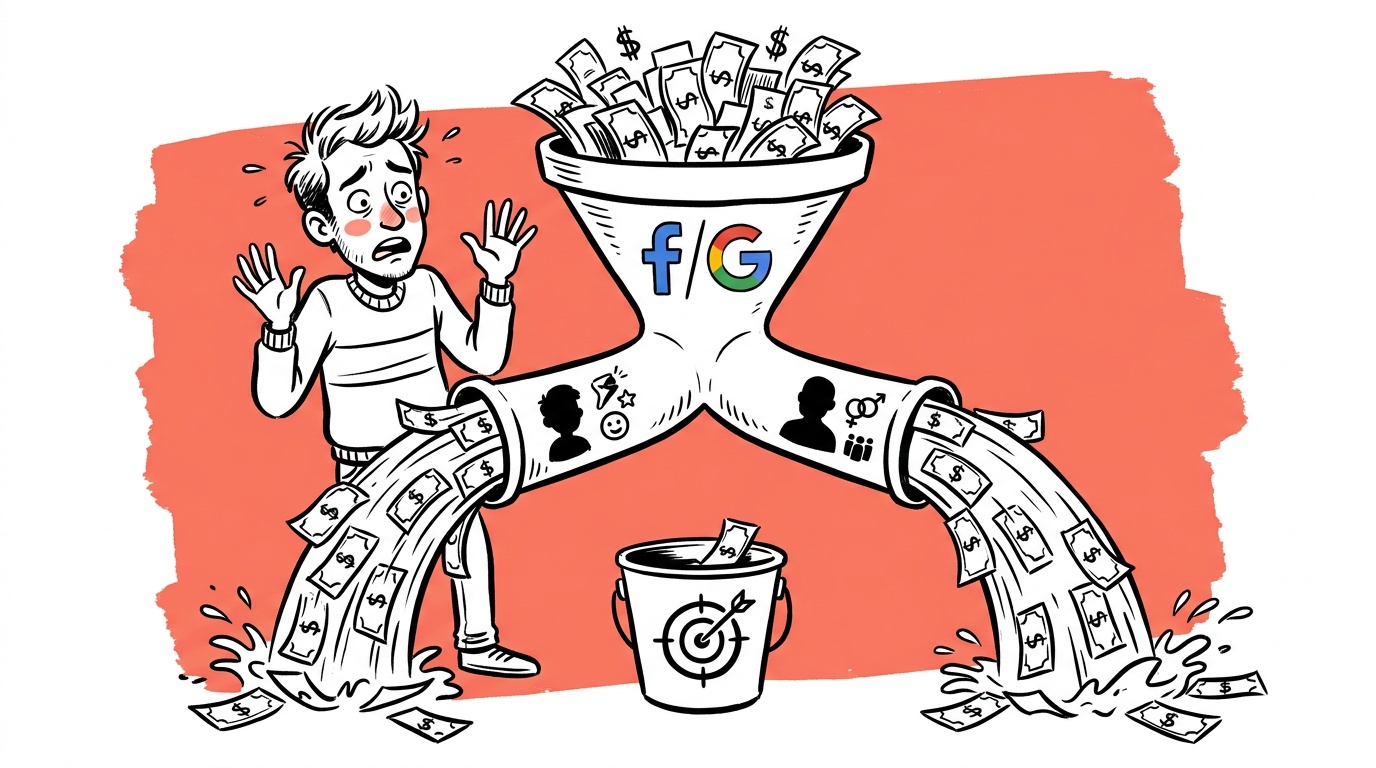
Most ad platforms let you target by interest, behavior, and demographic. For Gen Z, these buckets have a structural problem: the generation's actual taste clusters are too granular and too fast-moving for platform taxonomy to track accurately.
"Interested in fitness" is a category. "Running a 5K every weekend while also being deeply into Korean skincare and underground techno" is a person. Standard interest targeting collapses all of that into "Health & Wellness" and "Music." You end up paying to reach a very large audience that shares almost no actual purchase behavior.
What works better: behavioral signals that come from the creative itself. When you run three or four distinct creative concepts and let the algorithm find who engages with each, you learn something real. You discover that your product resonates with one subculture, not five, and you can double down on that specificity.
Accounts that narrow creative angles rather than broaden targeting consistently outperform the alternative—the opposite of what most platform reps recommend.
The TikTok Effect on Purchase Behavior
TikTok did not just create a new ad format. It rewired the discovery-to-purchase path. Gen Z routinely discovers a product in a TikTok comment, searches for it on YouTube to watch an honest review, then checks Reddit for negative opinions before buying. That is three platforms and potentially multiple weeks before a conversion happens.
Attribution models built for a two-touch world fall apart here. If you are optimizing purely for last-click or even seven-day click, you are invisible for most of the actual decision process. Meta's own research on cross-platform journeys has pointed to this complexity for years, but most SMB ad stacks are not built to handle it.
What the First Two Seconds Are Actually Doing
On short-form video, the first two seconds are not a hook. They are a credibility checkpoint. Gen Z is not asking "is this interesting?" They are asking "is this trying to manipulate me?" The moment the answer feels like yes, they swipe.
This means the standard direct-response hook formula—big claim, then proof—often fires the wrong signal. A big claim at the start reads as hype. Hype reads as manipulation. You have lost them before the proof lands.
When we tested a different approach—opening with the problem in the most specific language possible, without any framing that signals "this is an ad"—hold rates improved meaningfully. Not "struggling with X?" (that is the old pattern) but literally showing the problem happening, or saying the exact thing a real customer would say about it in a voice memo to a friend.
That specificity does two things. It signals that the brand actually understands the experience. And it filters—people who have exactly that problem keep watching; people who do not, stop. That is a good outcome. You want qualified engagement, not broad reach.
A useful benchmark to track internally: what share of viewers reach the three-second mark versus the midpoint of your video. A sharp drop between those two points almost always means the opening triggered the skepticism filter, not that the middle of the ad was weak. Fix the first two seconds before you rewrite anything else.

Live today.
The full campaign — copy, images, targeting — generated for your site and deployed paused for your approval.
Community Signals Are a Better Proxy Than CTR
Click-through rate tells you who was curious enough to leave a platform. For Gen Z, saves, shares, and comments tell you something more valuable: who cared enough to act while staying put.
A saved post is a bookmark. A share is an endorsement to a peer network that trusts the sharer more than any brand. A comment—especially an unprompted one that tags someone—is word-of-mouth at scale.
We track these as primary performance indicators for Gen Z-targeted campaigns, alongside downstream conversion data. In our experience, a campaign with low CTR but strong save and share rates is not failing—it is building trust across a longer decision window. Accounts that optimize only for CTR and ROAS often pause exactly these campaigns at the worst moment, right before the social equity compounds into purchases.
Sprout Social's research on social commerce behavior documents how saves and shares consistently outperform passive impressions as purchase predictors in younger demographics. This aligns with what we see in our own data.
A practical threshold: if saves and shares are climbing while CTR stays flat, hold the campaign for at least another week and watch comment sentiment. Unprompted tags and "this is literally me" comments are leading indicators that conversion is coming, just not through the channel your attribution model is watching.
The Discount Code Is Not a Strategy
Many brands default to discount codes as their Gen Z conversion mechanism. It makes sense on paper: price sensitivity is real, and a code creates urgency. The problem is that Gen Z has learned to interpret discount codes the same way they interpret infomercials. A code does not signal value. It signals that the brand is not confident the product can close on its own.
More damaging: discount-code-heavy campaigns train your audience to wait. You are teaching the most retention-conscious segment of buyers that your price is negotiable, which makes full-price conversion structurally harder over time.
What converts better with this cohort: social proof from people who look and sound like them, shown in contexts that are recognizable from their actual lives. Not influencers doing polished unboxings—peers doing unpolished, honest takes. The format signals the intent: this is what I actually think, not what I was paid to say.
Nielsen's trust in advertising data has consistently shown that recommendations from people like the consumer dramatically outperform brand messaging across demographics—but the gap is wider for younger cohorts, who have calibrated their trust filters more precisely.
Building a Targeting Architecture That Actually Holds
Most Gen Z targeting fails not because of the creative, but because the underlying architecture is lazy. Here is what a tighter setup looks like:
Creative-led segmentation. Run three to five distinct creative concepts, each built around a specific angle or subculture. Let spend distribute based on engagement quality, not just volume. Identify which angle converts and build around it.
Lookalike audiences seeded from buyers, not visitors. Site visitors from Gen Z skew curious. Buyers are who you actually want to clone. Seed your lookalikes from purchaser lists and filter by recency—behavior from two years ago is stale for this cohort.
Exclusion lists as a first-class tool. Exclude people who have seen your ad more than a handful of times without engaging. Frequency caps are not a nice-to-have; they are required. Repetition does not warm this cohort up—it signals desperation and actively erodes trust.
Platform sequencing that matches the discovery path. Awareness on TikTok or Instagram Reels. Deeper content (YouTube, Reddit) in the middle. Retargeting that does not feel like surveillance. The sequencing matters because they are moving across platforms intentionally, and showing the same ad in the same format across all of them reads as a brand that does not understand them.
Every quarter there is a new format, a new placement, a new targeting option that promises to crack the Gen Z code. Most of it is noise. The signal—specific creative, real social proof, architecture that respects how this cohort actually moves—does not change that fast. Build what persists.
FAQ
What is the most effective way to do Gen Z audience targeting on Meta? Start with broad targeting and creative-led segmentation rather than granular interest stacks. Run distinct creative angles, identify which ones generate high save and share rates alongside conversions, then build lookalike audiences from actual purchasers in that segment. Avoid high-frequency retargeting—Gen Z interprets ad repetition as brand desperation, not brand familiarity.
Why do Gen Z audiences skip or ignore paid ads? Because they are fluent in ad structure and can recognize persuasion mechanics the moment they appear. The most common triggers: vague aspirational claims, high production value with no specificity, and any opening that matches the pattern of ads they have already dismissed a thousand times. The fix is specificity and tone, not budget.
Does influencer marketing work for Gen Z? It depends heavily on the influencer's relationship with their audience. Macro-influencers with polished sponsored content often perform worse than micro-creators with genuine, niche followings. Gen Z trusts people, not reach. An honest, unglamorous review from someone with a small but loyal audience frequently outperforms a major placement.
How should I think about attribution when targeting Gen Z? Assume the path to purchase spans multiple platforms and multiple weeks. Last-click attribution will undercount the channels doing early work. Build in view-through windows, track community engagement signals (saves, shares, comments) as leading indicators, and run periodic incrementality tests to understand what is actually driving conversions rather than what is merely present at the moment of click.
What ad formats perform best with Gen Z? Short-form vertical video dominates, but the format is not the variable—the opening is. Ads that start with a specific, relatable problem in natural language consistently outperform ads that open with a brand claim. Static image ads can work when the image is genuinely specific and interesting, not a polished lifestyle shot. Track three-second hold rate and midpoint completion rate separately; a gap between those two tells you exactly where the creative breaks.
Is Gen Z actually willing to spend money, or are they too price-sensitive? Gen Z spends, but they spend on things that feel worth it. The price sensitivity narrative is mostly a misread of their skepticism toward manipulative sales tactics. A product that earns trust through honest creative and real social proof can command full price. A product that leads with discounts trains them to wait for the next one.
How do I know if my Gen Z campaign is working before conversions come in? Watch saves, shares, and comment sentiment in the first week. If people are tagging friends, saving the post, or writing comments that indicate genuine recognition ("this is literally me"), you are building the kind of social equity that converts over time. If you are getting impressions and nothing else, the creative is not landing—pause and rework the angle before scaling spend.
The hardest shift for most ad teams targeting Gen Z is accepting that the ad itself has to be worth something independent of the sale. Not because Gen Z is idealistic, but because they are experienced enough to know when they are being sold to—and experienced enough to leave. Build creative that earns attention on its own terms, architecture that respects how they actually move, and proof that comes from people they actually trust. The conversion follows from that, not the other way around.
Live today.
The full campaign — copy, images, targeting — generated for your site and deployed paused for your approval.
We build AdControlCenter — AI-powered ad management for small businesses, online stores, SaaS companies and service providers. We write what we'd want to read: real numbers, no fluff, the things we wish we'd known when we started.
More from the team →